
How to Test a Pressure Regulator on a Residential Plumbing System: A Safe Guide
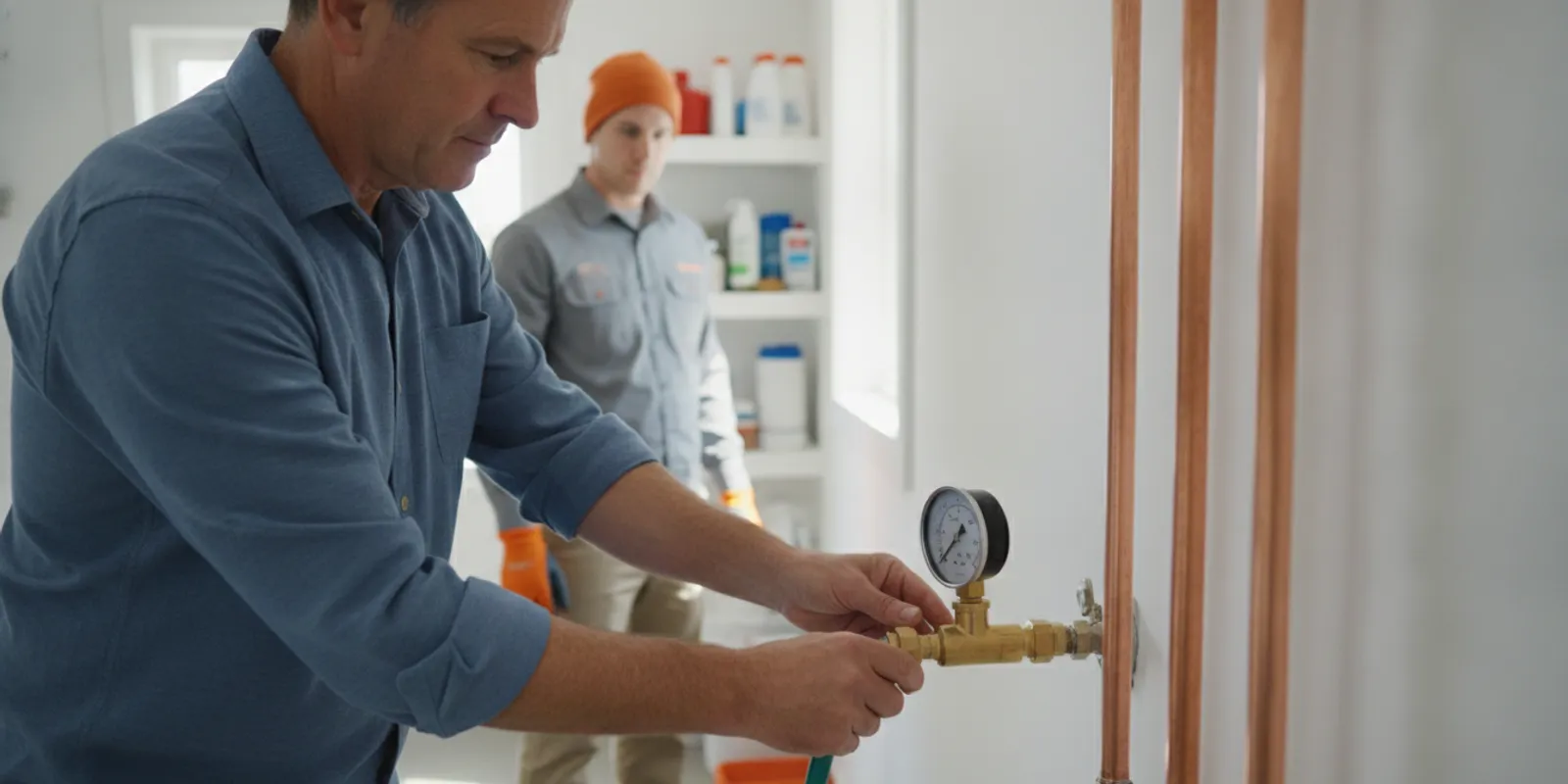
If several faucets sputter, water flow feels different than usual, or pressure changes from one day to the next, you may wonder how to test a pressure regulator on a residential plumbing system. A gauge reading can help you describe what is happening, but it is only one observation—not a diagnosis of the regulator or the rest of the plumbing. Start by recording conditions without taking equipment apart or changing its adjustment.
Request professional plumbing help
How to test a pressure regulator on a residential plumbing system safely
A pressure-reducing valve, commonly called a pressure regulator, reduces incoming water pressure for a building. It is often located where the water service enters the home, but plumbing layouts differ. A pressure gauge attached to a suitable hose-thread outlet can give you a static pressure reading while no water is being used elsewhere. It does not require removing piping or turning the regulator's adjustment screw.
Before beginning, decide whether a homeowner observation is appropriate. Do not proceed if a connection is leaking, the outlet is corroded or loose, the gauge does not fit securely, or you cannot reach the outlet safely. If there is active water damage, uncontrolled flow, or a wet regulator connection, skip the test and seek plumbing help. A reading is not worth creating a leak or disturbing pressurized equipment.
Gather a gauge and make a simple record
- A water-pressure gauge with a connection that fits a hose bib or another compatible outlet.
- A phone or notebook to record the number, time, location, and conditions.
- Access to an outlet known to connect to the home's cold-water supply.
Check the gauge for damage and read its instructions before connecting it. Make sure the outlet is usable and that you can turn it on and off without forcing a stiff handle. If you are unsure whether an outlet is suitable, do not guess. A plumber can select a test point and explain what the measurement represents.
Take one static reading
- Choose an accessible hose bib or other compatible outlet. Avoid a fixture with a mixing valve if you do not know how it is connected.
- Turn off faucets, showers, irrigation, and appliances that use water. Wait until active flow has stopped.
- Thread the gauge onto the outlet by hand. Make the connection snug, not forced or overtightened.
- Open the outlet as directed by the gauge instructions. Read the gauge and note whether the indicator is steady or fluctuating.
- Close the outlet, release pressure as the gauge instructions specify, and remove it carefully.
Record the location and time along with the result. Note whether any water use may have continued elsewhere. The reading describes pressure at that test point at that moment under the conditions recorded. Repeat the check once only if the setup was secure and the first result was unexpected. A second reading is a comparison, not permission to adjust the valve.
What can how to test a pressure regulator on a residential plumbing system tell you?
A gauge reading is one piece of evidence. It can help establish whether a reported change is present at an accessible outlet, and a series of notes can show whether the concern seems constant or intermittent. It cannot by itself prove that the regulator has failed, identify an internal obstruction, or show the condition of every branch and fixture in the home.
Static pressure also differs from what you experience while water is flowing. If you watch the gauge while another fixture runs, you are observing a change under flow. Demand, piping, supply conditions, valves, or other equipment may affect the result; it is not a regulator-only test. Do not draw a firm conclusion from one change, especially if the gauge connection or test conditions differ between readings.
| What you observe | What it may indicate | Useful next step |
|---|---|---|
| Similar readings on repeat checks | Pressure was similar at that outlet at the times measured. Intermittent problems are not ruled out. | Keep the notes and compare them with any future symptoms. |
| Readings differ at different times | A changing supply condition, regulator concern, or another system factor may be involved. | Record time, symptoms, and household water use; arrange an assessment if it recurs. |
| Reading changes when another fixture runs | Flow demand or a restriction somewhere in the system may affect performance. | Note which fixtures were operating and whether the change is limited to one area. |
| One fixture has weak flow but others seem normal | A local fixture, aerator, or shutoff issue may be involved instead of a whole-home concern. | Describe the affected fixture and do not change the regulator to address one tap. |
| Leak, noise, or persistent forceful flow | There may be a plumbing concern a gauge reading cannot resolve. | Stop testing and contact a plumbing professional. |
Which pressure symptoms should you observe around the home?
Consider how many fixtures are affected and when the change occurs. A symptom at one faucet may have a different cause from a change noticeable at multiple sinks, showers, or appliances. This distinction does not establish the cause, but it gives a technician a clearer starting point. For broader context on residential plumbing repair, note whether the issue is limited to water flow or appears alongside a leak or another symptom.
- Change at several fixtures: Note whether the water feels stronger or weaker throughout the home, or only at certain times.
- Change at one fixture: Record which tap or shower is affected, whether hot and cold water behave differently, and whether the issue began suddenly.
- Noise or vibration: Note when banging, humming, or rattling occurs and whether it coincides with a fixture being opened or closed. Do not assume the regulator is the source.
- Visible moisture: Record where you see dampness or dripping. Do not touch wet electrical appliances or tighten a pressurized connection.
- Timing after work: If a repair, remodel, or water-service interruption preceded the change, note the date and what you know about the work.
Take photos only of visible conditions you can reach safely. Do not remove covers, move pipes, open walls, or step into a wet or cramped area to get a better view. If pressure changes could affect an appliance or cause damage, stop experimenting and explain the concern when asking for help.
How should you check the regulator without adjusting it?
Keep the visual check limited to what is plainly accessible. If you can identify the regulator without moving anything, look for visible corrosion, mineral deposits, water marks, or a connection that appears wet. Do not remove insulation, dismantle a valve, loosen a fitting, or turn an adjustment screw. Disturbing a pressurized connection can create a leak or change the condition a professional needs to assess.
You can compare affected and unaffected fixtures. If comfortable, check whether aerators have obvious debris, but do not force a fixture part that is stuck or damaged. A weak stream at one tap can have a local cause and does not automatically call for a whole-home adjustment. If you suspect a fixture problem, describe its location and how it differs from the rest of the home. Conejo Bros provides leak detection service for plumbing concerns where a leak may need investigation.
If you know the location of the main shutoff, note it for the technician, but do not force a stiff, corroded, or unfamiliar valve. A shutoff that will not move freely is not a reason to use a tool or apply extra force. For urgent water flow or visible damage, explain what is happening and ask for help rather than continuing a home test.
How to test a pressure regulator on a residential plumbing system when readings change
When a reading varies, improve the record before repeating the test. Use the same outlet, gauge, connection method, and water-use conditions where possible. Record the time, whether fixtures or appliances were operating, and what symptoms were present. Comparing readings taken under very different conditions can make a difference seem more or less meaningful than it is.
For example, suppose a morning reading differs from one taken in the evening. Write down whether irrigation, laundry, showers, or other water use was happening, and whether the change was noticed at one fixture or several. The notes do not reveal the cause, but they help separate a repeatable observation from a one-time result. If the issue comes and goes, note its duration and what was happening just before it began.
If a gauge appears to fluctuate while no water is being used, do not try to correct it by turning the regulator. Confirm that the gauge is attached securely only if the connection can be checked safely, then record the result and stop. A technician can decide whether to test another point, inspect the regulator, or look for another explanation. For a concern that includes a drain symptom rather than supply pressure, drain cleaning service addresses a different part of the plumbing system.
When should you ask a plumber to investigate?
Contact a plumber if readings remain unusual, pressure changes keep returning, or several fixtures are affected. Seek prompt help if you see an active leak, water damage, a wet regulator connection, or a sudden change that makes normal use difficult. Do not wait for another measurement when water is actively escaping. A normal result from one gauge check does not make a visible leak harmless.
It is reasonable to ask for help when you cannot identify a safe test outlet, the gauge does not connect securely, the valve or piping is difficult to reach, or you are unsure how to interpret the result. An assessment may consider the regulator, accessible shutoff valves, water supply, piping, and individual fixtures. Which checks are appropriate depends on the symptoms and the home's layout.
Before contacting a plumber, collect a short record: the reading and location, date and time, whether other water was running, which fixtures were affected, and whether you observed noise, moisture, or recent plumbing work. If there is an active leak, say that clearly first. Do not change the regulator before the visit; preserving the original condition can make symptoms easier to evaluate. You can contact Conejo Bros Plumbing about a pressure concern, or review its customer feedback and company information before requesting help.
What standards or local requirements should you keep in mind?
Do not treat an online gauge check as a substitute for applicable plumbing requirements or professional evaluation. Requirements may depend on jurisdiction and the work being performed. For statewide building-standards information, consult the California Building Standards Commission; for a particular repair or remodel, ask the local building department or a qualified plumbing professional which requirements apply. This article is a general observation guide, not an interpretation of code for a specific property.
If pressure concerns began during a larger plumbing project or after a supply-line repair, keep available work records and share them with the professional. For other water-system needs, Conejo Bros lists emergency plumbing help and repipe services. Those are separate service paths, not evidence that a regulator or pipe replacement is necessarily needed.
When does public-works coordination become relevant?
A residential pressure reading usually calls for attention to the home's plumbing, but work involving a street-side lateral or municipal connection can require coordination beyond the property. Conejo Bros identifies as a public-works specialist for DWP and city public works, street-lateral replacement, traffic control, City planning and permits, septic-to-city-sewer rerouting, and pre-construction plumbing bids. These project needs are distinct from testing a home's pressure regulator; this context is relevant when symptoms begin during a larger utility or construction project.
If a contractor or public agency recently worked near the service connection, record the date, location, and any notices or project details you have. Do not open a street-side valve or attempt work on public infrastructure. Ask the relevant agency or qualified contractor who is responsible for investigating the connection. For project-specific coordination, see Conejo Bros' public-works specialist information.
Frequently asked questions about testing a residential pressure regulator
Can I check pressure without a gauge?
You can observe whether the change affects one fixture or multiple areas, and note when it happens. Those observations do not provide a measured pressure reading. A suitable hose-thread gauge can record static pressure at a compatible outlet; if the outlet or connection is uncertain, let a plumber choose the test point.
Should I adjust the regulator after taking a reading?
No. A basic homeowner check should stop at observation and note-taking. Adjusting the valve without confirming the cause can worsen the condition or make the original symptoms harder to assess. Ask a professional to determine whether the regulator needs attention.
Why does the water feel different when more than one fixture is running?
Water use elsewhere can affect what you notice at a fixture. Demand, a restriction, supply conditions, or equipment can be involved. Record which fixtures were running and whether the change happens throughout the home; do not treat the observation as a test of the regulator alone.
Does one normal reading prove the regulator is working?
No. It reports conditions at one outlet at one moment. Intermittent symptoms, changes during flow, or an issue limited to a particular fixture may require additional checks.
What should I do if the gauge connection leaks?
Stop the test. Close the outlet if you can do so safely, then remove the gauge only if the connection can be handled without force or exposure to escaping water. If leaking continues or you are unsure what to do, keep clear and contact a plumbing professional.
Request a plumbing assessment today
Take a safe next step
A careful gauge check can help you describe a pressure concern, but it cannot establish the cause on its own. Record what you observe, leave the regulator untouched, and request professional help when symptoms persist or you see a leak.