
How should homeowners maintain a septic system after heavy rain in Ventura County?
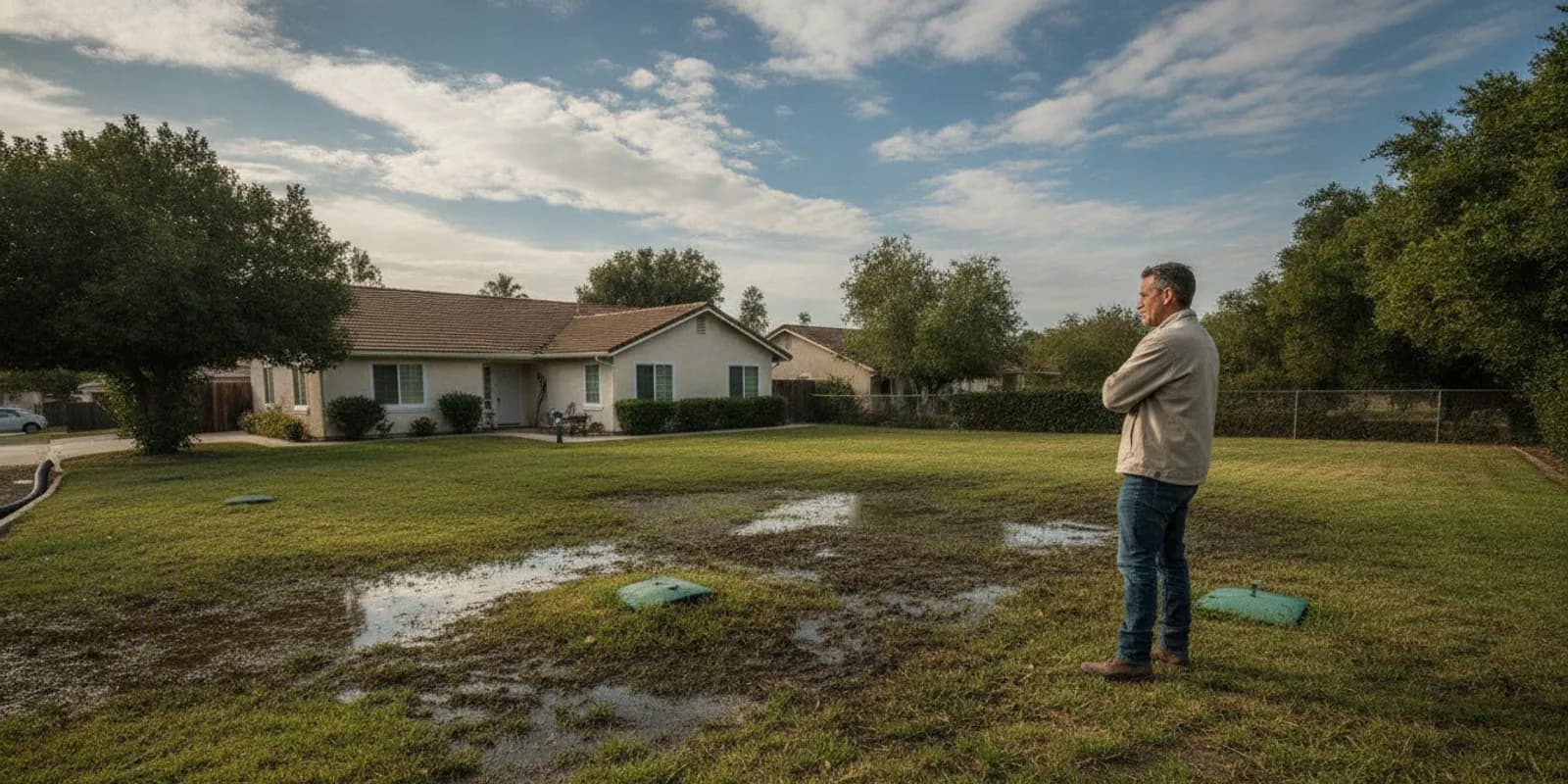
Heavy rain can leave the soil around a septic system saturated, reducing its ability to accept wastewater for a time. Septic system maintenance after heavy rain is mostly about using water carefully, staying off soft ground, and noticing changes without opening or disturbing buried components. These steps can help Ventura County homeowners separate routine observation from signs that need prompt attention.
Request septic system help today
What should you do first after heavy rain?
Begin with safety rather than inspection. Stay away from standing water over the tank or drainfield, especially if it may contain wastewater. Do not remove a tank lid, climb into an access opening, or walk across flooded or soft ground. Septic tanks can contain hazardous gases, and saturated soil may not support a person or vehicle safely.
- Reduce avoidable water use. Pause laundry, long showers, and dishwasher cycles while the yard is saturated or drains are slow. Spread necessary use across the day instead of running several water-heavy activities at once.
- Keep weight off the system area. Do not drive or park on the drainfield, and keep heavy equipment, deliveries, and landscaping work away. Limit foot traffic where the soil is soft.
- Observe from a safe location. Look for pooling, soggy or unusually spongy ground, sewage-like odors, or wastewater surfacing. Do not step into a suspect area to check its depth.
- Check indoor symptoms. Note whether one fixture or several are slow, whether drains gurgle, and whether wastewater backs up. A single slow sink can have a local cause; several affected fixtures deserve closer attention.
- Make a brief record. Write down when the rain started and stopped, when symptoms appeared, which fixtures are involved, and whether the condition is changing. Take photos from a safe distance.
These are sensible first steps, not a diagnosis. A wet patch may be ordinary surface runoff, while a septic issue may not be visible from above. If you need help assessing the system, review the company's septic system service information and share the observations you recorded.
How can heavy rain affect a septic system?
A conventional septic system holds wastewater in a tank, where solids settle, and sends liquid effluent to a soil treatment area. Soil needs to receive and treat that effluent. When the ground is already saturated, it may have less capacity to accept additional liquid. A storm can also expose a drainage or component problem: runoff may flow toward the system, water may enter through a damaged access point, or a pipe may already be obstructed or damaged.
That does not mean every wet yard signals failure. A low spot can collect rain even when the septic system is working. Conversely, a system problem may show up first as slow fixtures or a backup indoors. Consider the timing and combination of signs rather than treating one patch of wet ground as proof.
In Ventura County, rainfall intensity, slope, soil, landscaping, and the system's layout all affect how a property drains. Nearby properties can behave differently after the same storm. Do not use a fixed number of hours or days as a universal rule for when the yard should be dry.
What can you check safely without opening the septic system?
A visual check can help you describe the issue, but it cannot confirm the condition of a buried tank or drainfield. From firm, dry ground, look for patterns in a few areas:
- Yard and drainfield: Note standing water, persistent sogginess, sewage-like odors, or a narrow strip of unusually lush growth compared with nearby grass.
- Indoor plumbing: Note gurgling, slow drainage at several fixtures, or wastewater rising through a toilet, floor drain, or lower-level fixture.
- Visible access points: From a distance, look for a displaced cover, visible damage, or water collecting around a riser. Do not lift or move a cover.
- Surface-water routes: See whether roof downspouts, slopes, or yard drains appear to send runoff toward the tank or soil treatment area.
- Recent changes: Recall whether there was recent excavation, grading, planting, vehicle access, or work on indoor plumbing near the time the symptoms began.
Do not probe the soil with a rod, dig to find pipes, or open an access point. If you do not know where the tank and drainfield are, use available property records or ask a qualified professional to help identify them. The company's leach field repair information explains why an assessment should focus on the actual site condition rather than guesswork.
Which symptoms call for prompt attention?
Contact a septic professional promptly if wastewater backs up into the home, sewage appears on the ground, strong sewage odors persist, or several plumbing fixtures become slow at the same time. Keep children, pets, and visitors away from any wet area that may contain wastewater. If a fixture is backing up, stop using water through that fixture and avoid flushing toilets until the cause is assessed.
If the yard is wet but there are no odors, backups, or plumbing changes, limit nonessential water use and watch from a safe place as conditions change. Continued pooling, symptoms that return after another storm, or slow drains that do not improve are reasons to arrange an evaluation. Do not add chemical drain products or septic additives as a substitute for finding the cause. Avoid pumping based on rain alone; a professional assessment can help determine what work, if any, is appropriate.
For a plumbing symptom that appears limited to a drain, explain whether other fixtures are affected. A professional may need to distinguish a local drain issue from a system-wide concern. Conejo Bros' drain service page provides information about that separate service category, but a drain symptom alone does not establish a septic diagnosis.
How should you use water while the soil is saturated?
When the ground is wet, the goal is to avoid sending several large volumes of household wastewater into the system at once. This is a temporary precaution, not a repair. If the home has no symptoms, focus on modest adjustments: put off a nonessential laundry load, shorten showers, and avoid running the dishwasher at the same time as other water-heavy tasks.
Do not stop essential hygiene or safe household use simply because it rained. Instead, avoid avoidable surges and pay attention to the system's response. Repair leaking toilets or taps when practical, since a continuous leak can send water into the system around the clock. If several fixtures are slow or a backup begins, further limiting water is not enough by itself; contact a professional.
A useful example: if the yard is damp but drains work normally, postpone laundry and check the yard from a safe location later. If a toilet gurgles and a shower drain also slows, stop discretionary water use and report both symptoms. If wastewater backs up, stop using the affected fixtures and seek prompt help rather than waiting for the rain to pass.
How can you tell surface runoff from a septic concern?
Observe where the water sits and what else is happening, but treat these clues as context rather than a test. A puddle beside a downspout or in a known low spot may relate to surface drainage. A wet area over the known drainfield accompanied by sewage odor, unusually lush growth, or indoor backups raises more concern. The shape, smell, or location of a wet patch alone cannot confirm that effluent is surfacing.
Do not redirect a downspout or dig a trench until you know where buried system components are and where the diverted water will go. A quick fix can send runoff toward another part of the system, a building, or neighboring property. If roof or yard water appears to be flowing toward the septic area, describe the slope and drainage route during an assessment. Conejo Bros also provides area drain and yard drainage services; the right remedy depends on site conditions.
What should you tell a septic professional?
Clear information can make an assessment more focused. Before contacting a professional, gather what you know; do not delay an urgent call to complete a checklist.
- The property address and the approximate locations of the tank and drainfield, if known.
- When heavy rain began and ended, and whether symptoms started during the storm or afterward.
- Which fixtures are affected, whether multiple drains are slow, and whether anyone saw a backup.
- Where water is standing, whether there is an odor, and whether the wet area is changing.
- Any recent pumping, system work, excavation, grading, landscaping, or plumbing changes.
- Photos taken from a safe, dry location, if available.
Ask what areas were examined, what observations support the diagnosis, and what the recommended next step is. A professional may need to assess the tank, connecting pipes, soil treatment area, or nearby drainage. Different causes can produce similar symptoms. Pumping alone may not address saturated soil, a blocked line, damaged components, or runoff directed toward the field.
For homeowners in nearby communities, the Thousand Oaks service-area page and Camarillo service-area information offer local service context. The Ventura service-area page is another reference for the broader county region.
How does septic system maintenance differ by situation?
| What you notice | Reasonable first response | When to seek help |
|---|---|---|
| Rain has stopped; no plumbing symptoms | Keep traffic off the field and observe from firm ground. | Arrange an assessment if pooling, odor, or symptoms develop or persist. |
| Yard is saturated; fixtures work normally | Reduce nonessential water use and record where water collects. | Contact a professional if pooling continues, recurs, or changes. |
| Several drains are slow or gurgling | Limit water use and note each affected fixture. | Request prompt evaluation, especially if symptoms worsen. |
| Wastewater backs up or appears outdoors | Stop using affected fixtures and keep people and pets away. | Contact a septic professional promptly. |
| Runoff flows toward the system | Do not dig or reroute water until buried components are located. | Ask for an assessment of the drainage route and system location. |
This table is a triage aid, not a diagnosis. If there is immediate exposure to wastewater or a safety concern, keep people away and contact an appropriate professional or local authority. When symptoms are mild but recurring, a written timeline and site photos can help explain the pattern.
How can you prepare a property for the next storm?
Once conditions are safe and the ground is firm, review how rainwater moves across the property. Keep roof runoff and surface drainage from discharging near the tank or drainfield, while avoiding changes that send water toward a foundation, neighboring lot, or other problem area. Do not place paving, sheds, vehicles, or heavy loads over system components. Avoid deep-rooted planting over the treatment area unless a qualified professional advises that it is suitable.
Keep a simple record of the system location, known maintenance visits, recurring wet spots, and prior symptoms. If you manage a rental or commercial property, share storm precautions with occupants and maintenance crews. Mark the known system area on site plans, explain how to report a backup, and tell workers not to drive or excavate there. Before grading, construction, or landscaping, confirm the location of buried components.
Homeowners who want to understand the available system work can review the company's pages for septic tank pumping and drain camera inspection. These describe different service needs; neither should be assumed necessary just because a storm has passed.
What if a long-term septic issue leads to a larger property project?
Some properties may need planning beyond a post-storm check, particularly if the owner is already considering a system change or construction. A decision about rerouting from a septic system to a city sewer involves more than the appearance of a wet yard. Confirm the actual system condition and local requirements before planning excavation or connection work.
Where a project touches public infrastructure, coordination may involve DWP and city public works, street-lateral replacement, traffic control, City planning and permits, septic-to-city-sewer rerouting, or pre-construction plumbing bids. These are project-specific matters, not immediate storm-response steps. Conejo Bros has a public-works specialists page for readers whose scope involves public works or pre-construction coordination.
Rules and approvals are local. For an example of how requirements vary by jurisdiction, Oklahoma State University Extension summarizes Oklahoma septic system rules and homeowner responsibilities. That resource concerns Oklahoma and should not be treated as Ventura County guidance; check the relevant local authority for California requirements.
Frequently asked questions about septic system maintenance after heavy rain
Should I pump the tank after every major storm?
No. Rain by itself is not a reason to pump. Whether pumping is appropriate depends on the system's condition and use. If symptoms appear, an assessment can help identify the cause and the suitable next step.
Can I use the toilets if the drainfield is wet?
If fixtures work normally and there is no backup, use water conservatively and watch for changes. If wastewater backs up or appears outside, stop using the affected fixtures, keep people away, and seek prompt professional help.
How long should I wait for a wet yard to dry?
There is no single drying time that applies to every property. Soil, slope, drainage, and continuing rainfall differ. Persistent pooling, odors, or plumbing symptoms are more useful reasons to request an assessment than a fixed number of days.
Can I walk across the drainfield to inspect it?
Stay off flooded or soft ground. Observe from a safe, firm location, and keep children and pets away from areas that may contain wastewater. Do not probe or dig to find buried parts.
What details should I provide when I call?
Describe the rainfall timing, affected fixtures, location of standing water, any odor or backup, and recent work on the property. Photos taken from a safe distance can help communicate what changed.
Request a septic system assessment today
After heavy rain, careful observation, reduced nonessential water use, and keeping traffic off saturated soil are sensible first steps. Backups, sewage outdoors, persistent odors, or recurring symptoms call for a professional assessment rather than guesswork.