


Ventura County Septic Regulations and Homeowner Compliance
Buying a home, planning a remodel, or dealing with a slow septic system in Ventura County can raise an immediate question: what needs approval, and what can wait? The answer starts with understanding that a septic system is an Onsite Wastewater Treatment System (OWTS), with county and state requirements covering design, permits, inspections, and repairs.
Ventura county septic regulations generally require homeowners to address permits and professional design for new systems and most alterations. Routine care includes documented maintenance and regular inspections. A qualified review can show whether you need an inspection, repair, or an upgrade before a small issue worsens.
For a broader overview of ownership, pumping, and system care, see our Septic Tank Service Ventura County Homeowner Guide. The first step is knowing which agency interprets and enforces these requirements locally.
Request a septic compliance review today to confirm exactly what your property needs before you start any project.
Who Enforces Septic Regulations in Ventura County
For most homeowners, the local authority behind septic compliance is the Environmental Health Division of the Ventura County Resource Management Agency, or RMA. This division oversees and enforces the county’s local requirements for septic systems, including plan review, construction permits, inspections, and certain repairs or alterations. The county’s septic and wastewater disposal guidance identifies the Environmental Health Division as the agency responsible for local oversight.
Ventura County uses the term onsite wastewater treatment system, abbreviated OWTS, for what most families simply call a septic system. An OWTS is a privately owned and maintained sewage disposal system that treats and disperses wastewater on the property. Knowing both terms matters when you search county records, read permit requirements, or speak with a designer or inspector. A county form may say OWTS even when it applies to the septic tank and drainfield serving your home.
How local rules fit with state standards
Ventura County does not create its requirements in isolation. Statewide OWTS standards were adopted by the State Water Resources Control Board in 2012 and became effective in 2013. Those standards establish a broader water-quality framework while allowing local agencies to manage systems according to local conditions. Ventura County implements that approach through its Local Agency Management Program, or LAMP. The county Board approved the LAMP on August 7, 2018.
The LAMP is the practical reference point for many local septic decisions. It helps the county evaluate whether a proposed, repaired, or existing system protects public health and water quality under Ventura County conditions. If an OWTS does not meet the criteria established in the LAMP, the county may require an immediate upgrade or replacement. That does not mean every older septic system must be replaced. It does mean that a failing system, an unapproved alteration, or a project that changes wastewater demand may need formal review.
Why the current building code matters
Building-code requirements also affect septic approvals. The 2025 Ventura County Building Code is scheduled to take effect on January 1, 2026, so the applicable code can depend on when a project is submitted and reviewed. Before starting construction, remodeling, or a significant septic repair, confirm the current requirements with the county and the qualified professionals preparing the plans. The Ventura County RMA policies page provides the county’s policy documents and links to the governing standards.
In practical terms, the county is the place to verify what your property needs. While a qualified septic professional can help you understand the site conditions and prepare the work correctly. Early consultation is especially important when a project involves a failing system, a change in occupancy, or a repair that could affect the tank, drainfield, or wastewater flow.
When Do You Need a Septic Permit in Ventura County?
Ventura County’s permit question usually depends on what you are changing, not simply on whether a property already has a septic tank. New construction, additions, remodeling, and work that changes how wastewater is collected or treated should be reviewed before work begins. Ventura County’s Environmental Health Division says all new construction and most remodels require an Onsite Wastewater Treatment System (OWTS) construction permit. Alterations or repairs to an existing system typically require consultation and may also require a permit.
That distinction matters because an OWTS must protect public health and groundwater while handling the wastewater a property produces. Total household wastewater volume is a key factor in sizing a new or replacement system. A project that adds bedrooms, bathrooms, or other wastewater-producing uses can therefore affect the design, even when the existing tank appears to be functioning normally. Review the current Ventura County RMA septic FAQ before planning construction.
| Project type | Typical permit trigger | What to do first |
|---|---|---|
| New construction | A new structure connected to an OWTS generally requires a construction permit and current-code review. | Confirm the site, wastewater volume, and system design requirements before finalizing construction plans. |
| Major remodel | Most remodels require a permit, particularly when the project changes occupancy, bedrooms, plumbing fixtures, or wastewater flow. | Ask Environmental Health to review the scope and identify the required application and supporting plans. |
| Repair or alteration | Repairs or alterations typically require consultation and may require a permit, depending on the work and system impact. | Do not excavate or replace components first. Document the problem and obtain county direction. |
| Routine maintenance | Normal pumping and maintenance do not automatically mean a construction permit is needed, but unusual work should be screened. | Keep service records and ask whether planned work is maintenance, an alteration, or a replacement. |
Plan for design review before scheduling construction
When a design is required, Ventura County says it must be prepared by a Registered Civil Engineer, Professional Geologist, or Registered Environmental Health Specialist. The county’s review typically takes about three to four weeks, although application volume can change the timing. Build that review period into a remodel, sale, addition, or replacement schedule instead of treating approval as a last-minute formality.
For a project involving a new or replacement system, see our septic installation regulations resource and the Septic Tank Service Ventura County Homeowner Guide. When the scope is unclear, a documented evaluation and early county consultation can help prevent avoidable redesigns, delays, or unpermitted work.
How Often Are Residential Septic Systems Inspected?
For most homeowners, a septic inspection should be part of routine property care, not something reserved for a sale or an emergency. The EPA encourages homeowners to have their septic system inspected every three years. That interval gives you a practical way to identify buildup, damaged components, drainage problems, or other concerns before they become a sewage backup or a costly repair.
Inspection frequency may need to change based on how the system is used. A larger household, frequent guests, high water use, garbage disposal, older tank, or history of slow drainage can justify a closer maintenance schedule. If you are unsure when the system was last checked, scheduling an inspection now is more useful than trying to estimate from memory.
Inspection and pumping are different services
An inspection evaluates the condition and operation of the tank, drainfield, and related components. Pumping removes accumulated solids. The EPA typically recommends pumping every three to five years, with the actual timing depending on household size and tank capacity. A tank may need pumping sooner even when the property has not reached the three-year inspection mark, while a recent pumping does not replace a complete inspection.
Ask the technician to document the tank location, drainfield location, observed condition, pumping date, and any recommended repairs. The EPA recommends that property owners keep these records. They can prevent guesswork during a remodel, help a future owner understand the system, and make it easier to plan service when warning signs appear. A practical septic system maintenance requirements checklist can help organize those records and recurring tasks.
When should you schedule an inspection sooner?
Do not wait for the next routine interval if you notice foul odors, unusually slow drains, wet areas, or unusually lush grass near the tank or drainfield. You should also arrange an inspection before buying or selling a property when the available records are incomplete. A qualified inspection can clarify what is known about the system and what needs follow-up.
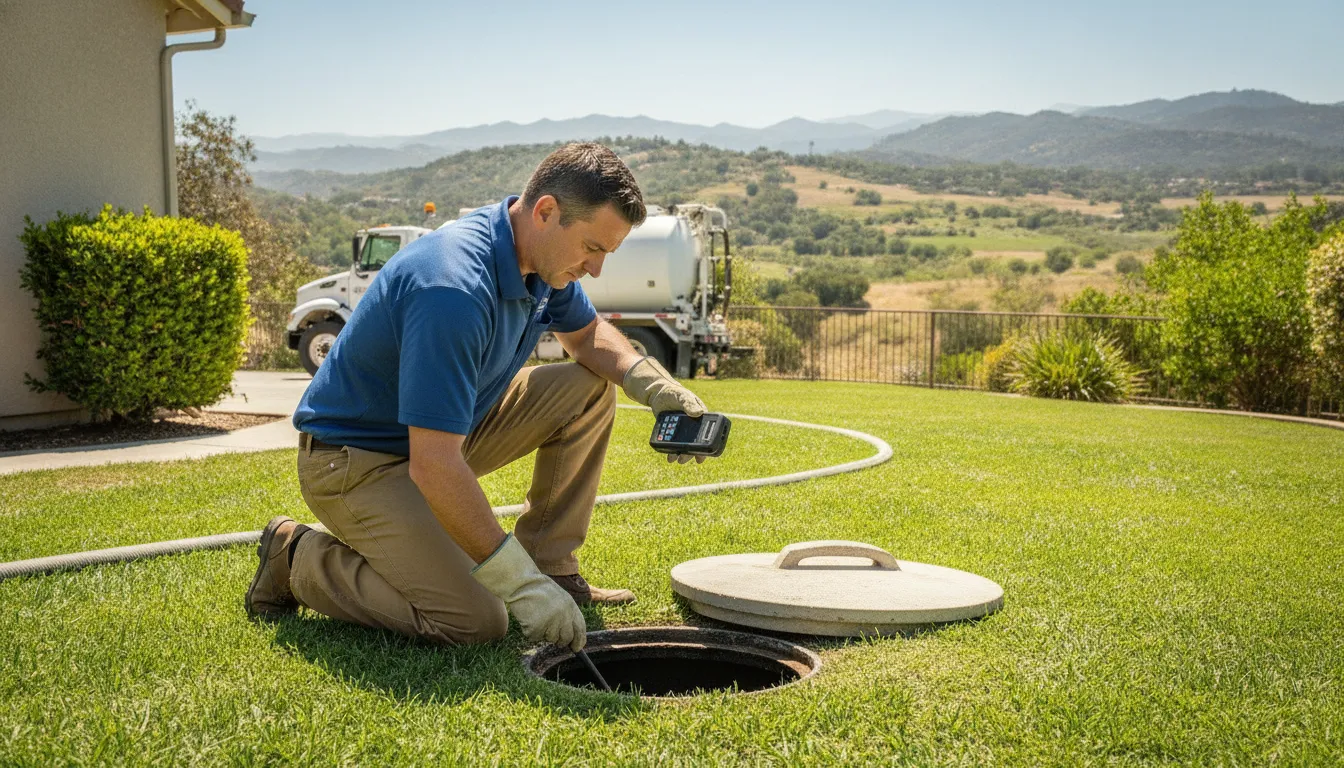
When you schedule an inspection, a thorough visit follows a clear sequence:
- Locate and uncover the tank and drainfield, using the most recent property records.
- Check the tank for sludge and scum depth, cracks, and any leakage around the lid or connections.
- Inspect the drainfield and outflow lines for blockage, standing water, or tree-root intrusion.
- Document the findings, including an inspection date, current condition, and any recommended service.
Ventura County septic regulations are administered locally through the Environmental Health Division of the Resource Management Agency. County records state that two staff members currently handle all OWTS plan checks and inspections. So complete documentation can be especially helpful when a project or repair requires county review. For local service, see Ventura County septic inspections and keep your inspection report with the rest of the property records.
What Ventura County Septic Regulations Mean for Your Property
For a property owner, compliance is not only a matter of having a tank in the ground. The entire onsite wastewater treatment system must be appropriate for the home, the site, and the way wastewater moves through the property. That is why an older system can become a concern when you remodel, change occupancy, investigate a drainage problem, or put the property on the market.
One practical consideration is system capacity. Ventura County identifies the total volume of wastewater produced by a household as a key factor in determining the required size of a new or replacement OWTS. In plain terms, the number of bedrooms, the number of regular occupants, and daily water use can affect the design. A system sized for a smaller household may not be suitable after an addition, a change in use, or a sustained increase in occupancy. The county’s OWTS guidance should be reviewed before planning construction or replacement work.
Soil is another property-specific condition. A drainfield is not simply an area where a contractor places perforated pipe. Soil composition is critical to the treatment and dispersal of effluent. Septic tank effluent can contain nutrients, pathogens, and other pollutants, so it must be treated as it moves through the soil profile of the drainfield. If the soil does not provide suitable treatment or dispersal, the system may need a different design, additional evaluation, or corrective work. The EPA’s SepticSmart guidance explains why soil and drainfield protection matter to long-term system performance.
These requirements can affect older septic systems even when they have operated for years. If an OWTS fails to meet the criteria established by Ventura County’s Local Agency Management Program, it may require immediate upgrade or replacement. That does not mean every aging tank must be replaced automatically. It does mean a failing system, an alteration, or evidence that the existing setup no longer meets applicable criteria should be evaluated rather than covered up with a temporary repair.
Watch for practical warning signs such as recurring slow drains, foul odors, or unusually lush grass near the tank or drainfield. Keep records of the tank and drainfield locations, pumping, inspections, and repairs. When the property’s use or condition changes, early review can clarify whether the existing system remains suitable and help prevent a rushed compliance decision.
Consequences of Failing Ventura County Septic Compliance
A failing septic system creates more than an unpleasant plumbing problem. It can expose a household to sewage, damage the property, and trigger regulatory action when the system no longer protects public health or water quality. Ventura County’s local policies provide that an onsite wastewater treatment system that fails to meet Local Agency Management Program criteria may require an immediate upgrade or replacement. Review the county’s onsite wastewater treatment system policies before assuming a repair can wait.
Health and environmental risks
Septic tank effluent can contain nutrients, pathogens, and other pollutants. The drainfield’s soil profile must treat that effluent before it reaches groundwater. When the system fails, untreated or inadequately treated wastewater may move into the soil, surface water, or groundwater. The EPA warns that a failing septic system can contaminate groundwater and potentially threaten local drinking water supplies. That risk is especially important where private wells or nearby waterways depend on the same groundwater system. See the EPA’s SepticSmart guidance for homeowners for maintenance and failure-prevention recommendations.
Ventura County also identifies the Ventura River Watershed as an area of special concern requiring additional study and stricter management of onsite wastewater systems. Resolution No. R12-011 was added to the Los Angeles Region Water Quality Control Basin Plan in 2013. These watershed protections mean a failing system may receive closer scrutiny than a homeowner expects, particularly when wastewater can affect a sensitive water body.
Property and compliance consequences
Warning signs should not be dismissed as routine drain trouble. Foul odors, slow drains, or unusually lush green grass near the tank or drainfield can indicate a failing system. Excess water use, especially during heavy rainfall, can overload the system and cause wastewater to back up into the house or surface outdoors. The EPA’s SepticSmart guidance for homeowners explains why managing water flow and preventing harmful exposure matter.
Once a failure is documented, an inspection may not simply result in a maintenance recommendation. The county may require corrective work, an upgrade, or replacement before the property can proceed with certain repairs, remodeling, or other compliance steps. A documented failure can also complicate a sale, refinancing, or property evaluation because buyers and inspectors may require proof that the system works and meets applicable requirements. Avoiding the problem usually increases the eventual disruption and cost.
Routine inspections and maintenance help identify problems before they become a health or regulatory emergency. Keep chemicals such as paints, varnishes, and pesticides out of household drains because they can kill beneficial septic-tank bacteria. Early action gives you more options while the system is still repairable.
How Conejo Bros Helps Homeowners Meet County Requirements
Septic compliance is easier when the inspection, field work, and county coordination are handled as one practical plan. Conejo Bros Plumbing helps homeowners across Thousand Oaks. The Conejo Valley and Ventura County understand what their property needs before a repair, remodel, sale, or system upgrade moves forward.
That process can begin with a septic inspection and review of available system records. For a helpful overview of inspections, tank care, and ownership responsibilities, see the Septic Tank Service Ventura County Homeowner Guide. If an existing system needs attention, Ventura County guidance says alterations or repairs typically require consultation with the Environmental Health Division and may require a permit. Conejo Bros can help identify the plumbing and septic scope so you know what questions to take to the county.
Inspection, pumping, and system maintenance
Routine care is the first line of defense. Conejo Bros provides septic inspections, septic tank pumping, and maintenance for residential properties, with septic services available throughout the full service area rather than only in Thousand Oaks. A clear inspection can document the tank, connections, and visible system conditions. Pumping and tank-system maintenance can also help homeowners address accumulated solids before they become a backup or a larger repair.
When an inspection identifies a damaged, undersized, or aging system, the next step may be a repair, replacement, installation, or upgrade. The appropriate design and approval path depends on the property and project. Ventura County states that OWTS designs must be prepared by a Registered Civil Engineer, Professional Geologist, or Registered Environmental Health Specialist. The county’s onsite wastewater treatment system policies provide the governing policy information, while the property-specific plan determines what work is appropriate.
Planning sewer connections and construction work
Some properties eventually need septic-to-city-sewer rerouting instead of continued onsite treatment. Conejo Bros can help coordinate the plumbing scope for that transition, including street-lateral replacement considerations, city public-works requirements, traffic control needs, and permit-related planning. The company also prepares pre-construction plumbing bids, giving homeowners, real estate professionals, and project teams a clearer basis for planning work before construction begins.
This public-works experience matters when a project affects a city right-of-way or must align with DWP and municipal requirements. Conejo Bros approaches the work as a compliance and infrastructure project, not just an isolated plumbing repair. The team can help clarify where county review, city coordination, qualified system design, or additional documentation may be needed. It does not replace the county’s approval role, but it can make the path to that approval more organized.
Conejo Bros Plumbing is identified with the A license and C-42 license, along with contractor license #1108756 (CSLB). For a property-specific review of septic inspections, pumping, installation, upgrades, or sewer conversion planning, homeowners can book a county-ready service with confidence.
Request septic compliance help today for a property-specific review of your inspection, pumping, installation, or upgrade needs.
Frequently Asked Questions
What is an Onsite Wastewater Treatment System (OWTS)?
An Onsite Wastewater Treatment System, or OWTS, is a privately owned and maintained sewage disposal system. It is commonly called a septic system and manages wastewater from a home or other structure. The tank and drainfield work together, so both components matter when evaluating compliance. Ventura County RMA explains the OWTS definition.
Who is qualified to design my OWTS in Ventura County?
Ventura County requires an OWTS design to be prepared by a Registered Civil Engineer, Professional Geologist, or Registered Environmental Health Specialist. Ask which professional classification applies to your site and project before paying for plans. The county uses those plans to evaluate factors such as wastewater volume, site conditions, and the proposed treatment and dispersal method. See the county’s design qualifications.
How long does it take to get OWTS plans approved?
Ventura County says OWTS design review typically takes approximately three to four weeks, although the actual time depends on the number of applications ahead of yours. Build that review period into a remodel, sale, or repair schedule, and allow additional time if the county requests revisions or supporting information. Review the county’s current FAQ.
When do I need an OWTS construction permit in Ventura County?
All new construction and most remodels require an OWTS construction permit. Alterations or repairs to an existing system typically require consultation with the Ventura County Environmental Health Division and may also require a permit. Confirm the requirement before starting excavation or changing plumbing, because an unreviewed project can create compliance and inspection problems. Check the county permit guidance.
Get Your Ventura County Septic System Back in Compliance
Staying ahead of Ventura County septic regulations does not have to be complicated. The right next step is a professional inspection that tells you exactly where your system stands. Whether you need routine pumping, a repair, or an upgrade before a failed county check creates a bigger problem.
Conejo Bros Plumbing serves Thousand Oaks and the surrounding Conejo Valley and Ventura County communities with septic inspections, pumping, maintenance, and compliant repairs. We handle the permitting paperwork, coordinate with county requirements, and keep your family’s system healthy year after year.
Ready to protect your property and your drinking water?
Request your septic compliance inspection today or book a county-ready septic service now. Our team will walk you through what your system needs to stay compliant.
