
Yard Drain Problems Thousand Oaks: What to Check After Rain
By Tiago Alkana
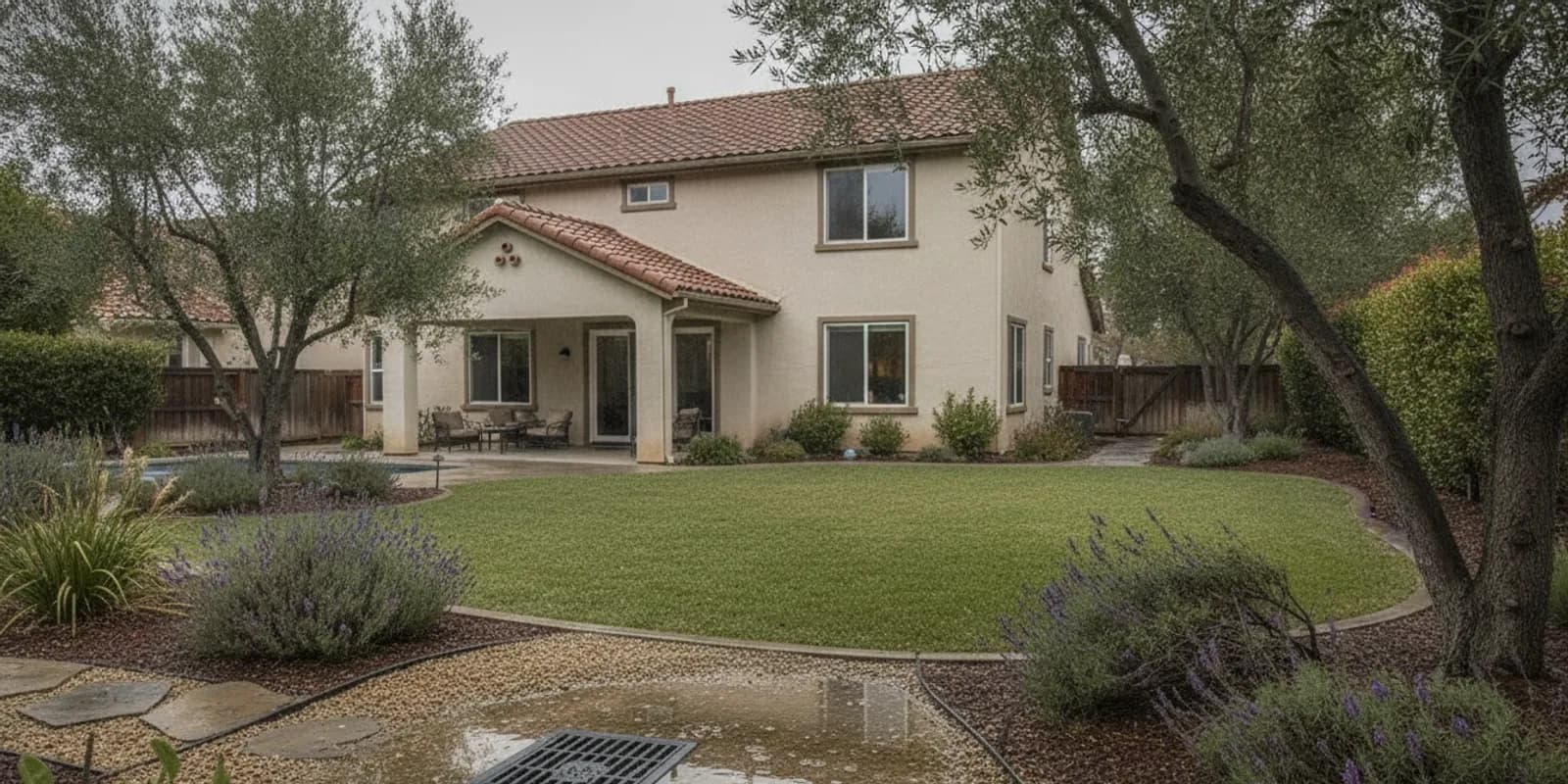
After a storm in Thousand Oaks, a shallow pool near a grate may be ordinary runoff. Or it may signal that an area drain is not moving water as it should. Before touching a cover or entering wet ground, note where water collects, whether it is moving toward the home, and how long it remains after rainfall ends.
Request an area drain assessment today
For yard drain problems Thousand Oaks homeowners should begin with safe observation: keep people and pets away from unsafe water. Clear only loose debris from an accessible surface grate, and record the timing, location, and recurrence of the pooling. These clues help a professional evaluate the drainage system without assuming that a visible symptom proves an underground failure.
The goal is practical triage, not a guess about roots, collapsed piping, or another hidden cause. A careful first look can also show whether the concern is limited to one private area drain or connected to runoff from a broader property or public system.
What should you do first when yard drain problems Thousand Oaks appear after rain?
Start with safety, not a repair attempt. If water is pooling around an entry, retaining wall, electrical equipment, or a neighboring property, keep people and pets away from the area and observe from dry ground. Yard drain problems Thousand Oaks homeowners notice after a storm can involve surface runoff, an area drain, or a connection that cannot be evaluated safely from above.
- Wait for unsafe conditions to settle. Do not walk through standing water, reach into a drain opening, open a buried cleanout, or use electrical equipment in a wet area. Never try high-pressure clearing yourself. Water can conceal uneven ground, debris, and other hazards.
- Make a dry-ground visual check. From a safe position, note whether water is moving toward the house, garage, walkway, street, or a neighboring property. Look for visible leaves or loose debris at the surface, but do not remove anything that requires entering water or reaching into the drain. Stormwater should be managed so it does not damage buildings, property, or neighboring properties.
- Observe the flow for context. Note where downspouts discharge and whether runoff crosses a paved surface. Downspouts can send rainwater directly into the street, and some may connect to underground pipes leading to a storm drain or sanitary sewer. Those connections are not proof of a blockage, so avoid guessing or disconnecting anything during a storm. EPA guidance explains downspout runoff and safety considerations.
- Record what happened. From a safe location, take a few photos or short videos, note when the rain began and stopped, and record whether the pooling recedes. If the condition threatens property, returns after the surface clears, or remains unclear, request a professional evaluation through Conejo Valley drain services, including outdoor and area drains.
This first response preserves useful evidence without turning a post-rain observation into an unsafe DIY diagnosis. A qualified assessment can separate a surface runoff issue from a drainage problem and recommend the next step based on the property.
Which post-rain signs are useful to document?
After conditions are safe, document what you can see without entering standing water or disturbing buried components. A useful record helps separate a one-time surface event from a pattern that deserves a closer evaluation.
- Exact location: Note whether water collected beside the house, near a driveway, at a curb outlet, around an area drain, or in a low part of the yard. Include nearby slopes, paved surfaces, and visible drain covers.
- Timing: Write down when the rain started, when pooling appeared, and how long visible water remained after the rain ended. A water level that falls as drainage occurs is different from water that remains unchanged, but timing alone does not identify the cause.
- Water path: From a safe, dry position, observe where runoff came from and where it appeared to go. Record whether water traveled across a paved surface, emerged from a drain opening, or crossed the property toward the street.
- Recurrence: Compare this event with earlier storms. Repeated pooling in the same location, or the same area drain showing trouble after ordinary rain, is more useful than a single isolated observation.
- Photos and notes: Take wide photos that show the location and closer photos of visible surface conditions, if doing so is safe. Add the date, approximate time, weather, and any changes you observed as the area dried.
These observations can document symptoms and help a professional understand the sequence of events. They cannot prove that an underground pipe is damaged, establish ownership of a street drainage feature, or identify the correct repair by themselves. Regular inspection and maintenance can reduce the chance of site flooding, but homeowner observations should remain a safe record. Not a reason to open buried cleanouts, use electrical equipment in wet areas, or attempt high-pressure clearing. For yard drain problems Thousand Oaks residents see repeatedly, a clear observation log supports diagnostic-first advice without guessing at hidden causes.
How can you maintain an accessible area drain between storms?
Between storms, keep maintenance focused on what you can see and reach safely. Remove leaves, mulch, and loose surface debris from the grate or inlet without lifting heavy covers or opening buried components. Check whether nearby soil, mulch, or newly added landscaping is directing water toward the opening, away from it, or against a structure. Conditions vary by property, so a routine that works in one Thousand Oaks yard may create runoff problems in another.
Downspouts deserve a separate observation. Note whether water is discharged onto a driveway, toward an area drain, or into a landscaped space. The EPA explains that downspouts can send runoff across paved surfaces into the street, or connect to underground pipes leading to a storm drain or sanitary sewer. If you consider redirecting one, first account for the destination, local rules, slope, and potential effects on buildings or neighboring property. The EPA notes that downspout disconnection is not appropriate for every location. Review the EPA guidance on redirecting downspouts before changing the setup.
| Safe maintenance | Unsafe or out-of-scope action |
|---|---|
| Clear visible debris from an accessible grate and record the date. | Opening a buried cleanout, lifting a heavy cover, or entering standing water. |
| Observe downspout discharge, runoff paths, erosion, and changes after landscaping. | Rerouting water without considering local rules, slope, structures, or neighbors. |
| Follow any property-specific maintenance schedule for swales, basins, planters, or disconnected downspouts. | Assuming every stormwater feature has the same maintenance needs. |
| Request professional evaluation when debris removal does not resolve recurring symptoms. | Using electrical equipment in wet areas or attempting high-pressure clearing yourself. |
Stormwater features such as swales, basins, planters, and disconnected downspouts require regular maintenance to keep functioning. Keep a short record of debris removal, rainfall timing, pooling location, and landscaping changes. That history helps separate ordinary surface upkeep from a recurring drainage concern without guessing at an underground cause.
When does standing water become a property-risk signal?
A puddle is not automatically evidence of a failed buried drain. It becomes more concerning when the same pattern returns after ordinary rain, lasts well after nearby areas have drained, or grows instead of receding. Regular inspection and maintenance can reduce the chance of site flooding, but the visible symptom still needs to be interpreted in context.
Watch for changes around the property
Document repeated pooling near a foundation, retaining wall, walkway, driveway, or other structure. New erosion, exposed soil, washed-out mulch, soft ground, or settling along a suspected drainage path also deserves attention. These signs can indicate that runoff is concentrating where it may damage buildings, property, or neighboring lots. They do not, by themselves, identify whether the concern is an area drain, surface grade, or another water source.
Pay attention to water that moves quickly, crosses a walking path, reaches an entrance, or appears contaminated. Keep children and pets away from unsafe or fast-moving water. Do not enter standing water, use electrical equipment in a wet area, open a buried cleanout, or attempt high-pressure clearing. If the area is unsafe, observation should stop rather than become a do-it-yourself inspection.
Know when observation is no longer enough
A single shallow pool after an intense storm may be worth recording and watching from a safe location. Repeated pooling, worsening erosion, settling, or water approaching a structure is a reason to request professional help before the next storm. Conejo Bros Plumbing serves outdoor drains and area drains in the Thousand Oaks area; its Thousand Oaks service information can help you understand the local service context.
When you report the issue, describe what changed, how often it returns, where the water travels, and how close it gets to a structure. Those observations help a professional evaluate the drainage system without treating a risk signal as a diagnosis.
What should you gather before requesting area drain service?
A little preparation helps a technician evaluate the drainage system without relying on guesses. It also helps separate a surface issue from a problem that may involve buried piping. Before requesting service for yard drain problems in Thousand Oaks, gather the following information while conditions are still fresh.
- Photograph the area from a safe location. Take wide photos showing the affected yard, driveway, gutter, curb, nearby structures, and visible drain openings. If water is present, do not enter it or approach an electrical hazard. Photos taken before the water recedes can help show the location and extent of pooling.
- Record the timing and pattern. Note when the rain started, when pooling appeared, how long it remained after the rain ended, and whether the same area has been affected before. Include whether water seems to come from a downspout, slope, driveway, or neighboring property. These observations are useful evidence, but they do not prove what is happening underground.
- Describe the recent history. Write down any landscaping, grading, construction, drain work, recurring debris, or prior service connected with the area drain. Mention whether the drain serves a yard, driveway, gutter, or line that runs toward the curb. This context can help define the appropriate scope.
- Keep access safe and visible. Clear loose surface debris only where you can do so without entering standing water, opening a buried cleanout, digging, or using electrical equipment in a wet area. Do not attempt high-pressure clearing. Conejo Bros provides professional drain clearing and can determine whether additional evaluation is appropriate.
- Ask what evidence and scope will be provided. Request a thorough evaluation, an explanation of the findings, and a clear recommendation before approving major work. The company's diagnostic-first approach may include camera inspection before major interventions and video documentation for transparency. Ask whether drain jetting is actually suitable, rather than assuming a method from the symptom alone. You can also review available service information before the visit.
For local help with an outdoor area drain in Thousand Oaks, provide the photos and notes when you contact the team. Clear evidence supports a focused conversation about the problem and the work that is genuinely needed.
When might a yard drain concern involve public works?
Not every drainage symptom belongs to the same system. A pool beside your home, driveway, or landscape area is a private-property observation. Water moving toward a curb inlet, crossing a street, collecting in a public sidewalk area. Or involving a street-side grate may also involve public right-of-way or municipal stormwater assets. Downspouts can discharge onto paved areas, and some may connect to underground pipes leading toward a storm drain or sanitary sewer. So the visible water path does not prove who owns the underground line. EPA guidance explains these downspout connections and runoff considerations.
Document what you can see from a safe location: where the water starts, where it travels. Whether a public inlet is overflowing, and whether the condition remains after rainfall ends. Do not enter standing water, lift a street grate, open a buried cleanout, or attempt to modify a curb connection. Those actions can expose you to traffic, contaminated water, electrical hazards, or infrastructure that is not yours to alter.
Know when permits or traffic control may matter
Replacing or changing drainage features such as catch basins, downspouts, or stormwater piping may require a plumbing trade permit; local requirements vary by jurisdiction. Public-right-of-way work can also require municipal approval and traffic control. The safest next step is to report a suspected street or public-works issue to the appropriate city channel, while keeping private-property observations separate. Stormwater should be managed to avoid damage to buildings, your property, or neighboring properties.
For a private outdoor drain that runs toward the curb, a professional evaluation can clarify the service boundary without guessing. Conejo Bros Plumbing provides public works specialists for situations involving city coordination, permits, and related drainage planning in Thousand Oaks and the Conejo Valley.
How can a homeowner avoid repeating the same drainage problem?
Prevention starts with treating each storm as useful information. After rainfall, make a brief note of where water collected, how long it remained, and whether the same area became wet again during the next ordinary shower. Regular inspection and maintenance can reduce the chance of site flooding, but a single observation cannot identify an underground fault. Look for patterns without assuming the cause.
Keep visible grates, pop-up outlets, and surrounding surfaces free of loose leaves, mulch, and soil when they can be reached safely. Check nearby downspout discharge areas and landscaping for changes that redirect water toward a building or neighboring property. Stormwater features need regular maintenance to continue performing as designed, and the right schedule depends on the property's specific conditions. A large lot, recent landscaping, or a shared drainage route may require a different routine than a small residential yard.
Record maintenance dates and note whether surface cleanup changed the symptom. If an area drain works normally after light rain but repeatedly pools after routine storms, preserve those notes. If the same problem returns soon after maintenance, keep the photos. They give a professional a clearer starting point than a general report that the drain is "bad." Conejo Bros provides drain services for outdoor and area drains. The team can evaluate the system before recommending a solution.
Use a diagnostic-first boundary: safe surface observations and routine upkeep are reasonable. But do not enter standing water, open buried cleanouts, use electrical equipment in wet areas, or attempt high-pressure clearing. When recurrence continues, request an evidence-based evaluation rather than repeating an unverified fix. That approach keeps maintenance practical while leaving concealed conditions to qualified service.
Request professional help for recurring standing water
Frequently Asked Questions
What can I safely check after rain?
From dry ground, look at where water collected, which direction it traveled, and whether the area drain or yard drain grate is visibly covered. Take a few photos from a safe distance and note whether water is still moving. Do not enter standing water, open a buried cleanout, use electrical equipment in a wet area, or attempt high-pressure clearing.
Should I remove loose leaves and debris from an area drain?
If the grate is easy to reach from stable, dry ground, you can remove loose surface leaves and similar debris without taking the drain apart. Do not dig around the drain, lift heavy covers, or reach into standing water. If the cover remains blocked, the water does not recede, or debris returns quickly, document the condition and request a professional evaluation.
How long should I watch standing water before requesting help?
There is no safe universal waiting period because soil, slope, drain design, and rainfall differ. Note whether pooling is recurring, spreading, eroding soil, approaching a building, or creating an unsafe walking area. A repeated pattern is useful evidence, even when the surface looks clear between storms. And can help a technician evaluate the drainage system rather than guess at an underground cause.
How do I tell whether a drainage concern is private or public?
Start by noting whether the water is confined to your property or also affects a curb, street inlet, sidewalk, or neighboring property. Do not alter a connection or reroute runoff based only on appearance. Underground pipes can connect to storm-drain or sanitary-sewer systems, and changes to drainage features may involve local rules. A municipal concern may need the appropriate public-works contact, while private area-drain symptoms can be evaluated on site.
What should I prepare before requesting area drain service?
Gather photos, the approximate rainfall date, where water first appeared, how long pooling lasted, and whether the same location has recurred. Clear safe access to the visible drain without entering wet areas, and note any nearby structures or erosion. Share what you observed and ask for a thorough evaluation and evidence-based recommendation. This helps distinguish routine area-drain maintenance from a condition requiring further diagnosis.
Ready to Request an Area Drain Assessment?
Post-rain observations can help clarify where water is collecting, but an experienced assessment can separate surface debris from a deeper drainage concern. Conejo Bros Plumbing can help you plan the next practical step for your Thousand Oaks property. Request an area drain assessment today and share what you observed, when it occurred, and whether the problem has returned.