
Why Yard Drains Back Up During Heavy Rain in Thousand Oaks
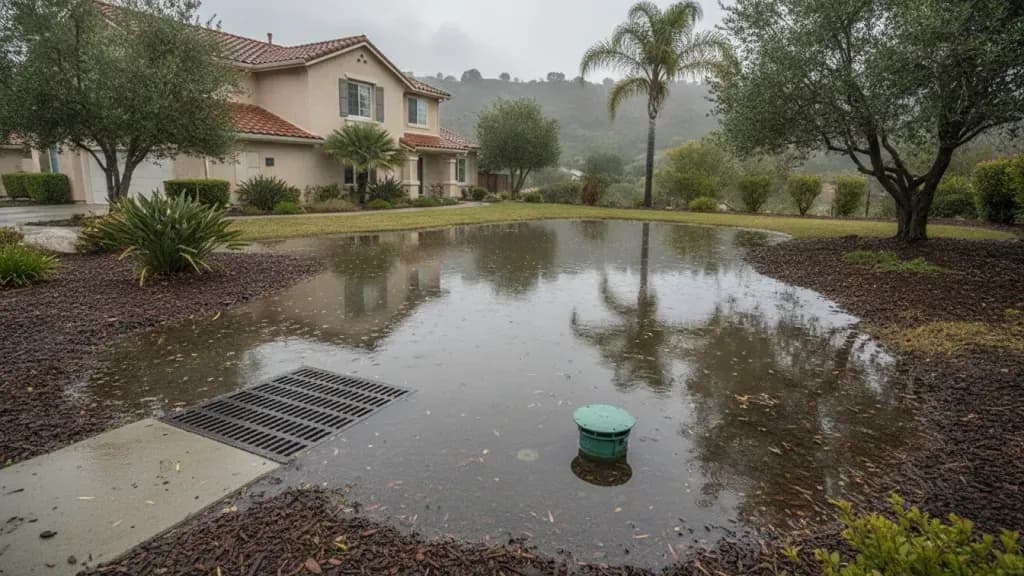
Yard drains back up during heavy rain in Thousand Oaks when water enters the system faster than the line can move it, or when debris, roots, pipe damage, slope problems, or a blocked pop-up outlet restricts flow. A short-lived puddle may need surface cleanup, but recurring backup calls for a closer look at the drain line.
Request storm-related drainage help today
Conejo Bros Plumbing calls these outdoor systems area drains because they serve the yard, walkways, driveways, and other parts of the property. For broader background on outdoor drain cleaning across the region, read the yard drain cleaning guide for Ventura County. This article takes a narrower approach: why a Thousand Oaks drain fails when a heavy storm suddenly sends a large volume of water across the property, and how to decide what should happen next.
Why do yard drains back up during heavy rain in Thousand Oaks?
Heavy rain exposes drainage problems that may stay hidden during dry weather. A partially blocked area drain can appear to work normally for weeks, then overflow when leaves, roof runoff, and hillside water arrive at the same time. The backup may start at the grate, inside the underground pipe, at the outlet, or where a damaged line no longer carries water correctly.
Thousand Oaks properties can also have different elevations, mature landscaping, hardscape, and compacted soil in the same yard. Those conditions change where water collects and how quickly it reaches a drain. The most useful first question is not simply whether the grate is dirty. It is whether the water is blocked at the surface, slowed inside the line, or unable to discharge at the far end.
Debris, silt, and mulch reduce the opening
Leaves, pine needles, soil, mulch, grass clippings, and small stones can cover a grate or fill a catch basin. During a storm, water carries even more material toward the inlet. A drain that is only partly open may become a complete restriction within minutes. This is the simplest cause to check, but surface debris is not always the whole problem. If the water returns after the grate is cleared, the obstruction may be below ground.
Tree roots enter a cracked or separated pipe
Roots look for water in the soil and can enter a small joint gap or crack. Once inside an outdoor drainage line, they catch additional soil and organic debris. The result is often a recurring backup rather than a one-time storm problem. Root intrusion can also make water drain slowly between storms, create a wet strip along the buried route, or cause the same area to overflow after every significant rain.
A crushed, offset, or collapsed section stops flow
Older pipe, ground movement, a heavy load above the line, or an unstable trench can deform an underground drain. A cable may pass through a damaged section temporarily without restoring the system's capacity. If the drain backs up even after professional clearing, or if the same section repeatedly traps debris, a camera inspection can show whether the line needs repair rather than another cleaning.
The slope, outlet, or system capacity is not working correctly
An area drain needs a clear route and a functional discharge point. A pop-up emitter can be buried, stuck closed, surrounded by compacted soil, or blocked by roots. A pipe can also have a low spot where sediment settles. In some yards, a downspout or hardscape change sends more water toward an existing drain than the original layout was designed to handle. These problems require more than removing leaves from the grate.
How can you tell which problem is causing the backup?
The location and timing of standing water provide useful clues, but they do not replace inspection when the backup is underground. Watch what happens at the beginning of the storm, after the grate is cleared, and after rain stops. Those patterns help separate a surface blockage from a restriction or failure farther along the line.
| What you notice | What it may indicate | What to check next |
|---|---|---|
| Water pools directly over the grate | Leaves, mulch, silt, or a full catch basin | Clear only loose surface debris if it is safe to do so, then watch the flow |
| The grate is clear, but water rises again quickly | A blockage inside the line or a restricted outlet | Have the line evaluated with appropriate drain-clearing equipment |
| The same drain overflows after every major storm | Roots, sediment, a low spot, or a damaged section | Consider camera inspection after the immediate blockage is controlled |
| Another part of the yard is wet along the pipe route | A crack, separated joint, or leaking underground section | Locate and inspect the buried drainage line before digging |
| The pop-up outlet never opens or discharges | A blocked emitter, buried outlet, or problem near the end of the run | Trace the outlet and inspect the line instead of adding chemicals |
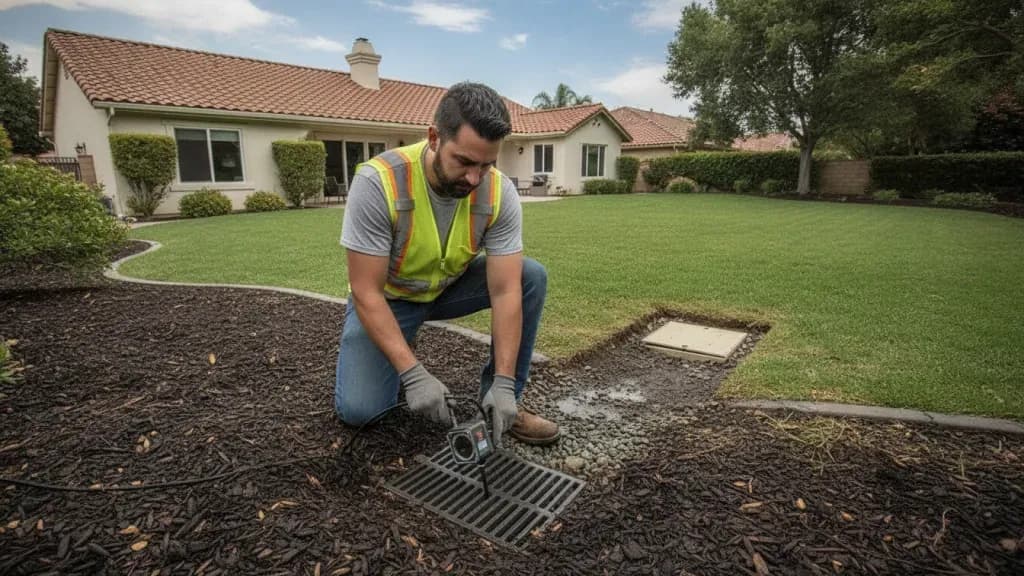
A camera-led inspection helps separate a surface clog from an underground drainage problem.
Do not assume that every storm backup needs the same fix. A grate can be clean while the pipe below is packed with silt. A line can also be open near the house but blocked at the outlet. The right service depends on where the restriction is and whether the pipe itself remains structurally sound.
What should you do when a yard drain backs up during a storm?
When a yard or area drain backs up, protect people and property first, then document the pattern before the water disappears. Avoid standing in moving water, keep electrical equipment away from wet areas, and do not remove a heavy grate while water is actively surging. A few safe observations can give a technician a better starting point.
- Move valuables and outdoor equipment. Keep tools, furniture, toys, and stored items out of the flow path. If water is moving toward a doorway, use temporary barriers only if they can be placed without entering unsafe water.
- Look for a surface obstruction from a safe position. If loose leaves or mulch are covering the grate, remove them with a tool only when the area is stable. Do not reach into an opening or use your hands to search for a blockage.
- Check whether the outlet is discharging. If you know where the area drain ends, look for water at the pop-up outlet or other discharge point without walking through flooded areas. No discharge can point to a restriction farther down the line.
- Record the timing and location. Note whether the backup starts immediately, whether it affects one drain or several, and how long standing water remains after the rain stops. Photos from a dry, safe location can help show the pattern.
- Skip chemical drain cleaners. These products are not a dependable solution for an outdoor drainage line filled with soil, roots, or a damaged pipe. They can also create a hazard for anyone who later has to inspect or clear the system.
Book a Thousand Oaks drain inspection now
Which service does a blocked yard drain need?
A blocked yard drain may need professional snaking, hydro jetting, camera inspection, or pipe repair. The purpose of the first visit is to identify the restriction and restore flow without guessing at a more extensive repair. Conejo Bros Plumbing provides drain clearing and repair services for outdoor systems as well as indoor drains.
Professional snaking for a reachable blockage
Snaking can open a line when the blockage is accessible and the pipe is suitable for the equipment. It may be a practical first step for a localized obstruction. Snaking does not, by itself, prove that roots, heavy sediment, or pipe damage are gone. If the line repeatedly backs up, the next step may be inspection or a more thorough cleaning.
Hydro jetting for stubborn buildup and roots
Hydro jetting uses high-pressure water to break up and flush deposits from inside a drain line. Conejo Bros Plumbing describes hydro jetting for sewer and area drains and uses different nozzle configurations for the job. It can be useful when silt, roots, or accumulated material is restricting flow, but the pipe should be assessed first when damage is suspected. See the drain jetting service page for more on this method.
Camera inspection for recurring storm backups
A drain camera lets a technician see conditions that cannot be confirmed from the grate. The inspection can help locate root intrusion, a break, an offset joint, a low spot, or remaining debris. Conejo Bros Plumbing's drain camera inspection service is designed to document the condition of the line and guide the repair recommendation.
Drainage pipe repair when the line is damaged
If the pipe is cracked, crushed, separated, or repeatedly failing after cleaning, repair may be more useful than another clearing visit. The repair approach depends on the location, material, access, and condition of the line. The drainage pipe repair guide explains why a camera-led diagnosis should come before choosing between a targeted repair, trenchless work, or excavation.
When is a yard drain backup an urgent plumbing problem?
A yard drain backup needs prompt attention when water is moving toward the home, collecting beside the foundation, entering a garage or living area, undermining soil, or remaining after the storm. It is also important to act when several drains back up at once, sewage odors appear, or the same drain fails repeatedly. These signs can indicate a larger drainage or sewer issue rather than a small amount of leaf debris.
Do not wait for the next storm if you see erosion, a sinkhole-like depression, a persistently wet strip over a buried line, or a drain that has stopped working completely. A professional can determine whether the problem is an outdoor area drain, a main drain, a sewer connection, or another part of the property drainage system. If the issue is affecting multiple indoor fixtures as well as the yard, treat it as a plumbing service call rather than a landscaping task.
How does Conejo Bros Plumbing diagnose a Thousand Oaks yard-drain backup?
Conejo Bros Plumbing starts with the symptoms, the property layout, and the condition of the visible drain components. The goal is to match the least disruptive effective service to the actual cause. Homeowners in Thousand Oaks can request help through the local service area page, and the team also serves nearby Conejo Valley and Ventura County communities.
- Review the storm pattern. The technician asks where water collects, how quickly the backup occurs, whether the issue repeats, and whether other drains are affected.
- Inspect the visible components. The grate, catch basin, pop-up emitter, cleanout, and surrounding grade can reveal surface debris, damage, or a discharge problem.
- Clear the restriction when appropriate. Snaking or hydro jetting may restore flow when the pipe is accessible and structurally suitable.
- Verify the line when the problem is recurring. A camera inspection can document roots, cracks, offsets, sediment, or a collapsed section that would otherwise be easy to miss.
- Explain the repair options. The recommendation should distinguish a one-time clearing from a repair or drainage improvement, so the homeowner can make an informed decision before work begins.
This process is different from simply pushing a blockage farther down the pipe. It focuses on why the line failed during the storm and what will help it handle the next heavy rainfall more reliably.
Request a yard-drain diagnosis before the next storm
Frequently Asked Questions
Why does my yard drain only back up when it rains hard?
A yard drain may back up only during heavy rain because a partial restriction still allows normal dry-weather flow. A surge of runoff can overwhelm a line narrowed by silt, roots, debris, a low spot, or a blocked outlet. If the water recedes slowly or the problem repeats, schedule an inspection instead of waiting for another storm.
Can I clear a yard drain with a garden hose?
A garden hose may rinse loose surface material from an accessible grate, but it usually cannot diagnose or clear an underground blockage. If water rises immediately, the line backs up again, or the outlet is not discharging, stop adding water and have the system evaluated safely.
How do I know whether roots are blocking my area drain?
Recurring backups, slow drainage after the grate is clear, and a wet strip along the buried pipe can be consistent with root intrusion. Those signs are not proof by themselves. A camera inspection can show whether roots entered the pipe and whether the line also has a crack, offset joint, or other damage.
Should I use chemical drain cleaner in an outdoor drain?
Chemical drain cleaner is not a dependable choice for soil, roots, or a damaged outdoor drainage pipe. It can create a safety hazard and does not correct a crushed pipe, poor slope, blocked outlet, or undersized drainage route. Professional clearing and inspection are safer ways to identify the cause.
When should I call a plumber for a yard drain backup?
Call a plumber when the backup threatens the home, remains after rain, affects more than one drain, produces an odor, causes erosion, or keeps returning after surface debris is removed. Prompt diagnosis can distinguish a simple blockage from a damaged drainage line before the next storm makes the problem worse.
Keep the next storm from becoming yard damage
A yard drain that fails once may need cleaning, but a drain that repeatedly backs up during heavy rain deserves a cause-based diagnosis. Clearing the visible grate, tracing the outlet, and documenting the pattern are useful first steps. When the problem is below ground, professional snaking, hydro jetting, camera inspection, or drainage pipe repair can restore a safer path for stormwater.
Schedule fast storm-related drainage help today
Conejo Bros Plumbing serves Thousand Oaks and surrounding Conejo Valley and Ventura County communities with drain, sewer, septic, and plumbing support for residential and commercial properties.