
Emergency Plumbing Shutoff Planning for Conejo Valley Property Managers
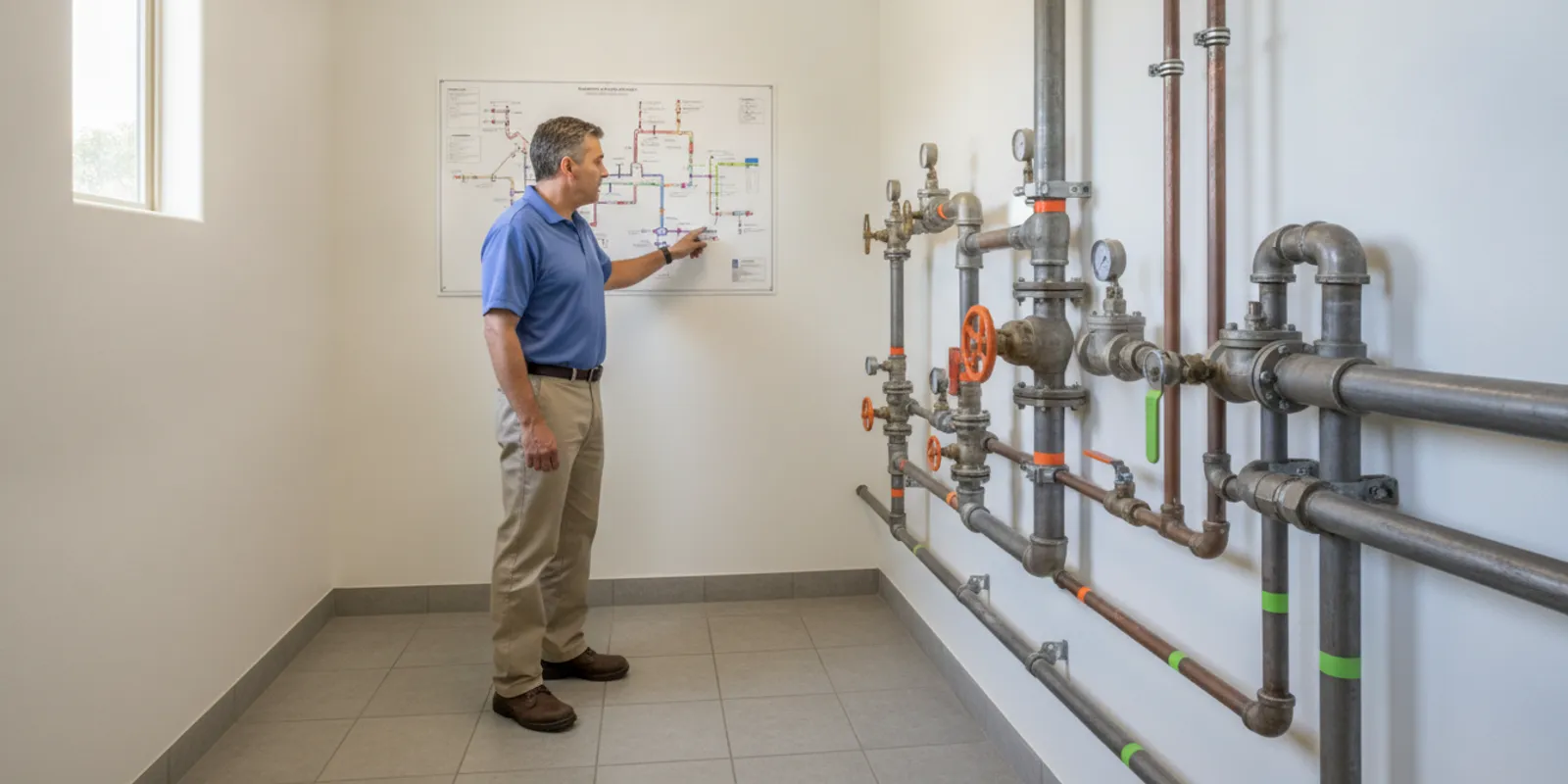
A property manager emergency plumber Conejo Valley response plan begins before a leak or backup. Staff should know how to find verified shutoffs, who may access secured rooms, and what information to collect. A useful plan does not replace professional judgment; it gives the team a clear, safer sequence when time matters.
Request help with a building plumbing concern
Why does a property manager emergency plumber Conejo Valley plan start with shutoffs?
Water can move from a fixture into cabinets, corridors, ceilings, or neighboring units. In a multi-unit property, a valve may isolate a single fixture, one apartment, a floor branch, or a larger part of the building. Staff should not have to guess which one during an incident.
Start by gathering available drawings, maintenance notes, and renovation records. Compare them with the actual building. Records can become outdated after tenant improvements or equipment replacements, so label the map with a verification date and distinguish confirmed information from assumptions. If a valve’s function is unclear, have a qualified plumbing professional identify it.
A shutoff plan is also an access plan. A mapped valve is of little use if the utility room is locked and no authorized person can reach the key. Document access responsibilities and escalation contacts while keeping sensitive codes and keys out of public view.
How should you document a plumbing shutoff plan apartment building staff can use?
Design the document for quick scanning. Keep a controlled master copy with property records and an appropriate current copy available to authorized responders. Include a simple building or floor plan, but pair it with plain-language directions and photographs because a diagram alone may be hard to interpret under stress.
- Identify the location. Record the property, building or wing, floor, unit, and room. Include a landmark such as “utility closet beside the east stairwell.”
- Name the control consistently. Use terms such as fixture isolation, unit branch, floor riser, or domestic main only when the function has been verified.
- State the known coverage. Describe what the control serves and what it does not serve, if confirmed. Do not imply that a valve shuts down an entire building without verification.
- Show the route and access needs. Note locked doors, required keys, restricted areas, and the role responsible for access.
- Mark uncertainty clearly. Use a visible “unverified” note rather than letting a guess appear authoritative.
- Track ownership and revisions. Name the role responsible for updates and record the last field check.
For example, a useful entry might read: “Laundry room, north wall, behind secured service door. Verified laundry branch; access key held by on-call facilities lead. Last checked: [date].” Do not include combinations or other sensitive access credentials on a sheet available to residents or visitors.
Use readable labels and photographs that show the surroundings, not just a close-up of a handle. Avoid relying on color alone. A staff member should be able to match the image to a real location even when lighting is poor or the person has not visited that room before.
Which shutoffs should property teams locate and verify?
Building systems differ, so make a property-specific inventory rather than copying another site’s assumptions. Ask a qualified professional to identify uncertain controls and explain their coverage. Common categories to investigate include:
- The main water shutoff serving the property, where accessible and identified.
- Branch or riser controls serving a floor, wing, or group of units.
- Fixture or appliance isolation valves that may limit a localized leak.
- Water-heating equipment controls, handled in accordance with the equipment instructions.
- Exterior hose connections and irrigation controls where a leak could affect the building or grounds.
Do not ask staff to operate unfamiliar, damaged, hot, electrically hazardous, or hard-to-reach equipment. If water is near electrical equipment, keep people away and follow the property’s life-safety and utility procedures. The written plan should clarify who to contact, not encourage unsafe improvisation.
What should staff do when a leak or plumbing failure is reported?
A consistent intake sequence helps the property team prioritize people, reduce confusion, and pass useful details to the responder. Tailor it to the building’s emergency procedures.
- Assess immediate safety. If people, electrical systems, or structural areas may be at risk, keep occupants clear and use the appropriate emergency process.
- Capture the report. Record the caller and callback details, exact location, start time if known, what is affected, and whether water is actively flowing.
- Protect nearby areas if safe and authorized. Restrict access and move vulnerable contents only when doing so does not expose staff to hazards.
- Use only a known, authorized control. Follow the documented procedure. If the valve is uncertain or does not operate normally, stop and seek professional guidance.
- Contact the appropriate responder. Explain symptoms, access arrangements, known shutoffs, and actions already taken.
- Document the outcome. Record discovery and arrival times, affected areas, photos where permitted, work performed, and follow-up needs.
For a plumbing concern, the property contact can review the company’s plumbing services and provide the location and access details when requesting assistance. Avoid diagnosing the cause from a short report; a wet ceiling, for example, identifies a symptom and location, not necessarily the source.
How should a building plan for drains and sewer backups?
A wastewater backup calls for a different response than a pressurized supply leak. Multiple slow fixtures, wastewater at a low fixture, or a recurring problem in shared areas are useful observations to report, but they do not by themselves prove where the blockage is. Avoid repeated use of affected plumbing until the situation is assessed, keep occupants away from contaminated water, and follow the property’s sanitation procedures.
Record which fixtures are involved, whether the issue affects one unit or several, when it began, and whether it has happened before. Do not pour chemicals into a drain as a substitute for diagnosis; they can create handling hazards and complicate service. Note whether a cleanout or secured access area is known, but do not open or enter an unsafe area.
When setting up the response directory, keep the company’s drain service information and sewer service information accessible to the authorized team. Staff can describe patterns and affected locations while leaving the determination of the cause to an inspection.
How can property managers prepare before an after-hours call?
Preparation matters when a responder needs to find the right entrance, reach a secured room, or contact a decision-maker. Create a concise incident sheet for each property. Include the address, building names, entrance instructions, on-site contact, utility-room access arrangements, verified shutoff locations, resident communication procedures, maintenance history, and roles authorized to approve work.
Make a separate access note if necessary so that sensitive details remain restricted. Confirm who is on call and who can make decisions if that person is unavailable. A list of names without responsibilities can leave a responder waiting while staff search for authority.
Prepare a short intake template: property and unit; observed symptom; when it began; whether the condition is active; people or areas affected; verified actions taken; safe access instructions; and decision-maker contact. For a backup, add which fixtures are affected and whether the condition is recurring. Share only the resident information needed to assess and access the issue.
What should a property manager emergency plumber Conejo Valley relationship include?
Build a useful service relationship before an incident. Establish how the property team should describe urgent concerns, what access information to provide, and who can authorize work. Clarify how plumbing, drain, and sewer reports are routed so that the initial description reaches the appropriate team. Do not assume a particular arrival time or result unless it has been expressly confirmed.
Conejo Bros Plumbing serves residential and commercial customers in the Conejo Valley and Ventura County with plumbing, drain, sewer, septic, and trenchless services, and offers 24/7 emergency availability. The contact page is a starting point for sharing a service request. A clear request includes the property address, affected area, symptoms, when they began, whether water is still flowing, known shutoff actions, access arrangements, and authorized decision-maker.
For planned maintenance or a developing concern, separate what is urgent from what can be scheduled through the property’s normal process. If the issue involves an area drain or water entering from outside, include where water is collecting and its path; the company refers to yard drains as area drains. This detail helps the responder understand the report without assuming the cause.
What public-works issues should a property manager route separately?
Some work may involve public infrastructure or municipal coordination rather than only building plumbing. When a concern appears to involve a street lateral or a connection to a public system, record the location and observations and ask which agency or property party is responsible before authorizing disruptive work. Do not assume the property team can direct work in a public right-of-way.
Conejo Bros Plumbing has a public-works specialist section covering DWP and city public works, street-lateral replacement, traffic control, City planning and permits, septic-to-city-sewer rerouting, and pre-construction plumbing bids. These topics can require coordination beyond a routine building leak response; clarify the project scope and applicable authority for the specific site.
How often should you review the shutoff plan?
Review the map after plumbing work, unit renovation, access changes, or a report that a valve does not match the record. Include a brief check in the property’s regular maintenance process. Confirm signs remain readable, access is not blocked, and contact roles are current. A qualified person should verify any changed system or uncertain valve rather than relying on an informal test.
When staff turnover occurs, make the plan part of onboarding for anyone likely to respond. Show where the current copy is stored, which controls have been verified, when staff must not attempt a shutoff, and how to reach the decision-maker. Avoid turning orientation into an unsupervised equipment test.
What does a useful response checklist compare?
This table is a planning aid, not a diagnosis. Staff should follow property safety procedures and professional instructions.
| Reported issue | First property-team focus | Information to record | Next step |
|---|---|---|---|
| Active water leak | People safety and safe containment | Location, flow, affected areas, known valve action | Contact plumbing support; use only verified controls |
| One slow fixture | Identify fixture and whether others are normal | Fixture, onset, recurrence | Request assessment if it persists or worsens |
| Several fixtures or low-point backup | Limit use of affected plumbing; protect occupants | Fixtures involved, spread, history, access | Arrange drain or sewer evaluation |
| Unclear valve or unsafe area | Keep people clear | Hazard, access barrier, observed condition | Do not improvise; seek qualified help |
For general information on protecting water quality and public health, consult the U.S. Environmental Protection Agency at EPA.gov. Follow applicable local requirements and the property’s own safety procedures for a specific incident.
Property teams can also make the plan operational through short scenario reviews. Choose a hypothetical event, such as water appearing below an upstairs laundry room, and have the on-duty person locate the correct map entry, identify who controls access, and read back the facts they would relay. Do not simulate an actual valve operation unless qualified staff have approved a safe procedure. The purpose is to find missing information: perhaps the map names a room that has since been renumbered, or the on-call list points to an outdated role. Record each gap and assign an owner and due date for correction.
After a real incident, conduct a brief factual review while details are fresh. Compare the documented valve location and coverage with what the responder found, note whether access instructions worked, and capture any new maintenance or repair information. Keep observations separate from conclusions; for instance, “water stopped after this valve was operated” is an observation, while the exact source of the leak may still need professional confirmation. Update the controlled plan only after verification, preserve the revision date, and distribute the current version to authorized users. This turns an emergency into a measured improvement rather than relying on memory the next time.
Think of the response directory as three connected layers: site facts, incident facts, and authority. Site facts guide a responder to the right building entrance, room, and verified control. Incident facts explain what staff observed, when it began, what areas are affected, and what has already been done. Authority identifies who can permit access, make decisions, and approve work. A directory missing any one layer can slow coordination even if the other information is accurate.
For example, a night report might say, “Water is visible in the corridor outside unit 204.” That is a useful start, but the team still needs to establish whether the water is spreading, whether anyone is at risk, which floor or spaces are affected, whether an authorized person can reach the service room, and who can make decisions. Record confirmed facts and mark unknowns as unknown. Clear uncertainty is safer than filling gaps with a guess.
Frequently asked questions
Should every employee be allowed to operate the main shutoff?
No. Define authorized roles and provide clear instructions. Staff should not operate a control they cannot identify, reach safely, or use within their authority.
What should staff do if a shutoff does not stop the leak?
Do not keep forcing a damaged or unfamiliar valve. Keep people away from hazards, document what is happening, and contact qualified plumbing help. Follow emergency procedures if there is an immediate safety risk.
How can we tell whether a backup is a drain or sewer problem?
Patterns such as several affected fixtures can help describe the situation, but they do not confirm the cause. Record what is affected and arrange an appropriate professional assessment.
What information should be ready for an after-hours request?
Have the property address, exact affected location, symptoms and start time, safe access instructions, known shutoff information, and authorized decision-maker contact ready. Share only details needed to assess and access the problem.
Request plumbing, drain, or sewer assistance today
Set up a practical next step
Assign one staff role to maintain the shutoff map, access notes, and response contacts at each property. Share the current incident sheet with authorized personnel so a leak or backup does not begin with a search for basic information.
A clear plan helps property teams communicate useful details and bring in qualified help when a building plumbing, drain, or sewer concern needs attention.