
Restaurant Drain Cleaning Ventura County: Kitchen Grease Clogs and Home Drain Problems
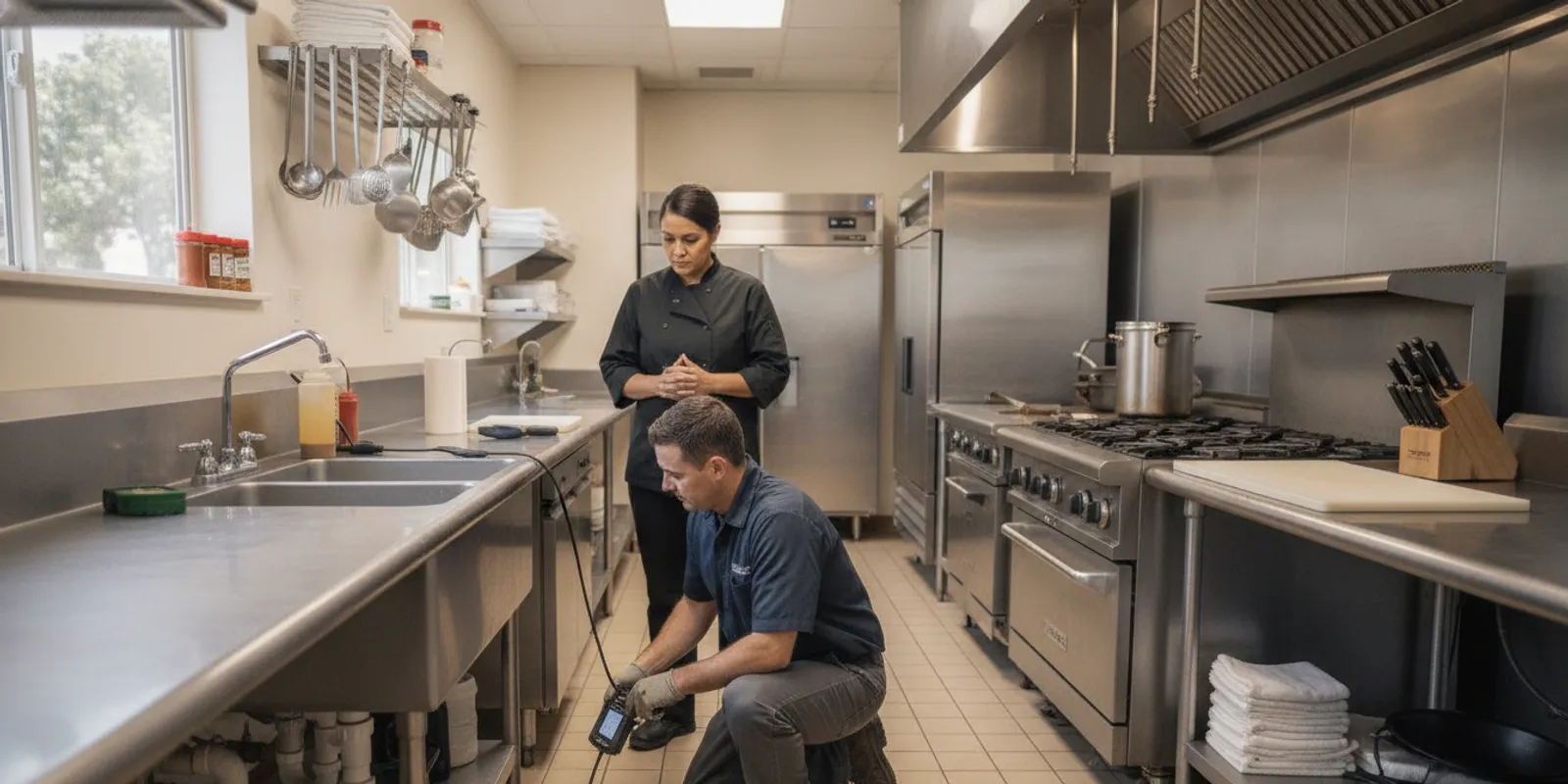
Grease can turn an ordinary kitchen sink into a slow, smelly, or backed-up drain. Restaurant drain cleaning Ventura County businesses rely on starts with understanding where grease collects and whether the problem is limited to one fixture or has moved farther into the plumbing. The same warning signs can show up at home, especially when oils, fats, and food scraps regularly go down the sink.
Request help with a grease-clogged drain
A little prevention helps, but recurring clogs are not always a matter of using the wrong household trick. Grease can coat pipe walls, catch other debris, and restrict flow over time. This guide explains the warning signs, practical habits for kitchens, and when professional drain clearing or hydro jetting may be worth discussing. It also shows how commercial kitchens and household drains differ, so you can describe the problem clearly when requesting help.
How can kitchen routines limit repeat grease trouble?
For a restaurant, good drain habits work best when they are part of the closing and cleanup routine, not an occasional reminder after a clog. Keep a designated container or disposal process for used oil and grease, and make sure staff know not to pour it into a sink or floor drain. Scrape plates and cookware before washing, and remove food scraps from strainers and baskets rather than washing them through the plumbing.
Assign someone to check that sinks and floor drains are flowing normally and that drain access points remain clear. If a sink begins to slow, record the location and time, and report it before the line stops draining completely. A short log can note which fixtures were affected, whether the symptom followed a busy service period, and whether earlier clearing seemed to help. That record gives a technician context and can help managers identify a recurring pattern.
At home, the same principles are easy to adapt: collect cooking oil instead of pouring it away, wipe greasy pans before washing, and use a sink strainer for scraps. Avoid pouring grease into a floor drain, storm drain, or toilet as an alternative. These steps reduce what enters household plumbing, but they do not replace service when water is already backing up or a clog repeatedly returns. Prevention is most useful before a restriction develops; once symptoms appear, track them and choose an appropriate response rather than relying on repeated quick fixes.
Why does kitchen grease clog plumbing?
Cooking fats and oils may be liquid while warm, but they can cool and cling to plumbing as they move through a drain. Grease can build up in a sink trap, a branch line, or farther along the drain system. Each small amount can leave residue. Over time, that coating can narrow the passage and catch food particles, soap residue, and other material that should not have entered the drain.
That is why a drain may continue to work for a while even when buildup is forming. Water might drain more slowly, then seem to improve temporarily, before the same fixture clogs again. A brief improvement does not necessarily mean the grease has been removed from the line. If the restriction remains, new debris can stick to it and the symptoms can return.
Grease-related blockages can also be mistaken for a simple sink clog. A homeowner may see standing water in one basin, while a restaurant may notice a floor sink or several connected fixtures draining poorly. Those symptoms do not prove the exact cause or location. A technician may need to determine whether the obstruction is local to the fixture or farther into the drain.
What signs point to a grease-related drain problem?
Look for a pattern rather than one isolated slow drain. Common clues include:
- Slow draining after cooking: The sink takes longer to empty, particularly during busy meal preparation or cleanup.
- Recurring stoppages: A drain clears for a short time, then slows or blocks again.
- Unpleasant odors: Food residue and buildup in a drain can create persistent smells near a sink or floor drain.
- Gurgling or bubbling: Air and water may have trouble moving through a partially restricted line.
- More than one affected fixture: If nearby drains back up together, the issue may involve a shared branch or a larger section of plumbing.
- Water backing up during use: A sink, floor drain, or other low fixture may be affected when another fixture is draining.
Notice when the trouble appears and which fixtures are involved. For a food business, note whether the issue follows a heavy prep or cleanup period, whether the floor drain is affected, and whether sinks share the same symptoms. At home, note whether the kitchen sink alone is slow or if nearby fixtures are also acting differently. These details help a drain professional assess the situation without guessing based on one symptom.
How does restaurant drain cleaning Ventura County address recurring grease?
Restaurant drains face frequent use, repeated food preparation, and rapid cleanup. The volume and routine are different from a typical household kitchen. Grease management is part of daily operations, but even careful staff can encounter a restriction when buildup accumulates in plumbing or a blockage develops beyond the sink itself.
A useful response begins by identifying the affected fixtures and the timing of the problem. Staff can stop using a sink that is backing up, keep people away from standing wastewater, and alert the person responsible for maintenance. Avoid adding more water to a drain that cannot carry it away. Record what happened and whether the issue returns after a prior clearing. These observations help a technician decide what inspection or clearing method is appropriate.
Professional drain clearing is often a reasonable starting point when a line is blocked and the immediate goal is to restore flow. If grease is recurring or the restriction appears substantial, a technician may discuss a more thorough cleaning approach, including hydro jetting where appropriate. The right option depends on the line, access, condition, and what an assessment finds; it is not a one-size-fits-all choice.
Conejo Bros Plumbing provides drain clearing and high-pressure drain jetting. A description of the symptoms and affected fixtures can help the team understand whether a visit is warranted. If the issue is urgent or a backup is actively affecting a kitchen, make that clear when you reach out.
What can homeowners and kitchen staff do before calling?
Small habits can reduce the amount of grease that enters a drain. They will not clear a blockage already in the line, but they can help avoid adding to it.
- Keep fats and oils out of the sink. Let used cooking oil and grease cool, then collect and dispose of them through an appropriate local waste route. Do not rinse pans so that grease flows down the drain.
- Scrape food scraps into the trash or designated organics container. A strainer can catch larger scraps, but it does not make a sink suitable for disposing of grease or food waste.
- Wipe greasy cookware before washing. Removing residue with a paper towel or other suitable method reduces what reaches the sink.
- Keep drains and access points usable. Do not cover a floor drain or cleanout with equipment, storage, or mats. Access can matter if the line needs professional attention.
- Respond early to a change in flow. A drain that repeatedly slows deserves attention before it becomes a full backup.
- Share one routine with everyone using the kitchen. A consistent approach to oil, scraps, and cleanup is more effective than relying on one employee or household member to remember.
Avoid relying on caustic drain chemicals or improvised combinations of cleaning products. They may not remove a deep grease restriction and can create hazards for people handling the drain or for a technician who later works on it. Do not mix cleaning products. If water is backing up, stop using the affected fixture and seek appropriate professional guidance rather than repeatedly flushing the line.
When is professional drain clearing or hydro jetting safer?
Call a drain professional when the blockage returns after a basic clearing, several connected fixtures are affected, wastewater is backing up, or the source is not clear. A professional can assess the line and select an approach based on the blockage and the plumbing conditions. Avoid treating hydro jetting as an automatic next step. The condition of the line and the nature of the restriction matter.
Drain clearing and jetting are related but not identical decisions. Clearing focuses on opening a blocked drain. Hydro jetting uses high-pressure water to clean the inside of a suitable line. An assessment helps determine whether jetting fits the situation and whether another method is more appropriate. Ask what the technician expects to address, how the line will be accessed, and whether follow-up inspection is recommended if the problem recurs.
What if a drain is actively backing up?
For a restaurant, stop using the affected sink or nearby fixtures and follow the business's cleanup and food-safety procedures. Keep food, utensils, and clean surfaces away from wastewater, and prevent customers or staff from walking through a wet area. Do not continue running water to test whether the line has cleared. If a floor drain is affected, note whether other drains are backing up at the same time and share that information with the service team.
At home, stop using the affected fixture and keep children and pets away from wastewater. Avoid using a chemical drain opener before calling for help, especially when water is standing in the sink or the cause is unclear. A description of what backed up, where it appeared, and whether other fixtures are affected is more useful than repeatedly trying different products. If the issue is confined to one fixture, say so; if the backup occurs when another fixture runs, mention that too.
| Situation | What it may suggest | Practical next step |
|---|---|---|
| One sink is slow once | A local obstruction or early restriction is possible | Stop grease disposal, note the symptoms, and monitor for recurrence without forcing water through a blockage. |
| The same sink clogs repeatedly | Some buildup or an unresolved restriction may remain | Request professional drain clearing and explain the history of prior stoppages. |
| Several fixtures or a floor drain are affected | The issue may be beyond an individual sink or involve a shared line | Limit water use in affected fixtures and arrange an assessment. |
| Grease-related restrictions keep returning | A more thorough cleaning approach may be worth evaluating | Ask whether hydro jetting is suitable for the specific line and what the assessment shows. |
| Wastewater is actively backing up | Continued use could spread the backup or increase cleanup needs | Stop using affected fixtures, protect people from contact, and seek prompt professional help. |
The table is a guide to deciding what information to share, not a diagnosis. A smell alone, for example, does not establish that grease is the cause. A technician may recommend checking the line before selecting a clearing method. Learn more about drain camera inspection and the options for sewer inspection and repair when the symptoms suggest a larger line concern.
How should a restaurant prepare for a drain service visit?
A few details can make it easier to explain what is happening and plan access. Before requesting service, gather the following where possible:
- List each affected fixture. Distinguish the prep sink, dishwashing sink, floor sink, and any other drain that is slow or backing up.
- Describe the timing. Note when the symptoms began, whether they are constant, and whether they become more noticeable during busy periods.
- Share prior work. If the drain has been cleared before, explain when the problem returned and what was done, if known.
- Identify access and safety concerns. Tell the team about standing wastewater, equipment that may need to be moved, and any access restrictions.
- Keep the work area available. Follow safe procedures for isolating the affected sink or floor area while waiting for service.
Property managers can also document repeated incidents and tell staff who should report a change in drainage. That record can help identify a recurring pattern without assuming that every stoppage has the same cause. If a problem appears to involve a sewer line rather than only a kitchen fixture, the sewer clearing service information can help you understand the related service category.
What is different about a home kitchen grease clog?
The basic mechanism is similar at home: oils and fats can collect in plumbing, and the residue can catch other material. The scale and frequency of use are usually different, but a household sink can still develop recurring clogs, odors, and slow drainage. If one sink is affected and other drains work normally, the obstruction may be near that fixture. If multiple fixtures are involved, mention that when asking for help because it may point to a broader issue.
Do not assume that a garbage disposal makes grease or scraps safe to send down the drain. A disposal can break up some food waste, but it does not prevent grease from cooling and sticking farther along the plumbing. Use the disposal according to its instructions, scrape excess food into the appropriate bin, and keep cooking oils out of the sink.
For a persistent problem, a professional can help determine whether ordinary drain clearing is sufficient or whether another service should be considered. See the company's drain cleaning information and, for broader household plumbing concerns, its plumbing service overview. General service information is also available on the service area page for nearby Ventura County communities.
How do public works and sewer connections affect a property?
Not every drain concern starts or ends inside a restaurant or home. Work involving public infrastructure, a street lateral, or a connection to a city sewer can require coordination beyond clearing a kitchen drain. Conejo Bros Plumbing serves public-works needs involving DWP and city public works, street-lateral replacement, traffic control, City planning and permits, septic-to-city-sewer rerouting, and pre-construction plumbing bids. These are separate project needs from a routine kitchen sink stoppage, so explain the property, scope, and any known city requirements when requesting information.
For more on this work, visit the public works specialists page. A property that uses an onsite septic system may need a different evaluation from one connected to municipal sewer; see the company's septic service information when that applies.
How can you compare drain service options?
There is no single method that fits every grease clog. Use the discussion with a service professional to understand what is being proposed and why. Useful questions include:
- What observations suggest the restriction is grease, and where might it be?
- Is the problem limited to one fixture, or could it involve a shared branch or larger line?
- Would drain clearing address the immediate blockage, or does the recurring pattern call for further evaluation?
- Is the line appropriate for hydro jetting based on its condition and access?
- How will we know whether flow has been restored, and what should we watch for afterward?
- What routine changes are practical for this kitchen to reduce grease entering the drain?
For general service information, Conejo Bros Plumbing lists its plumbing and drain service details. Ask the team to explain the work and any applicable scope before proceeding. Avoid assuming that a method or result is guaranteed from a short description of symptoms.
Restaurant and property owners looking for local service providers can also review the Better Business Bureau's drain cleaning listings near Ventura, California. A directory listing is one place to begin your research; confirm directly that a provider handles the type of drain and service your property needs.
Request drain service information from the Conejo Bros Plumbing team
Frequently asked questions
Can grease cause a drain to smell before it stops?
Yes. Residue and trapped food material can produce odors while water still drains. Odor by itself does not confirm a grease clog, but a persistent smell together with slow or recurring drainage is useful information to share with a drain professional.
Does hot water remove grease from plumbing?
Hot water may move some residue temporarily, but it does not reliably remove a buildup farther along the line. Grease can cool and collect again. Keep fats and oils out of the sink and seek professional help if the restriction recurs.
Is hydro jetting always the best choice for a grease clog?
No. Hydro jetting may be considered for an appropriate line, but the line's condition, access, and the nature of the restriction matter. A technician should assess the situation and explain why a method is suitable rather than treating it as a default for every clog.
What should I do if a restaurant floor drain backs up?
Stop using the affected fixtures, keep people away from wastewater, and tell the person responsible for maintenance. Note which drains are affected and whether the issue began during kitchen use. Contact a professional promptly, especially if the backup is active or spreading.
When should I call about a kitchen grease clog?
Reach out when a drain repeatedly slows or blocks, multiple fixtures are involved, odors persist alongside drainage problems, or water is backing up. Describe what you observe and any prior clearing so the team can understand the issue.
Contact Conejo Bros Plumbing to discuss a recurring kitchen drain problem.
Keeping grease out of drains and responding early to changes in flow can help kitchens avoid preventable disruption, while recurring clogs deserve a careful assessment of the line and the right clearing method.