
Seepage Pit Repair Conejo Valley: Septic Seepage Pit Problems and Repair Signs in Conejo Valley
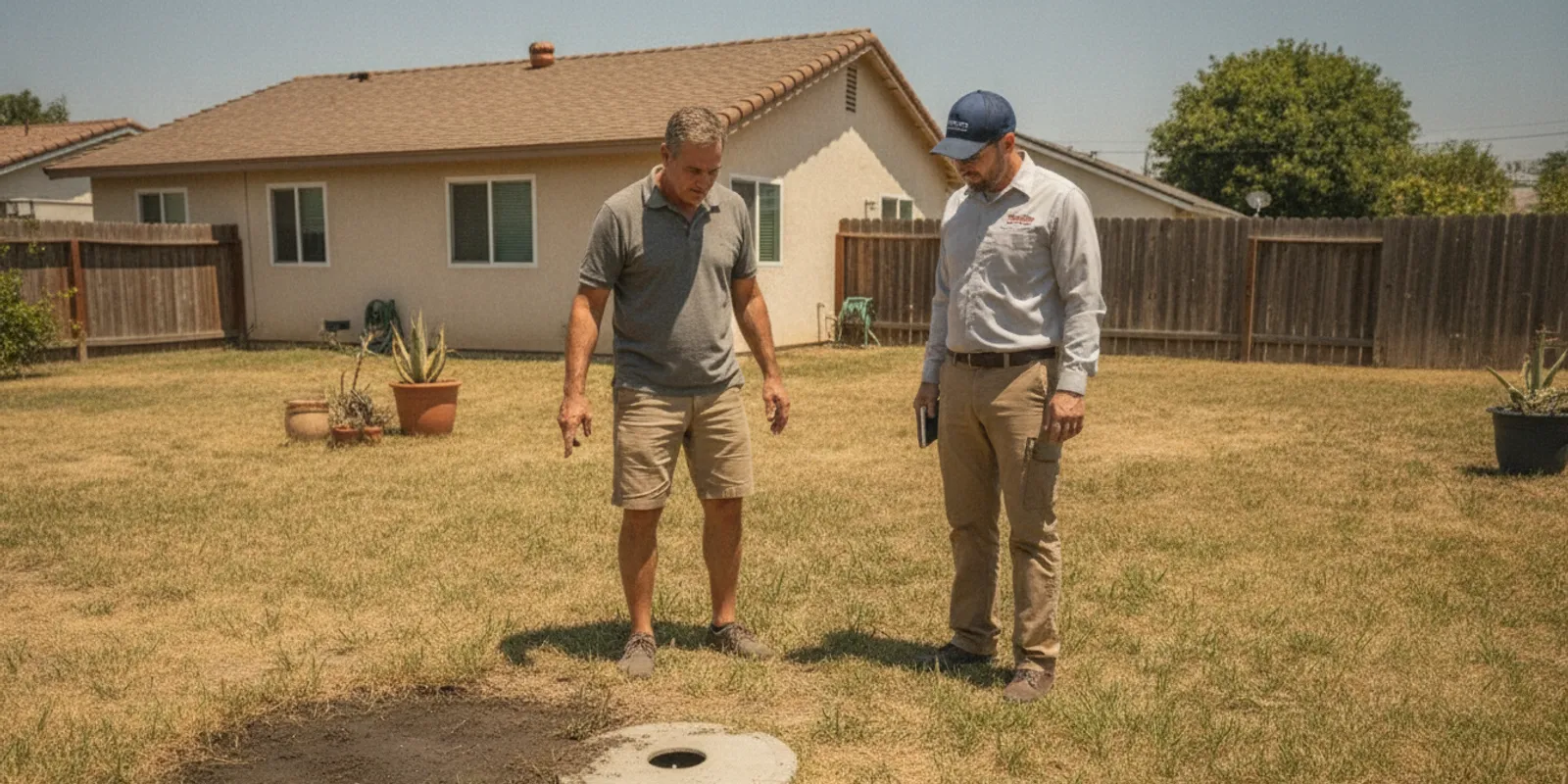
Seepage pit repair Conejo Valley homeowners may be considering starts with a careful diagnosis, not a guess based on one wet patch or odor. A slow drain, recurring sewage smell, or unusually soft ground can indicate a septic concern, but those signs can also come from plumbing, weather, irrigation, or another part of the system. Knowing what to notice—and what not to assume—helps you choose a sensible next step.
Request help with septic symptoms today
What does a seepage pit do in a septic system?
A seepage pit is a wastewater dispersal component used in some onsite septic systems. Wastewater first passes through the tank, then moves through connected piping to a dispersal area where the surrounding soil receives it. A pit concentrates that dispersal in a particular location. Other properties use a leach field or a different configuration, so the correct explanation depends on the system installed at the home.
The parts work together, but they do different jobs. A tank holds wastewater and allows solids to settle. Pipes carry effluent between components. A seepage pit or leach field receives and disperses it. A restriction or failure in one part can affect how the whole system behaves. For an overview of the company’s septic system services, start with the system type and component involved rather than assuming every septic problem is a tank problem.
Because the components are underground, homeowners may notice symptoms only after wastewater flow, soil conditions, or a component’s performance changes. A visible symptom can help narrow where to look, but it cannot confirm that a pit is the cause. That distinction matters: a repair directed at the wrong component may not resolve the underlying issue.
What septic seepage pit problems can homeowners notice?
Look for a pattern over time and consider where it occurs. A single clue has limited diagnostic value; several recurring clues together are more useful to describe during an assessment.
- Recurring sewage odor: A persistent smell near a septic area deserves attention. Odor may also come from a vent, drain, tank, or other plumbing issue, so location and timing are useful details.
- Ground that stays wet or soft: A persistently soggy patch close to a known system component can point to drainage trouble. Recent rain, irrigation, a broken water line, or surface grading can also create wet ground.
- Several slow drains or gurgling fixtures: When multiple fixtures change at once, the issue may be farther along the shared flow path. One slow sink or shower may instead have a local obstruction.
- Wastewater backing up: A backup is a prompt to reduce water use and seek help. It signals that flow is not behaving normally, but it does not identify the pit as the cause.
- Unusual pooling or vegetation changes: A recurring wet area or a change in plant growth near the dispersal zone is worth noting. Neither appearance proves a septic failure by itself.
- Symptoms that return after service: If the same problem comes back soon after tank service or a drain is cleared, explain what was done and when. Ask whether the full flow path was assessed.
Keep a short record rather than relying on memory. Note the date symptoms started, where odors or wetness appear, which fixtures are involved, whether the pattern changes after heavy water use or rain, and any recent service. This helps distinguish a one-time event from a repeating condition and gives the professional a clearer starting point.
If wastewater is backing up indoors, limit water use and arrange prompt assessment. Keep children and pets away from standing wastewater or visibly affected ground. Avoid direct contact, and do not try to open, enter, or dig around a tank or pit.
How does seepage pit repair Conejo Valley homeowners need differ from pumping?
Septic tank pumping removes accumulated contents from the tank when service is needed. It is maintenance for the tank; it does not repair a seepage pit, a connecting pipe, or a dispersal area. Pumping may be appropriate in some circumstances, but it cannot establish on its own that wastewater is moving and dispersing correctly beyond the tank. Learn about septic tank pumping separately from repairs to downstream components.
A seepage pit concern is about the path or area receiving wastewater after it leaves the tank. The assessment may need to consider whether a connection is restricted or damaged, whether the pit or dispersal component is functioning as intended, or whether another issue explains the symptoms. The exact work depends on what the evaluation finds and on the system’s construction and site conditions.
| Possible concern | What it involves | What an assessment can help clarify |
|---|---|---|
| Tank maintenance | Accumulated material in the septic tank | Whether tank service is appropriate and whether symptoms have another cause |
| Seepage pit concern | Wastewater movement through the connection or dispersal component | Whether a restriction, damaged connection, or pit-related issue needs attention |
| Leach field concern | Dispersal across a wider field area | Whether field conditions or another system component better explains the symptoms |
| Building drain or sewer concern | A restriction in a fixture drain, building drain, or connecting line | Whether the trouble is local or affects a shared flow path |
These problems can share warning signs. For instance, multiple slow drains could reflect an obstruction, a tank-related concern, or a downstream dispersal problem. A drain camera inspection may help assess certain accessible pipe sections, but no single diagnostic method answers every question about an onsite system. Ask what the inspection covers and what it cannot establish.
For general service context, review the company’s service and pricing information. A general service listing is not a site-specific diagnosis or repair recommendation; the scope of work should follow the condition found.
Why does inspection matter before seepage pit repair Conejo Valley?
An inspection helps connect a symptom to a component before repair is recommended. The useful question is not only “What is wet?” but also “Where does wastewater travel, what parts are present, and what evidence points to the source?” A system-wide view can reduce the risk of treating a symptom while missing a blockage or another cause.
Depending on the property and problem, an evaluation may consider the system layout, known access points, recent service history, piping, tank condition, and dispersal component. The type of access and testing needed will vary. A homeowner should not open a tank or pit to gather information; simply sharing available records or pointing out known locations is safer.
Before the visit, prepare a simple timeline. For example: “The yard became soft beside the marked septic area three days after heavy rain; the house drains are normal; the smell is strongest in the evening.” Or: “Two bathrooms began gurgling after laundry use, and the issue returned a week after the tank was serviced.” These descriptions do not diagnose the fault, but they help an evaluator compare possible causes and decide where to look.
Useful records can include the dates and nature of prior pumping or repairs, a site plan or permit paperwork if you have it, and notes about which fixtures are affected. Do not delay reporting an active backup while searching for old documents. If you know the approximate location of the tank or dispersal area, share that information without moving covers or disturbing the ground.
Do not pour strong drain chemicals into the system, dig to locate the pit, or attempt to clear buried septic piping. These actions do not identify a dispersal problem and may create additional risks or damage. A professional can explain which inspection is appropriate and what its findings mean. Conejo Bros describes seepage pit repair and installation for relevant system needs.
How should you compare similar septic symptoms?
Think in terms of location, timing, and how many fixtures are affected. If one sink drains slowly while the rest of the home works normally, that pattern differs from several fixtures gurgling together. If a wet area appears only after watering the garden, that timing points to a different set of questions than a patch that stays damp through dry weather. None of these patterns proves a particular cause, but they help focus the assessment.
Consider two common examples. In one home, the yard is wet near an assumed pit after a sprinkler cycle, but indoor drains and odors are unchanged. The observation to share is the link to irrigation and the exact location—not a conclusion that the pit has failed. In another home, several drains slow down at once and the condition returns after a local drain clearing. That pattern merits asking whether a shared line or another part of the system was checked, rather than requesting pit replacement based on the symptom alone.
Also note whether use of water changes the symptom. A problem that appears after laundry, showers, or multiple fixtures running may help the evaluator understand when the system is under flow. Avoid deliberately reproducing a backup or flooding the area to test a theory. A calm, factual record of what happened during normal household use is safer and more useful.
How can you distinguish a pit concern from a leach field problem?
A seepage pit and a leach field both receive wastewater, but their layouts differ. A pit concentrates dispersal at a component, while a leach field distributes wastewater through an area. Wetness near a suspected location may help guide the inspection, but the location alone does not prove which component has a problem. Groundwater, irrigation, rain, grading, and plumbing leaks can complicate the picture.
For a possible pit issue, note the relationship between symptoms and the known or suspected pit location. For a possible field concern, record whether wetness or changes in vegetation recur across or near the dispersal area. Also note if drains or odors change at the same time. These observations are clues for an inspection, not a basis for deciding that a pit or field needs replacement.
Read about leach field repair considerations if your concern appears to involve a dispersal field. The right next step still depends on the actual system and what an evaluation finds. Avoid treating advice about a different layout as a diagnosis for your property.
What should you do when you suspect septic seepage pit problems?
- Reduce avoidable wastewater flow. If drains are backing up or the ground is becoming wet, pause laundry and other high-water activities while arranging guidance. Do not keep testing the system by running repeated large loads.
- Keep people clear of affected areas. Avoid walking through pooling or visibly contaminated ground, and keep children and pets away. Do not cover the area in a way that hides whether conditions are changing.
- Document what you see. Note the onset, location, odor, affected fixtures, weather, water use, and recent service. A dated photo from a safe distance can help show whether a patch is growing or returning.
- Leave buried components alone. Do not dig, open a tank or pit, enter a confined space, or use chemicals as a substitute for evaluation.
- Request an assessment and clarify its scope. Describe the pattern and ask what will be checked, what the findings can establish, and whether other causes remain possible.
If you are arranging help in the area, the company’s pages for Ventura septic and seepage pit services and Thousand Oaks drain, sewer, and septic services provide local service context. The symptom details you share matter more than trying to label the fault in advance.
What questions should you ask about a seepage pit recommendation?
A clear recommendation should connect the observed condition with the proposed work. These questions can help you understand what has been found and what remains uncertain:
- Which system component appears to be causing the reported symptoms?
- What inspection findings support that conclusion?
- Could a tank, drain line, or leach field issue create similar signs?
- What part of the system will the proposed work address?
- Will access or excavation be needed, and what site conditions could affect the work?
- Are there permits or other coordination steps to verify before work begins?
- What changes should we monitor afterward, and who should we contact if symptoms return?
Ask for an explanation in plain language and make sure the proposal identifies the component and scope. If a recommendation is unclear, it is reasonable to ask what alternatives are suitable for the system and site, or what further evaluation could reduce uncertainty. See the company’s sewer inspection and repair information if the symptoms may involve a sewer line rather than the septic dispersal component.
How can public works and construction projects affect septic planning?
Some properties face a broader infrastructure question rather than an isolated repair. A planned street-lateral replacement, nearby public works, or a change from septic service to a city sewer connection can require coordination beyond the pit itself. Do not assume a municipal project automatically resolves a private onsite-system concern; confirm which property components and responsibilities are included.
For a project involving DWP or city public works, ask early about the relevant City planning and permit process, traffic control, and the scope of any street-lateral work. A septic-to-city-sewer rerouting project may also need its own review and coordination. For commercial or property projects, pre-construction plumbing bids can help define work before construction starts. Conejo Bros has a public works specialists section covering DWP and city public works, street-lateral replacement, traffic control, planning and permits, septic-to-city-sewer rerouting, and pre-construction plumbing bids.
These project considerations do not replace an inspection of a current seepage pit symptom. Keep the immediate problem and the longer-term site plan distinct: identify whether wastewater is backing up or dispersing poorly now, then coordinate any planned public works or sewer conversion with the appropriate project contacts.
What should you monitor after septic work?
After work is completed, keep observing the same details that helped describe the original problem: whether drains return to their normal pattern, whether odors persist, and whether the ground remains wet or becomes dry. Follow any instructions the service professional gives about water use, access, or when to report a recurring symptom. Avoid drawing conclusions from one day of changing weather or irrigation; compare conditions over time and note when household use or rainfall affects them.
Keep the service record with your septic paperwork. It can include the date, the component addressed, the work described, and any follow-up recommendations. If a symptom returns, share the new timeline and explain whether it is identical to the original pattern or has changed. That history can help determine whether the first issue remains, a separate component is involved, or additional evaluation is warranted.
Frequently asked questions about seepage pit repair Conejo Valley
Can a bad odor confirm that a seepage pit has failed?
No. Odor can come from a vent, drain, tank, pipe, or dispersal issue, among other causes. Record where and when it occurs and ask for an assessment rather than treating smell alone as proof of pit failure.
Does pumping fix a seepage pit?
Pumping services the tank by removing accumulated contents. It does not, by itself, repair a seepage pit or show that wastewater is dispersing correctly after it leaves the tank.
Is a soggy yard always a septic problem?
No. Rain, irrigation, grading, a water-line leak, and other drainage conditions can cause wet ground. Persistent wetness near a septic component—especially alongside recurring odor or drainage changes—deserves evaluation.
Should I dig to find the seepage pit?
No. Do not excavate, open, or enter septic components. Share any known system location or records with a professional who can advise on appropriate access and inspection.
Where can I find general septic-system information?
The U.S. Environmental Protection Agency provides federal environmental and public-health information, including access to septic-system resources through its official website. Property-specific decisions still require attention to the installed system and local requirements.
Request an assessment for septic symptoms today
Careful observations, safe precautions, and an inspection focused on the whole flow path can help identify the right response without mistaking a symptom for a diagnosis.