
Septic System Installation Ventura County Guide
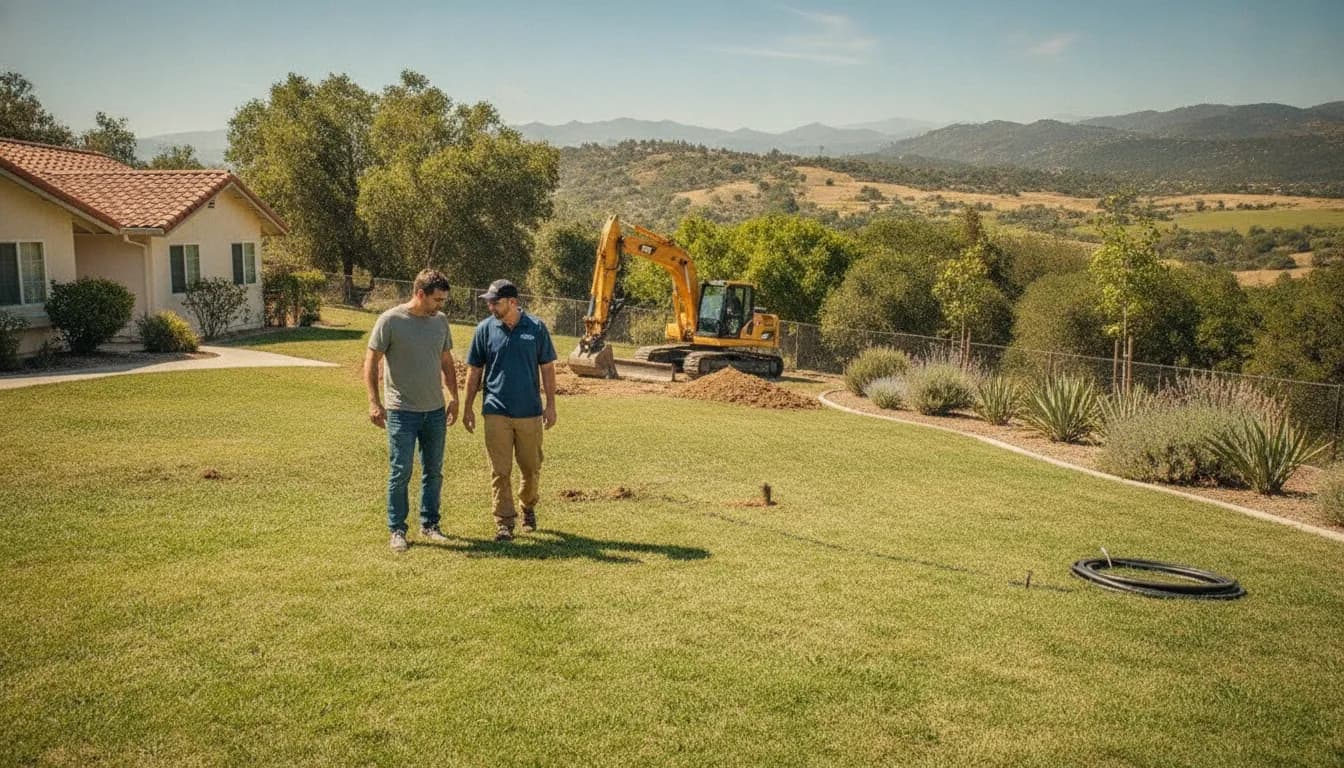
Planning a new septic system is not just a matter of choosing a tank. The property, available records, soil conditions, wastewater needs, and local review requirements all shape the workable options. Starting with those questions helps homeowners prepare for a more focused conversation and avoid preventable surprises.
Septic system installation in Ventura County typically involves evaluating the property, confirming applicable local requirements. Selecting a suitable system design, and coordinating the tank, distribution equipment, drainfield, and soil-based treatment area. For septic system installation Ventura County homeowners should expect the final plan to depend on site conditions and the requirements of the applicable authority. So a site-specific recommendation should come before major work.
Request septic installation planning help today
The sections below explain the main system components, the information to gather, and the planning questions to raise before an installation plan is finalized.
What Septic System Installation in Ventura County Involves
A septic system is an onsite wastewater treatment system, or OWTS, for a structure without access to a public sewer or wastewater treatment utility. Installation is therefore more than placing a tank underground. The system must match the property's wastewater needs, physical conditions, and applicable local requirements.
A conventional OWTS brings several components together. The septic tank receives wastewater and provides initial separation and storage. Effluent then moves through outlet piping and a distribution box before entering the disposal field. The soil beneath and around that field provides an important part of the treatment process. Ventura County's new OWTS design guidance identifies the septic tank, distribution box, and disposal field as components of a conventional system.
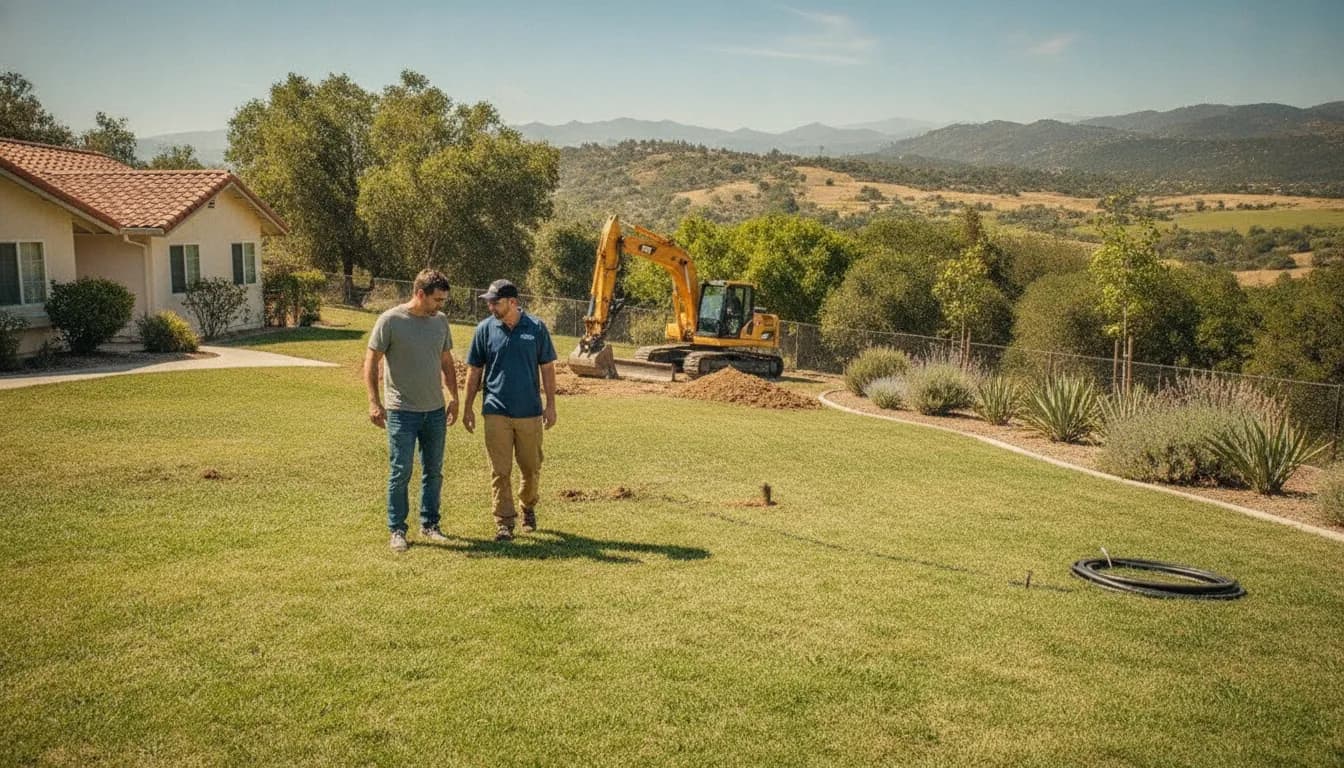
Ventura County evaluates each new OWTS individually, and the evaluation is site-specific. The proposed system type and size can depend on bedroom equivalents, plumbing fixtures, tank capacity, and the property's location. Reviewers may also consider soil permeability, groundwater depth, geologic features such as bedrock, slope, hill stability, and nearby waterbodies. These factors help determine whether a conventional layout is suitable or whether another design requires evaluation.
That review can change the installation scope. A property may need a new disposal field, a different component arrangement, or additional design work to address site limitations. Existing records and access conditions can also help frame the planning conversation, but they do not replace a site-specific evaluation. The goal is to understand how the tank, distribution equipment, disposal area, and surrounding soil will function together before construction decisions are made.
For local context, Ventura County notes that a conventional OWTS may require connection to a public sewer when an available utility line is within 200 feet. Confirm that question, along with the applicable design path, with the authority serving the property and a qualified professional before finalizing an installation plan.
Which Property Records and Site Details Should Homeowners Gather?
Start with what is already available, but do not assume every document exists or is needed before an initial conversation. A property deed, building permit, or original design plan may indicate whether a septic system is present. Older homes often have incomplete files, so missing paperwork is a reason to investigate, not a reason to stop planning.
If your property has an existing or formerly documented system. Ask the relevant local permitting authority whether it can provide the septic record drawing, sometimes called the as-built design, and copies of permits. Those records may include the installation date and information about soil properties. The U.S. Environmental Protection Agency describes these documents as useful sources for understanding an existing system: EPA septic system records guidance.
It also helps to gather practical site observations. Note where wastewater exits the home and whether you can identify a tank access point. Check whether the yard has a mound or small hill that could indicate a drainfield. Do not dig, uncover components, or treat a visible feature as proof of a system location. A septic professional can walk the property and determine where the system and its components are located.
Bring questions about prior pumping, repairs, backups, additions to the home, and changes in site use. These details can help frame an evaluation, even when no record drawing is available. For local planning context, review the Ventura County septic regulations guide, then confirm site-specific questions with the appropriate authority or qualified professional.
How Local Permits and California OWTS Rules Shape the Plan
California's onsite wastewater treatment system (OWTS) framework sets the broader expectations for septic design, construction, and protection of public health. The local review path still depends on where the property sits. Separating county jurisdiction from city jurisdiction early can keep the project moving and prevent a homeowner from submitting questions to the wrong office.
Start with the correct Ventura County or city authority
For property in unincorporated Ventura County, the Environmental Health Division Liquid Waste Program is the authority with jurisdiction over OWTS. Its staff review design proposals and criteria, then inspect new construction and repairs for code compliance. If the property is inside city limits, the county directs homeowners to contact the appropriate city building department for OWTS permit information or complaints. Conejo Bros Plumbing can help you understand site conditions and prepare questions for the process, but it is not the permitting authority.
Ventura County describes three basic application paths: design review and approval for a new conventional or alternative system. A construction or repair permit for a conventional or alternative system; and certification of an existing system. The county's septic systems and wastewater disposal guidance explains which path may fit the project.
Expect design documents before construction approval
A complete application may require a soils report, site plan, legal declarations, and other documents listed in the instructions for the selected application. The county states that incomplete applications will not be processed. That makes accurate site information and a clear plot plan valuable before anyone schedules installation work.
After design approval, a new OWTS installation requires a Permit to Construct. The same permit process applies before repairing damaged or deteriorated OWTS components. Ventura County's OWTS construction and repair guidance also identifies the plot plan and legal declaration materials used with construction permits.
For a new system, the county FAQ says the design must be prepared by a Registered Civil Engineer (RCE), Professional Geologist (PG), or Registered Environmental Health Specialist (REHS). The county gives an approximate three-to-four-week design review period, but notes that timing depends on the queue. Completeness of the application, and any deficiencies in the soil engineering report. Review the Ventura County OWTS FAQ for the current process, then confirm project-specific requirements with the authority serving the property.
How Do You Choose a Septic System Design?
The right design depends on how wastewater will move through the property, how the soil can treat it, and what the applicable local authority allows. A conventional gravity layout may be appropriate when the site supports natural flow and adequate treatment. An advanced or alternative system may be considered when treatment goals, site constraints, or local requirements call for a different approach. That decision should follow a site-specific evaluation, not a one-size-fits-all rule for Ventura County.
A septic system usually includes a tank, distribution box, drainfield, and the soil beneath the drainfield. The tank temporarily stores wastewater and separates solids, fats, and grease from liquids, while the soil provides additional treatment after effluent reaches the drainfield. The University of Maryland Extension explains that conventional gravity systems remain among the most common system types, while advanced treatment systems can improve treatment and reduce nitrogen and other water-quality parameters.
Planning considerations for septic system designs.
| Design approach. | What it generally involves. | Questions to resolve before choosing. |
|---|---|---|
| Conventional gravity. | Uses gravity to move effluent through the tank, distribution components, and drainfield when the site's layout and soil conditions support that arrangement. | Can the proposed location provide suitable flow, treatment, setbacks, and drainfield space under the applicable local standards? |
| Advanced or alternative. | Uses enhanced treatment or a different collection and disposal arrangement when a conventional layout does not address the site's needs or water-quality goals. | What treatment objective, operating plan, monitoring, or maintenance obligations apply to the proposed system? |
California's onsite wastewater treatment system resources recognize that local agencies may establish different design and siting controls, including density and setback requirements. Some local management programs may also require monitoring or maintenance agreements. Review the California Water Boards OWTS technical resources and confirm the applicable requirements before selecting equipment or finalizing a layout.
A qualified septic professional can compare the practical options after reviewing the property, existing records, soil and drainage information, and the local authority's direction. Conejo Bros can also discuss septic tank replacement options when an existing system is part of the planning decision.
What Site Conditions Can Change the Installation Scope?
A septic plan has to fit the property, not just the home. During a site walk, a septic professional can help locate the tank, drainfield, piping, and other components. A mound or small hill may indicate where a drainfield was installed, but visible grading alone is not a final design decision. The EPA recommends evaluating the property and system records together rather than relying on appearance alone.
Property layout can affect where the tank and drainfield can be placed. Local authorities may set requirements for tank placement and minimum setbacks from a foundation. California wastewater rules also allow local agencies to apply different siting controls, including density and setback requirements. That local review can change the proposed layout, component locations, or documentation needed before work begins.
Access is another practical consideration. Narrow driveways, steep topography, fences, existing structures, and limited equipment staging can affect excavation and installation planning. Trees may require special consideration because removal, roots, and the final restoration plan can affect the work area. Landscaping, hardscape, soil disturbance, and drainage patterns should be discussed before the installation scope is finalized.
The drainfield deserves particular attention because soil and site conditions influence how wastewater is treated after it leaves the tank. If the existing field is damaged, undersized, or unsuitable for reuse, the project may shift toward repair, replacement, or a different design. Review Conejo Bros' leach field installation and repair information to understand that part of the planning process. A clear site assessment helps separate confirmed conditions from items that still require local review.
How Septic System Installation in Ventura County Is Planned and Estimated
A useful installation estimate starts with the property, the proposed use, and the approvals that may be required. It should not be based on a standard package or a guess from the number of bedrooms alone. Ventura County evaluates each new onsite wastewater treatment system individually, and the evaluation is site-specific. The county says the system type and size can depend on bedroom equivalents. Plumbing fixtures, tank capacity, location, soil permeability, groundwater depth, geology, slope, hill stability, and nearby waterbodies.
That information helps define the work involved before a contractor can provide a meaningful scope. Ask what assumptions the estimate uses, which existing components will remain, what access and excavation conditions could affect the work. And which items are still subject to design review or agency approval. A responsible estimate should separate confirmed work from allowances and identify documents or site findings that could change the final scope. It should also explain whether the project involves a conventional or alternative system, replacement components, or a new dispersal area.
What to gather before requesting an estimate
Ventura County's new-system application materials provide a practical checklist for early planning. Depending on the project, the file may include:
- A geotechnical, soils, and engineering report prepared by a qualified professional, along with a percolation test form.
- A scaled plot plan showing existing structures, proposed construction, property lines, driveways or other paved areas, wells. Streams, trees, any existing OWTS, the proposed septic tank and dispersal area, and the 100% expansion area.
- A floor plan showing the proposed construction layout and a bedroom-equivalents and fixture-units determination used for sizing.
- Approved zoning clearance from Ventura County Planning, when listed for the project.
Ventura County identifies design review, construction or repair permits, and existing-system certifications as separate OWTS application categories. For a new system, design approval comes before a Permit to Construct. Applications are accepted through VC Citizen Access, and the county instructs applicants to follow the documentation list for their specific application. Incomplete applications will not be processed, so missing reports, plans, or declarations can affect the schedule. Conejo Bros can discuss installation scope and site conditions, but the county and qualified design professionals determine the applicable design and approval requirements. Review Ventura County's new OWTS design requirements before finalizing project assumptions.
A Practical Homeowner Checklist Before Work Begins
- Gather the property records. Collect the deed, prior permits, design plans, as-built records, soil information, and details about the existing tank or disposal area. The EPA septic guidance explains why permit records and as-built drawings can help identify system components and installation history.
- Confirm the property's jurisdiction. If the property is in unincorporated Ventura County, the Environmental Health Division Liquid Waste Program is the authority for onsite wastewater treatment systems, or OWTS. If the property is inside city limits, contact the appropriate city building department instead. This distinction affects where you ask permit and inspection questions. The county's wastewater disposal guidance explains the routing.
- Identify the correct application and complete the packet. Ventura County describes three basic application paths: design review or approval for a new conventional or alternative system, construction or repair permits, and certification of an existing system. Depending on the application, gather the required soils report, site plan, legal declarations, and other documents listed in the applicant instructions. Incomplete applications are not processed.
- Choose the county submission method when applicable. For an unincorporated county property, submit the complete application through VC Citizen Access, at the Environmental Health Division public counter, or by mail to 800 S. Victoria Ave., Ventura, CA 93009-1730. Mail submissions must include the applicable review or permit fee, or the packet will be returned.
- Confirm the construction permit sequence. After the OWTS design is approved, a Permit to Construct is required before a new system is installed. The county also requires this permit before repairing damaged or deteriorated components. Review the county's OWTS construction and repair instructions, then confirm the site-specific sequence with the responsible authority and your qualified professional.
- Prepare for the planning conversation. Note access limits, slopes, landscaping, wells, driveways, structures, and any prior backups or repairs. Bring those details, your records, and questions about the proposed scope to a septic professional. For service details, review septic system installation options.
Request a septic installation planning review today
Frequently Asked Questions
What is the typical cost of installing a new septic system in California?
There is no reliable universal price. An installation estimate can change with site evaluation, soil and percolation results, tank and drainfield design, excavation conditions, permits, inspection coordination, landscaping, and restoration. Ask for a written scope that separates these items rather than relying on a statewide average.
How many bedrooms will a 1,500 gallon septic tank support?
Tank capacity alone does not determine bedroom support. The appropriate tank size and overall system design depend on expected wastewater flow, the property, soil conditions, local authority requirements, and the approved design. A septic professional and the responsible local authority should confirm the sizing before installation.
Can I install my own septic system in California?
Do not assume a homeowner can self-install every part of a septic system. Local authorities control permitting, inspection, and site-specific requirements, while the design may involve soil evaluation, setbacks, excavation, and wastewater-flow calculations. Confirm the rules for your property before purchasing equipment or starting work.
How much does it cost to install a 2,000 gallon septic tank?
The tank size does not provide enough information to calculate the project price. Costs may also include engineering or evaluation, delivery, excavation, distribution components, drainfield work, permits, inspections, and site restoration. Request a property-specific estimate that explains what is included and identifies allowances or work that may change after site evaluation.
Get Started With Septic Installation Planning
A site-specific review can help you organize the right questions, understand the work involved, and plan the next step for your Ventura County property. Request septic installation planning help today so the conversation can stay focused on your property, existing system, and installation goals.