
Sewer Line Cleaning: How to Choose the Right Repair Option
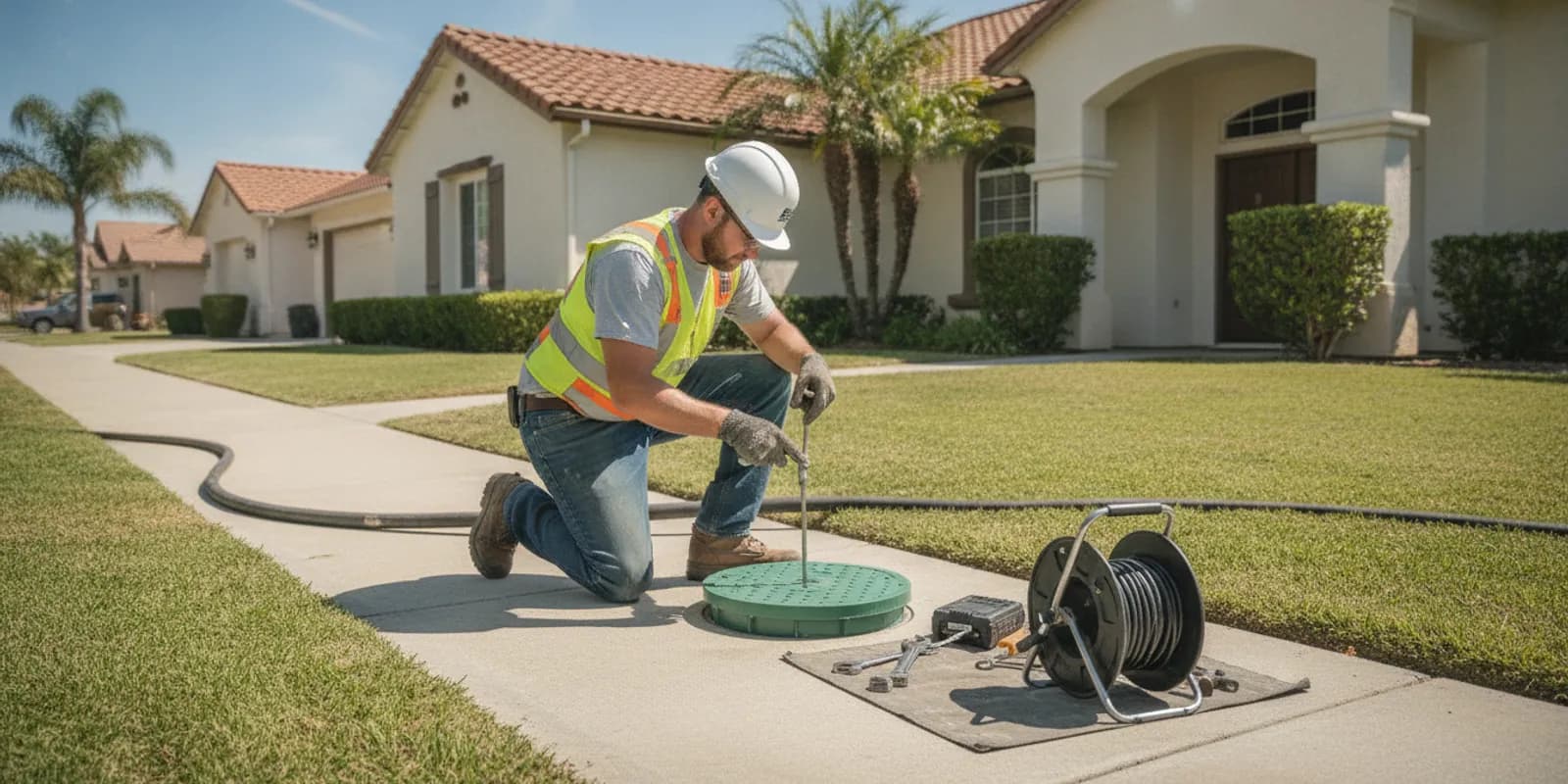
Sewer line cleaning can clear buildup or an obstruction, but it will not fix every damaged pipe. If a drain backs up repeatedly, several fixtures are affected, or wastewater appears where it should not, the useful first step is to identify whether the issue is a blockage, a pipe condition, or both.
Request help with a sewer concern
What does sewer line cleaning address?
Sewer line cleaning removes material that is restricting flow inside a drain or sewer pipe. Depending on the condition and location, a professional may discuss mechanical clearing or high-pressure water jetting. The right method depends on what is in the line, how accessible it is, and whether the pipe can safely tolerate the proposed approach.
Cleaning is not the same as repair. A cleared line may flow again, while a cracked, collapsed, offset, or persistently damaged section may continue to cause trouble. Cleaning can also be part of preparation for a camera inspection, since debris can obscure the pipe interior. For an overview of available drain services, see drain cleaning in Thousand Oaks.
When is sewer line cleaning the right first conversation?
A single slow fixture can have a local drain issue. A problem affecting multiple fixtures, or recurring after a prior clearing, may point farther into the building drain or sewer lateral. These signs do not prove that the main sewer line is damaged, but they are useful details to report.
- One fixture is slow: The restriction may be close to that fixture, though the pattern matters.
- Several fixtures act up together: A shared branch or main line may be involved.
- A backup returns: Repeated symptoms merit diagnosis rather than assuming another clearing will be enough.
- Outdoor cleanout overflow or sewage odor: Keep people away from wastewater and request professional guidance.
Avoid repeatedly using chemical drain products as a substitute for diagnosis. Tell the technician what was used, if anything. Do not enter a sewer access point or attempt work in a confined space.
How does sewer line cleaning differ from repair?
Cleaning is intended to restore flow by removing an obstruction or buildup. Repair addresses a pipe defect or a section that cannot reliably carry wastewater. In practice, a problem can involve both: cleaning may improve flow, while inspection then helps determine if the line has a structural concern.
| Option | What it is meant to do | When it may be discussed | What to clarify |
|---|---|---|---|
| Drain clearing | Remove an accessible blockage | Flow stops or slows with signs of an obstruction | What caused the stoppage and whether symptoms return |
| Hydro jetting | Use high-pressure water to clean pipe walls and remove certain buildup | Conditions and pipe suitability support this method | How the line will be assessed and whether the pipe can safely be jetted |
| Camera inspection | View the inside of a pipe to help locate and describe a concern | Recurring issues or a need to assess pipe condition | What portion was inspected and what the footage shows |
| Repair or relining | Address a damaged section, with the method depending on the defect | Inspection identifies a repairable structural problem | Repair scope, access, permits, and whether a trenchless method fits |
These are not automatic steps in every job. A professional should explain the finding, the reason for a recommended method, and what alternatives may apply. Learn more about sewer inspection and repair and high-pressure drain jetting.
What can a camera inspection tell you?
A sewer camera can help locate and visualize conditions inside an accessible pipe. It may reveal a blockage, buildup, a change in alignment, or visible damage. It does not make every question disappear: the result depends on access, visibility, and the portion of pipe reached. Ask what was examined and whether the recording or findings can be explained to you.
For a property transaction, a sewer scope is a specific inspection need. It is different from routine cleaning, and the scope should be clear about what section is evaluated. For a persistent concern, a camera assessment may help distinguish a cleaning need from a repair discussion. See the company's drain camera inspection information.
When might trenchless sewer repair be considered?
Trenchless methods are repair options, not cleaning methods. Depending on pipe material, location, access, and the nature of the defect, a contractor may discuss CIPP relining or pipe bursting. These methods can reduce the amount of excavation compared with some traditional replacement approaches, but they are not suitable for every line or condition. A second opinion can help a property owner understand whether trenchless work is feasible before deciding on a major dig.
Ask the contractor to connect the recommended repair to the inspection finding. The explanation should identify the affected section, describe the repair approach, and note any access or permitting considerations. Conejo Bros offers trenchless sewer repair and sewer relining options.
What should you share before requesting service?
Clear details help the team understand the urgency and direct the conversation. Note when the problem began, which fixtures are affected, whether there has been a prior clearing or repair, and whether you can locate an accessible cleanout. If safe, take a photo of visible pooling or a cleanout area, but do not open a cap if wastewater may be under pressure.
- Describe the symptoms and how often they occur.
- Identify which sinks, toilets, or drains are affected.
- Share any known history of repairs, backups, or inspections.
- Tell the team about chemicals or equipment already used.
- Report active sewage overflow promptly and keep children and pets clear.
For public sewer or street-lateral concerns, responsibility and work requirements can depend on the location and local authority. Conejo Bros has a public works specialists section covering public works and related project considerations.
How can you compare sewer line cleaning recommendations?
Do not compare recommendations by the service name alone. Ask what was found, which section needs attention, and what result the proposed work is expected to achieve. A clear recommendation separates immediate flow restoration from longer-term pipe repair.
- Confirm the problem area. Ask whether the symptoms suggest a fixture drain, building sewer, or lateral concern.
- Understand the evidence. Find out whether a camera inspection or other assessment informed the diagnosis.
- Compare the method to the finding. Clearing, jetting, and repair solve different problems.
- Discuss limitations. Ask about access, pipe condition, and any uncertainty that affects the recommendation.
- Agree on the next step. Make sure you understand what will be done and what follow-up may be needed.
For general background, the U.S. Environmental Protection Agency's sewer cleaning fact sheet discusses sewer cleaning operations and related considerations. It is an operations reference, not a diagnosis of an individual home's line.
What should you expect during a sewer service visit?
The technician will need to understand the symptoms and locate an appropriate access point. The visit may involve checking fixtures or a cleanout, discussing a clearing method, or explaining whether further inspection is useful. What happens depends on the presenting issue and the condition of the system; no single procedure applies to every stoppage.
Before work begins, ask the technician to explain the planned step and any limits. If a camera is used, ask what portion of the line is visible. If cleaning restores flow, monitor the system and report a return of symptoms. A recurring backup should not be treated as resolved indefinitely just because water moves temporarily.
Why might a sewer blockage keep coming back?
A return of symptoms can mean the original obstruction was not fully cleared, that material has collected again, or that a condition in the pipe continues to interfere with flow. The symptom alone does not identify which explanation is correct. Record how long the line stayed clear after the last service, which fixtures were affected, and whether the backup happened during heavy water use or at another particular time. That timeline can help frame a more useful diagnostic conversation.
When the same line has needed attention more than once, ask whether the next visit should include inspection or another diagnostic step rather than simply repeating the prior method. Cleaning may still be appropriate, but the decision should take account of the pipe's condition and what was learned previously. If an earlier camera inspection exists, share its date and findings; a new assessment may be needed if the situation has changed or the earlier view was limited.
How do access, permits, and responsibility affect sewer work?
The route of a sewer line and the location of the problem can affect who handles the work and what approvals are needed. A homeowner may be dealing with a private building sewer, a lateral, or a connection near public infrastructure. Do not assume that every section is under the same ownership or that the same process applies in every city. Ask the contractor to identify the area under discussion and whether the local agency should be contacted before work begins.
For work that reaches a public right-of-way, requirements may include coordination, traffic control, planning, or permits, depending on the jurisdiction and scope. Conejo Bros' public works specialist information discusses DWP and city public works, street-lateral replacement, traffic control, city planning and permits, septic-to-city-sewer rerouting, and pre-construction plumbing bids. The relevant authority determines applicable requirements, so confirm the process for the specific address and proposed work.
In some cases, a public sewer concern may need to be reported to the municipality or utility rather than handled as a private-line repair alone. A contractor can help explain what their inspection covers, but the property owner should clarify responsibility with the local agency when the line crosses a boundary or the affected section is uncertain. This distinction helps prevent a private repair plan from being confused with work on a public system.
What questions help you evaluate a repair recommendation?
A useful recommendation should be specific enough that you can explain it in your own words after the conversation. Ask the provider to separate what they observed from what they infer, then connect each proposed step to the finding. You do not need to know plumbing terminology to request a clear explanation.
- Where is the concern? Ask for the approximate location and the portion of line assessed.
- What evidence supports the diagnosis? Ask whether it comes from symptoms, a camera view, or another finding.
- What is the goal of the proposed work? Clarify whether it is intended to restore flow, clean buildup, or correct a defect.
- What alternatives are reasonable? Ask whether monitoring, another cleaning method, or repair should be considered, and why.
- What could limit the result? Discuss access, visibility, pipe condition, and any uncertainty.
- What happens afterward? Ask what symptoms to watch for and whether follow-up inspection is advised.
For property owners comparing a traditional excavation with a trenchless approach, request an explanation of how each option fits the identified section. The choice can depend on pipe material, access, condition, and the surrounding site. Conejo Bros' trenchless sewer repair and replacement page offers another overview of the repair category; the right method still needs to be assessed for the particular property.
Frequently asked questions
Does sewer line cleaning repair a cracked pipe?
No. Cleaning removes an obstruction or buildup. A crack or other structural defect may require a separate repair recommendation, based on an assessment of the line.
Does every sewer backup require hydro jetting?
No. The appropriate method depends on the cause of the blockage, pipe condition, and access. Ask why the proposed method fits the particular line.
Can a camera inspection find every sewer problem?
A camera can show visible conditions in the portion of pipe it reaches, but access and visibility can limit what it reveals. Ask what was inspected and what could not be assessed.
When should I ask about trenchless repair?
Ask when inspection suggests a structural repair may be needed. Trenchless options depend on the pipe and site conditions, so suitability should be explained rather than assumed.
Request a sewer service assessment
What is the next step for sewer line cleaning?
If symptoms are recurring or several fixtures are affected, describe the pattern and ask what assessment is appropriate before choosing between cleaning and repair. For property owners in Conejo Valley and Ventura County, the service area information can help confirm local coverage.
Requesting help with a main-line blockage can begin with describing the symptoms and the point of access. If you are unsure whether the issue is local or farther along the sewer, share what you have observed and ask what evaluation makes sense.
Sharing the symptoms, their timing, and any prior work gives the team a practical starting point for discussing the right next step.