
How to Find Yard Drainage Solutions for Standing Water
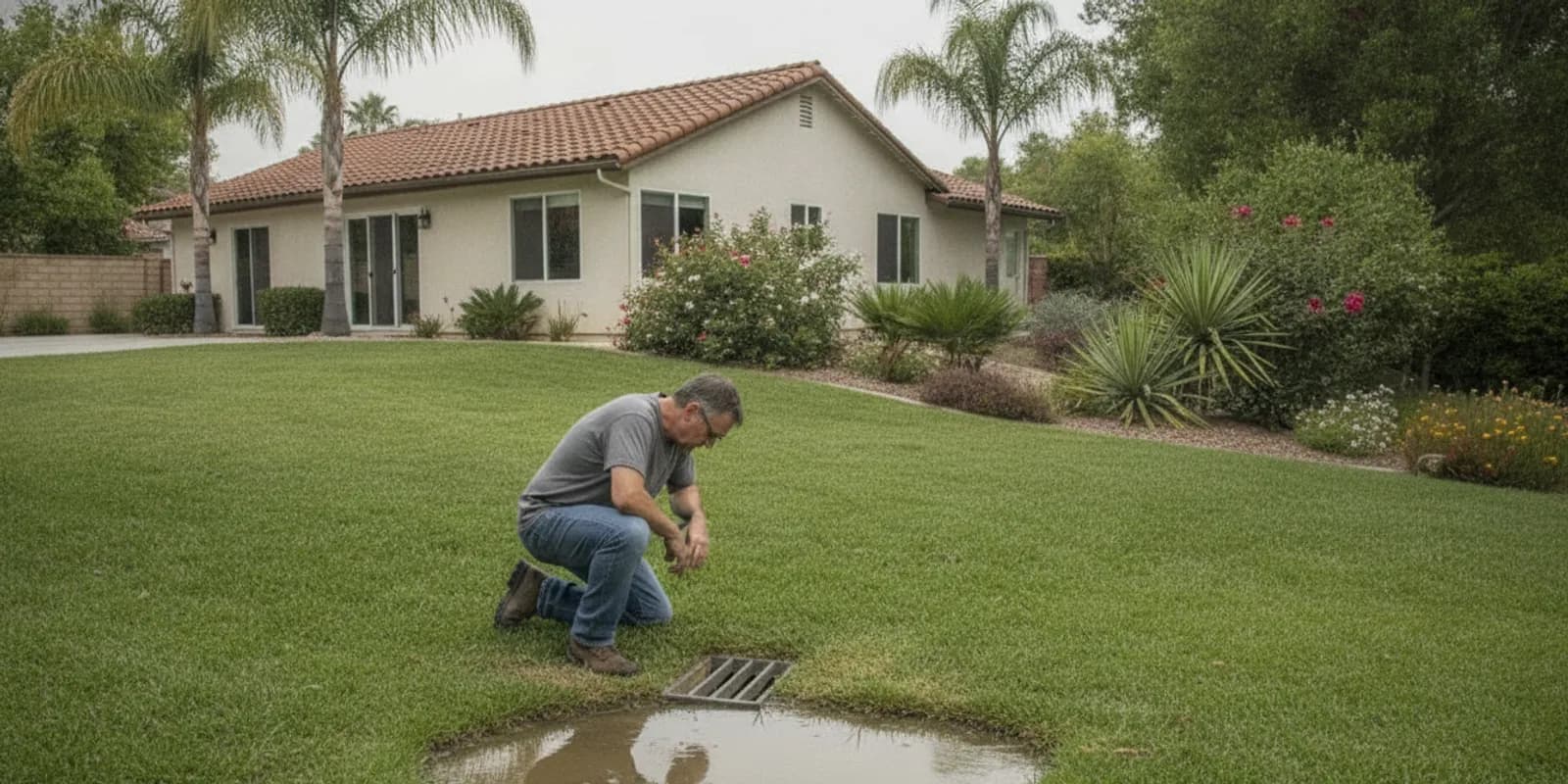
Standing water can make a yard difficult to use, damage planting beds, and point to a drainage path that is blocked or poorly placed. The right yard drainage solutions begin with finding where the water comes from and where it can safely go—not simply adding another drain at the lowest spot.
Request help with standing water
How do yard drainage solutions start with the water pattern?
Before choosing a drain, observe the area during and after rain. Look at where water first appears, the direction it travels, and how long it remains after rainfall stops. A puddle near a downspout may have a different cause from water that rises along a slope or backs up around an existing grate.
Make a simple site sketch. Mark the house, patios, walkways, retaining walls, planting beds, downspouts, visible drains, and the wettest areas. Add arrows to show the direction water seems to move. Note whether the problem happens after every shower or only after prolonged rain. Photos taken at similar times can help reveal a pattern that is hard to remember.
- One small, isolated puddle: The ground may have a shallow low spot, compacted soil, or a surface that has settled.
- A long wet strip: Runoff may be following a slope, a path, or the edge of a hard surface.
- Water near a downspout: Roof runoff may be discharging too close to the house or into a drain that is obstructed.
- Several grates that stay wet: A shared outlet or downstream section may be restricted.
- Water moving toward a building: Check the surface slope and the point where the water crosses the foundation, patio, or doorway.
These clues do not prove what is underground. They help describe the symptoms so the next inspection can focus on the right area. If the water appears to come from a broken water line, sewage, or an overflowing septic area, keep people away and arrange appropriate professional help rather than treating it as ordinary rain runoff.
Which yard drainage solutions fit the source of the water?
A yard drain system works by collecting water at one or more points and conveying it through a route to an appropriate outlet. The best arrangement depends on the water source, soil, slope, existing hardscape, and where discharge is permitted. A drain is not a substitute for correcting a downspout discharge, grading issue, or blocked outlet when that is the actual cause.
| What you observe | Possible approach | What to check before choosing |
|---|---|---|
| Water collects in one shallow low spot | Adjust the surface grade or collect water with a catch basin | Whether the soil can be reshaped and a safe outlet is available |
| Runoff crosses a broad area or paved edge | Use a channel drain or surface swale to intercept and guide flow | Flow direction, slope, walkway access, and where the channel discharges |
| Water seeps or gathers below the surface | Assess whether a subsurface drain is appropriate | Soil conditions, depth, nearby structures, and outlet location |
| Downspout discharge saturates one area | Correct the downspout route or connect it to a suitable drainage path | Roof runoff volume, pipe condition, and legal discharge options |
| Existing yard drain backs up | Inspect and clear the drain or investigate its outlet line | Whether the grate, pipe, or downstream outlet is restricted |
Catch basin: A basin with a grate can collect water at a defined low point, while its outlet pipe carries it away. It can be useful where water consistently gathers in one location. The basin must sit where runoff can reach it, and it needs a dependable outlet. If it is installed too high, water may pass by; too low or poorly supported, it can settle and create a new depression.
Channel drain: A long, grated channel can intercept water along a patio, driveway, or other hard edge. Its placement and fall matter: water needs to enter the channel, then continue toward an outlet rather than stagnate. A channel that crosses a walkway also needs to suit the surface and expected use.
Surface swale or grading: A shallow shaped path can guide runoff across a yard without collecting it at a single point. Grading may be enough for a small, manageable flow, but it should not send water toward a neighbor or a building. In established yards, consider the effects on paths, planting, irrigation, and adjoining surfaces before changing elevations.
Subsurface drainage: A buried perforated pipe may be considered when water remains in soil or appears along a below-grade area. It is not automatically the answer to every soggy lawn. Soil, pipe depth, filter material, and outlet conditions affect performance. A system without an effective discharge point can remain full and fail to solve the surface problem.
For a broader overview of area drains and yard drain services, compare the symptoms on your property with the drain types being considered. The name of the component matters less than whether the full route—from collection point to safe outlet—makes sense.
How can you check an existing yard drain safely?
Start with visible checks. Remove loose leaves, soil, and debris from around the grate without reaching into a pipe. Look for a grate buried under mulch, a basin filled with sediment, a damaged cover, or a low spot that prevents surface water from reaching the inlet. Check whether nearby downspouts are sending water into the same area.
If safe and practical, observe the drain during ordinary rainfall. Does water enter the grate, or does it flow around it? Does the area drain after the rain ends, or does the basin remain full? Do not open a sealed utility cover or enter a basin. Avoid pouring chemicals into a yard drain, and do not use high-pressure equipment unless the system and outlet have been assessed. Pressure can worsen a damaged line or send debris to an unknown location.
When an accessible grate is clear but water still backs up, the restriction may be farther along the pipe or at the outlet. A professional can determine whether the next step is cleaning, inspection, repair, or a change to the collection layout. If a drain is linked to a larger property drainage network, identifying that connection first can prevent work on the wrong line. For help with a recurring drain issue, see drain cleaning and diagnosis.
What should you plan before installing yard drainage solutions?
Before digging or buying materials, confirm the whole drainage route. The drain needs an outlet that can receive the water without creating a new hazard or sending runoff where it is not allowed. Rules can vary by property and jurisdiction, so do not assume that a convenient street, neighboring lot, or sewer connection is an acceptable discharge location. Ask the local authority or a qualified professional when the destination is uncertain.
- Map the source and path. Note roof runoff, slopes, hard surfaces, soil that stays wet, and the existing drain locations.
- Identify the likely collection point. A grate works only if water can reach it. A linear channel or reshaped surface may suit a different flow pattern.
- Confirm a viable outlet. Trace where the pipe would go and verify that the destination is suitable and permitted.
- Check for underground utilities. Arrange the required utility location service before any excavation. Never assume a shallow trench is clear.
- Consider the entire property. Keep water away from buildings and do not shift a pooling problem onto a neighbor, walkway, or other vulnerable area.
- Choose maintenance access. Grates and basins need to be reachable for debris removal, and the pipe route should be considered if future inspection is needed.
For larger projects, compare the drainage plan with existing yard drain installation options and any other planned work. A drainage layout may interact with irrigation, landscaping, patios, retaining structures, or construction access. Reviewing those constraints before installation can avoid disturbing finished work later.
Why do yard drainage solutions sometimes fail?
Repeated pooling does not always mean the drain itself is too small. Common causes include a blocked grate, a buried inlet, a pipe with poor fall, a disconnected outlet, sediment accumulation, or a system that collects water but has nowhere suitable to send it. Surface grading can also change over time as soil settles or landscaping is altered.
A system may also be asked to handle more water than it was designed to collect. New paving, roof runoff, or changes elsewhere on the property can concentrate flow in a spot that used to stay dry. If the water pattern has changed, note what changed with it. That information is useful when discussing repair or redesign.
Do not assume that adding more grates will fix a downstream restriction. If several inlets back up together, the shared pipe or outlet deserves attention. If only one inlet has trouble, the local basin or connection may be the issue. Where needed, a drain camera inspection can help investigate an accessible drain line; the technician can advise whether it is suitable for the particular system.
What can public works and construction teams coordinate?
Some drainage questions are part of a broader public or construction project rather than a simple yard-drain repair. Conejo Bros Plumbing has a public works specialists section for project teams coordinating with DWP and city public works. Relevant work can include street-lateral replacement, traffic control, City planning and permits, septic-to-city-sewer rerouting, and pre-construction plumbing bids.
For these projects, establish responsibilities and approvals before work begins. Confirm who is coordinating with the utility and City, what permit or planning review applies, how traffic control will be handled, and where private-property drainage work connects to public infrastructure. A homeowner noticing standing water should not assume that a municipal line is the cause, but documenting the location and pattern can help the right team assess it.
When should you ask for a yard drainage assessment?
Consider getting professional input when water repeatedly reaches a foundation, enters a garage or crawlspace, damages hardscape, or remains after ordinary rain. An assessment is also useful when you cannot identify the outlet, multiple drains back up, the drainage route crosses utilities or structures, or the proposed work needs excavation. Keep people away from unstable ground and electrical equipment in flooded areas.
Before contacting a service professional, gather a few details: the address or service area, when pooling occurs, how long it lasts, whether it follows rain or irrigation, which drains are affected, and any changes made to the property. Share photos from before, during, and after rainfall if available. For local help with an area drain problem, review drain and septic service in Thousand Oaks or service in Agoura Hills. Nearby homeowners can also check the Moorpark service area and Simi Valley services.
For general background on stormwater management and environmental protection, visit the U.S. Environmental Protection Agency. Local requirements for discharge and construction still depend on the property and jurisdiction, so confirm those details locally.
Frequently asked questions about yard drainage solutions
Can I fix standing water by adding soil to the low spot?
Sometimes minor surface settling can be corrected with careful grading, but filling a depression without considering the flow can push water elsewhere or cover an existing inlet. First identify where water comes from and where it will go after the change. If the area is near a structure or the pooling returns, get the drainage path assessed.
Should a yard drain connect to a sewer line?
Do not assume a yard drain should connect to a sanitary sewer. Discharge rules and permitted connections depend on local requirements and the system involved. Confirm the proper destination with the local authority or a qualified professional before connecting or altering a drain line.
How do I know if an existing drain is clogged?
Debris around the grate, a basin that remains full, or water backing up at multiple inlets can indicate a restriction. Clear only loose debris that is safely accessible. If the grate is clear and the water still does not move, the blockage may be in the pipe or outlet and may need professional inspection.
Will one catch basin solve a wet lawn?
It can help when water reliably collects at a suitable low point and an effective outlet is available. It may not solve broad runoff, saturated soil, poor grading, or a blocked downstream line. The cause and complete route determine whether a catch basin is appropriate.
What information should I share when asking for help?
Describe where water appears, when it happens, how long it stays, which grates or downspouts are nearby, and whether the property has changed recently. Photos and a simple sketch can help explain the pattern without guessing at the underground cause.
Request an assessment for a recurring yard drain problem
A yard drain system can manage standing water when its collection point, route, and outlet all suit the property. Start by tracking the water pattern, then choose a solution that addresses the source and keeps runoff moving to an appropriate destination.