
Cast Iron Sewer Pipe Problems in Ventura County Homes
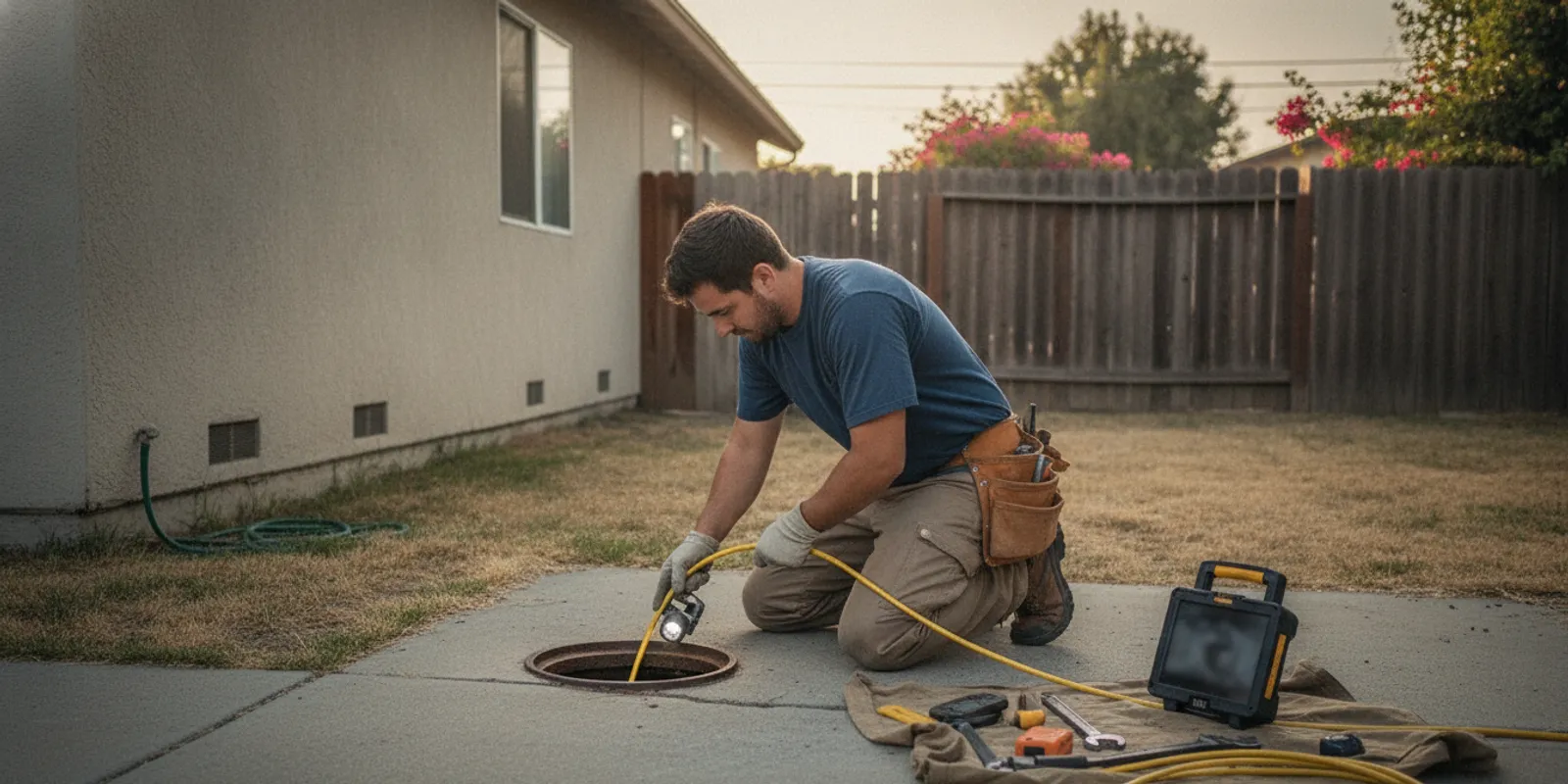
Recurring sewer backups can be stressful, especially when a home has older plumbing. Cast iron sewer pipe problems Ventura County homeowners encounter may involve corrosion or a different obstruction, and symptoms alone cannot establish which one is present. A systematic evaluation can help separate a temporary blockage from a pipe condition that needs a longer-term plan.
Request a sewer inspection today
What cast iron sewer pipe problems Ventura County homeowners should watch for
Cast iron can corrode internally over time. The interior surface may become rough, and scale or other material may reduce the open space available for wastewater. A restriction can contribute to slow drainage or repeat stoppages. But a single slow sink does not prove that a buried sewer pipe is corroded. Local clogs, damaged fittings, roots, and other drainage issues can produce overlapping symptoms.
Look for a pattern across fixtures and over time. Write down which drains are affected, what was happening just before the problem started, and whether the same issue returns after clearing. A problem involving more than one fixture may point to a shared drain path, while one isolated fixture may have a more local cause. These are useful clues, not a diagnosis.
- Backups that recur: Wastewater returns through a low drain or toilet, or the same stoppage returns after a line was cleared.
- Several slow fixtures: Multiple drains slow down close together, which can suggest that the restriction is farther along a shared route.
- Gurgling or bubbling: Unusual sounds can accompany a drainage problem, but do not identify corrosion by themselves.
- Changes when water is used elsewhere: Note whether running a shower, washing machine, or other fixture coincides with a backup in another location.
- Odor or damp areas: These warrant attention, but can have causes unrelated to a buried sewer line.
Keep a simple log rather than trying to interpret every sound. Include dates, affected fixtures, whether the problem was constant or intermittent, and any previous cleaning or repair. If sewage is backing up, reduce water use and keep people and pets away from contaminated water. Do not open a cleanout or enter a wet, confined, or contaminated area to investigate.
How old sewer pipe corrosion can affect drainage
Corrosion, deposits, and structural damage are related concerns, but they are not interchangeable. Scale or roughness may catch waste and contribute to restricted flow. A crack, separated joint, offset, or collapsed section is a different kind of condition. A line may have more than one issue, and a pipe's age alone does not establish how much of it is affected.
This distinction matters when deciding what to do next. If a removable blockage is the main problem, clearing it may restore drainage. If buildup has narrowed the pipe, a suitable descaling method may be considered after the pipe's condition is assessed. If there is structural damage, cleaning alone cannot repair it. The purpose of diagnosis is to understand the location and nature of the problem before comparing work options.
Repeated clearing without investigating why the stoppage returns can leave the underlying question unanswered. On the other hand, seeing corrosion or having an older home does not automatically mean that the entire sewer line needs replacement. A careful recommendation should connect the observed findings to the proposed scope of work.
How are cast iron sewer pipe problems Ventura County confirmed?
A sewer camera inspection can let a technician view accessible portions of the pipe from the inside. The camera may show visible buildup, roots, cracks, offsets, or other concerns, and help identify where they appear along the inspected route. This is useful evidence when a backup keeps returning or when repair options need to be compared. It is a diagnostic aid, not a guarantee that every condition is visible or that the camera can predict how long a pipe will last.
Before the inspection, describe the history in practical terms. Explain which fixtures are affected, how often the problem occurs, whether it follows heavy water use, and what previous work was done. If you have notes or a description of past service, share them. The context can help the technician decide what section to inspect and interpret what the camera shows.
During or after the inspection, ask for a clear explanation. Useful questions include:
- Which section of the line was accessible and inspected?
- Where exactly does the visible concern begin and end?
- Does the camera show a blockage, surface buildup, a structural defect, or more than one condition?
- What can the video confirm, and what cannot be seen or concluded from it?
- Would another test or a follow-up inspection be needed before choosing a repair?
A camera view can be more helpful when findings are tied to a location and explained in plain language. Ask whether you can review the relevant video or images and how the proposed work relates to them. If a recommendation is to replace a long section, it is reasonable to ask what evidence supports that scope and whether the rest of the line was evaluated. Learn more about drain camera inspection and sewer inspection and repair options.
What should you do when a sewer backup keeps returning?
- Protect the household. If wastewater is backing up, stop or limit water use until the immediate situation is assessed. Keep people and pets out of the affected area and avoid direct contact with sewage.
- Record the symptoms. Note the fixtures involved, when the backup occurs, whether other water use affects it, and when the previous stoppage was cleared.
- Describe past work. Tell the technician about prior clearing, repairs, or inspections. Do not assume a previous service addressed the cause if the symptom returned.
- Ask what diagnostic step fits. A camera inspection may help when the concern is a recurring sewer-line restriction or suspected pipe damage. Ask what the inspection can establish in the accessible sections.
- Compare the findings with the proposal. Check that the recommended work addresses the observed condition and that the proposed location and extent are clear.
For a stoppage that needs attention, learn about sewer clearing. If the issue appears to be within a household drain rather than the main sewer route, drain cleaning information may help you describe the service need. In either case, recurring symptoms call for an explanation of what is causing the restriction, not just a repeat of the same response.
Which repair or cleaning option may fit the findings?
Cleaning, descaling, trenchless repair, and replacement solve different problems. The table is a discussion guide, not a diagnosis or a promise that any one method will fit a particular home. Ask the plumbing professional to connect the recommended approach to what was found, the condition of the pipe, access, and the extent of the concern.
| Option | When it may be considered | Questions to ask |
|---|---|---|
| Cleaning | A blockage or removable material is restricting flow. | What caused the stoppage? Does the inspected section appear intact? |
| Descaling | Internal scale or corrosion-related buildup is restricting the passage, and the pipe is suitable for the method. | How was the pipe condition assessed? What result should be expected, and what are the limitations? |
| Trenchless repair | A damaged section appears repairable and pipe and site conditions support a no-dig approach. | Which method is proposed? What exact section is included, and what conditions could rule it out? |
| Replacement | Damage is extensive or the pipe condition makes a repair unsuitable. | What evidence supports replacement? Which parts of the line are included, and why? |
Cleaning and descaling
Cleaning is intended to remove an obstruction or material that can be cleared from the line. It may address the immediate flow problem without changing a damaged pipe. Descaling is intended to remove certain internal deposits that restrict the passage. Suitability depends on the pipe's condition and the method proposed, so ask how the line will be evaluated before work and what the process can and cannot accomplish. Read about drain descaling as a possible service to discuss with a professional.
Trenchless repair or replacement
Trenchless approaches may reduce the need for excavation in appropriate circumstances, but they are not suitable for every line or defect. Pipe condition, access, location, and the type of damage affect whether a particular method is practical. A proposal should identify the section involved and explain the limitations. A second opinion can help when a major dig-up is recommended and you want to understand whether a trenchless alternative is feasible. Explore trenchless sewer repair, pipe relining, and the trenchless relining process as options to ask about, not automatic solutions.
Replacement may be considered when the condition or extent of damage makes a repair unsuitable. Before approving a broad replacement, ask how much of the line was inspected, which areas show a problem, and why a more limited option would not address it. A useful comparison states both what each approach is expected to solve and what it leaves unchanged.
How can you separate a sewer-line concern from a fixture clog?
The number and location of affected fixtures can help frame the inspection, although they do not prove where a blockage sits. If only one sink is slow while other fixtures drain normally, the cause may be close to that fixture. If several fixtures have trouble at about the same time, tell the technician that the symptoms overlap. A shared route may deserve attention, but the actual layout and inspection findings determine what can be concluded.
Consider a simple example: a homeowner clears a bathroom sink, and that sink drains normally afterward, while the kitchen and toilet continue to work as usual. That pattern differs from wastewater appearing in a low shower drain when the toilet is flushed or other fixtures are used. The second pattern makes it especially important to describe which drains are involved and when. Neither example proves cast iron corrosion; each helps focus questions and diagnostic work.
Also separate a single event from a recurring pattern. A one-time stoppage that resolves may not have the same implications as a backup that returns after repeated clearing. Keep track of the time between episodes and what changed after each service. This history can help the technician assess whether a camera inspection or another diagnostic step is appropriate instead of assuming that every symptom has one cause.
How should you prepare for a camera inspection?
Preparation can make the inspection discussion more useful. Before the visit, note the affected fixtures on a short list or a simple sketch of the home. Mark where you have noticed a backup, odor, or damp area, and record whether the issue appears during ordinary use or only at certain times. You do not need to draw the underground pipe route; the purpose is to describe what you have observed.
Gather any available information about previous stoppages, repairs, or camera inspections. If a prior report identifies a location or condition, share it and ask whether the current inspection will revisit that section. Avoid covering up a cleanout or moving heavy objects to access it unless a qualified professional tells you what is safe to do. Do not attempt to enter a confined space or handle wastewater to prepare.
Afterward, ask for a plain-language summary that distinguishes observations from conclusions. For example, a visible deposit is an observation; deciding whether it is the main cause of a backup or whether a pipe is structurally sound requires interpretation. Ask what evidence supports that interpretation, whether the whole relevant section was visible, and what uncertainties remain. This makes it easier to decide whether the next step is clearing, further evaluation, repair, or monitoring.
What should public works and construction teams coordinate?
Some sewer work connects with public infrastructure or a larger construction project. Depending on the location and project, coordination may involve DWP and city public works, street-lateral replacement, traffic control, City planning and permits, septic-to-city-sewer rerouting, or pre-construction plumbing bids. Responsibilities and approvals vary by project and jurisdiction, so confirm them before work begins rather than assuming a private-line repair covers public-side requirements. Conejo Bros provides information about its public works specialist coordination.
What can you ask before authorizing sewer work?
Use the inspection findings to make the conversation specific. A homeowner does not need to identify the technical defect independently; the goal is to understand the evidence and scope. These questions can help keep a recommendation clear:
- What symptom or visible condition is the proposed work meant to address?
- Where is the affected section, and how was its location determined?
- Is the recommendation for a temporary flow restoration, deposit removal, structural repair, or full replacement?
- What could remain unresolved after this work?
- What access, preparation, or disruption should the household expect?
- How will the result be checked, and what records or video will be available?
- If trenchless repair is proposed, what about this pipe and site makes that method suitable?
Clear answers make it easier to compare proposals without treating every option as equivalent. They also help reveal when two contractors are addressing different portions of the system or making different assumptions about the cause. If the explanations do not match, ask each provider to identify the findings supporting its scope.
Frequently asked questions about cast iron sewer pipe problems Ventura County
Does a slow drain prove that a cast iron sewer pipe is corroded?
No. A slow drain may come from a local clog or another drainage problem. Several fixtures affected together or a recurring backup can justify a broader evaluation, but inspection is needed to identify the cause.
Does every older cast iron sewer line need replacement?
No. Age by itself does not establish that a line has failed. The observed condition, location and extent of any damage, symptoms, and suitability of repair options all matter.
Will cleaning fix old sewer pipe corrosion?
Cleaning may remove a blockage or material that can be cleared, but it does not repair structural damage. Ask what the inspection showed and whether the recommendation is intended to restore flow or address a damaged pipe.
Can a sewer camera show every problem?
No inspection method should be treated as a guarantee that every hidden condition is visible. A camera can show accessible interior sections and visible concerns, but the technician should explain what was inspected and what could not be confirmed.
Can trenchless repair be used on any sewer line?
No. The pipe's condition, access, site layout, and type and location of damage affect whether trenchless work is suitable. Ask which method is proposed and what limitations apply to the specific section.
For broader federal information about water and wastewater topics, the U.S. Environmental Protection Agency is a public information resource; local conditions and project requirements still need to be assessed for your property.
Request help evaluating recurring sewer backups today
With a record of symptoms and an inspection-based explanation, homeowners can compare next steps without guessing from the pipe's age alone.