
Hydro Jetting HOA Conejo Valley: Maintenance for Multi-Unit Properties
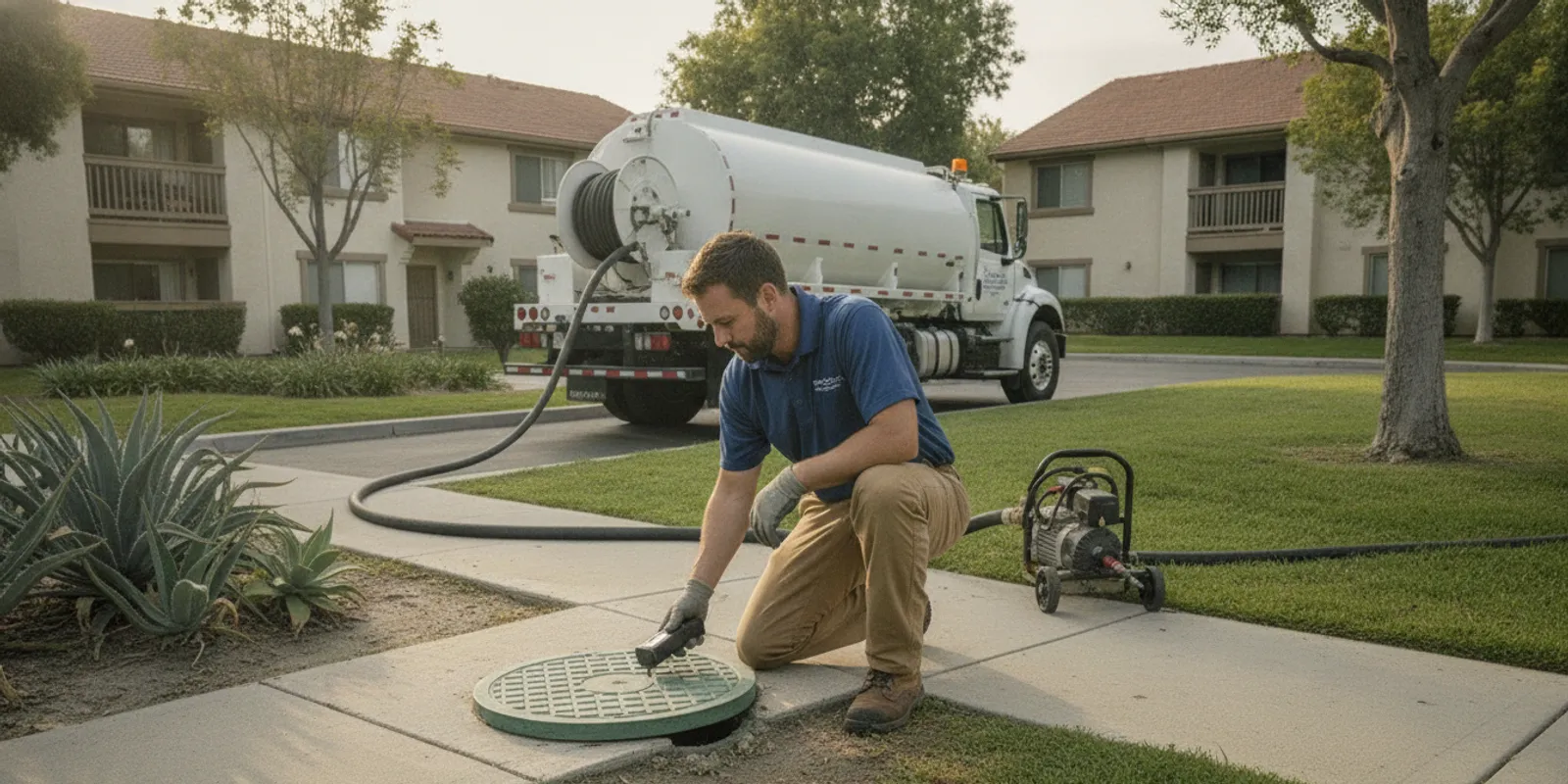
Hydro jetting HOA Conejo Valley property managers consider can remove certain buildup from a shared drain or sewer line, but the right next step depends on what is in the pipe and its condition. When several homes or commercial spaces use one system, recurring symptoms can affect multiple people at once. A camera inspection, clear service scope, and useful maintenance records help managers decide whether cleaning, repair, or another approach fits the evidence.
Request a shared drain assessment
Why does multi-unit drain maintenance need a system-wide view?
In a detached home, one slow sink may point to a local fixture branch. In an apartment complex, condominium, or HOA, many fixtures may connect through branches that feed a common building drain or sewer line. A restriction farther downstream can affect several units, while a single fixture problem may have nothing to do with the shared system. It is important to separate those possibilities before planning work.
Property managers can start by recording which units and fixtures are affected. Note whether the issue involves sinks, toilets, showers, floor drains, or more than one type of fixture. Include when symptoms began, whether they happen together, and if they improve or worsen after water use. A cluster of reports around the same time can help a technician identify a shared line as a possibility; it does not prove the source on its own.
Common contributors include:
- Grease and food residue: Cooking fats and food particles can stick to pipe walls and capture other debris. Warm grease may travel as a liquid and cool farther down the line.
- Roots: Roots can enter through an existing opening or joint and obstruct flow. Removing root material from the pipe interior does not close the entry point.
- Scale and accumulated deposits: Mineral deposits and residue can narrow the available passage and create rough surfaces that collect waste.
- Heavy, shared use: More fixtures contribute to the same system. A restriction that was not obvious at low use may become noticeable during busy periods.
- Structural defects: Cracks, offsets, sagging sections, or a collapse can restrict flow. A cleaning method does not restore a damaged pipe.
Managers can review the company’s drain cleaning information and sewer inspection and repair services when identifying which type of line may be involved. The system’s layout and inspection findings matter more than the property label: an HOA, apartment, or office building can each have a different arrangement.
How can managers tell a local blockage from a shared-line concern?
Patterns help set the scope of an assessment, even though they cannot confirm a diagnosis. A single slow sink with normally draining nearby fixtures may point toward a local branch or fixture. Several reports from different units, multiple fixtures draining slowly at the same time, or recurring trouble in a common area may raise the question of a shared line. A toilet that gurgles when another fixture drains is another observation worth recording, but it is not proof of a particular defect.
Build a simple incident log rather than relying on a string of separate calls or messages. For each report, note the date and approximate time, building or unit, affected fixture, symptom, and whether other areas were affected. Record whether the drain cleared on its own, whether the symptom returned, and whether there was an overflow. Keep the resident’s description in their own terms where possible. This helps distinguish a recurring pattern from several unrelated fixture problems.
For example, suppose two residents report slow sinks on different floors during the same afternoon, and a common-area floor drain is also slow. That cluster gives a technician a reason to ask about the shared branch or downstream line. If the assessment instead finds one localized obstruction, the property can avoid treating the entire building system as the cause. In either case, the reports guide the investigation; camera findings and other assessment evidence help establish what work is appropriate.
Managers can also note timing. Symptoms that appear during a busy period may make the use pattern relevant, while an issue that persists when the building is quiet may call for a different line of inquiry. Do not ask residents to test drains by running large quantities of water, flush items to see what happens, or access a cleanout. Limit information gathering to normal observations and leave tests involving the plumbing system to the service professional.
When is hydro jetting HOA Conejo Valley service appropriate?
Hydro jetting sends pressurized water through a pipe to clear certain material from its interior. Depending on the obstruction and the pipe, it may help remove grease, residue, and some root growth. It is a cleaning method, not a repair. A technician should consider the pipe material, condition, access point, blockage, and prior history before recommending it.
A camera inspection can help locate a restriction and show visible conditions inside an accessible line. It can provide useful evidence for choosing between cleaning and repair, though the view is limited to the area the camera can reach and what is visible at the time. Ask what was observed, where the camera traveled, and whether the findings are available for the property’s records. Conejo Bros Plumbing describes its drain camera inspection service as a diagnostic option.
Hydro jetting may be worth discussing when an assessment identifies removable buildup in a line that is suitable for the method. It deserves more caution when an inspection shows a fragile, badly damaged, collapsed, or severely offset pipe. In those cases, ask whether a repair or a different cleaning approach should be considered first. If roots are present, ask both whether clearing is appropriate and whether the point of entry needs separate attention.
Jetting is not a do-it-yourself pressure-washer task. Equipment, pressure, nozzle selection, pipe condition, and access all matter. Using the wrong method can damage a line or leave the actual problem unresolved. For an active sewage backup, keep residents away from contaminated water, prevent unnecessary use of affected fixtures if it is safe to do so, and arrange a professional assessment promptly. The U.S. Environmental Protection Agency provides public information about environmental and water protection at EPA.gov; treat wastewater backups carefully and follow appropriate local health and safety guidance.
How do cleaning, inspection, and repair compare?
Use the inspection findings to compare the likely next steps rather than assuming one service fits every blockage. The table below is a discussion guide, not a diagnosis. The provider should explain what applies to the specific line and what evidence supports a recommendation.
| Observed condition | Possible next step to discuss | Questions for the property manager |
|---|---|---|
| Soft grease or residue in a sound, accessible line | Cleaning, which may include hydro jetting if appropriate | What line will be cleaned, how will access be made, and how will the result be checked? |
| Root growth visible inside the line | Compare removal with a plan to address the entry point | Could roots return, and is a separate repair evaluation warranted? |
| Scale or hard deposits | Assess the pipe and material before choosing a method | Is the proposed method suitable for this pipe and deposit? |
| Crack, offset, collapse, or other defect | Discuss repair options; cleaning alone may not solve the problem | What inspection evidence identifies the defect, and what alternatives are available? |
| Symptoms isolated to one fixture | Check the local fixture or branch before assuming a main-line issue | What observations distinguish a local blockage from a shared-line restriction? |
For a property comparing scope, Conejo Bros Plumbing publishes a $375 hydro jetting price. Confirm with the company what service scope and conditions apply to that published amount before authorizing work; do not assume it covers every building, access condition, line, inspection, or additional repair. The company’s published pricing information and high-pressure drain jetting page can help frame questions about the service. Ask for a written description of the work being considered and any exclusions or separate recommendations.
What should managers do before authorizing a service visit?
A little preparation can make a diagnostic visit more focused and reduce confusion among residents and staff. A manager does not need to identify the precise defect before calling. The goal is to share observations and arrange safe access, not to ask residents to open cleanouts or investigate sewer lines.
- Collect consistent reports. Ask each affected resident to state the unit, fixture, time of onset, and whether another drain or fixture showed a symptom. Record active overflow separately from slow drainage.
- Mark the system context. Share available plumbing plans, cleanout locations, prior camera footage, and records of previous clearing or repairs. Note which areas are common spaces and which need resident access.
- Describe what changed. Mention recent maintenance, unusually heavy use, landscaping or construction near the line, and whether a prior service temporarily improved flow. Keep observations factual rather than assuming a cause.
- Ask for diagnosis and scope. Clarify which branch or main line is being evaluated, whether a camera inspection is planned, and what conditions could change the proposed work.
- Coordinate access and communication. Notify affected residents about the assessment window and any specific instructions provided by the service team. Arrange entry to mechanical rooms or common areas where needed.
- Keep the findings. Request an explanation of what was found, what work was completed, whether the result was checked, and whether follow-up or repair is recommended.
When comparing a cleaning proposal with a repair proposal, ask the same questions of each: What exact section of line is involved? What evidence supports the recommendation? What work is included? What remains unresolved? Is there a separate inspection, access, or restoration step? A clear scope helps an HOA compare like with like rather than treating a brief description such as “clear the sewer” as a complete plan.
What should the service record say after work is completed?
A useful service record should let someone who was not present understand the problem and the decision made. Include the affected line or area as identified by the technician, the date, reported symptoms, access point used, and whether inspection was part of the visit. Record the observed condition in plain language. If the provider shares camera footage or still images, note where they relate to the line and keep them with the maintenance file.
Separate findings from recommendations. For instance, the record might state that a restriction was observed at a particular section, that cleaning was completed, and that a visible defect remains for further evaluation. Those are distinct facts and next steps. Avoid reducing the record to “jetting done” if the property still has a recurrence or a repair question. Ask who should receive a follow-up recommendation and whether the service provider advises monitoring, another inspection, or a separate repair assessment.
This level of detail is helpful when a property changes managers, when the same issue returns months later, or when an HOA compares proposals. It also gives the board a more useful summary than a collection of invoices: what symptoms prompted the visit, what the assessment found, what scope was authorized, and what remains unresolved. Store records according to the property’s normal maintenance and privacy practices.
How can property managers make follow-up useful?
Record the service date, symptoms, affected locations, inspection findings, work performed, and whether the same symptoms returned. If available, store camera notes or video with the property’s maintenance records. A later technician can compare new observations with earlier ones instead of starting with only a vague report that the drain “clogged again.”
Recurring problems after cleaning are a reason to review the diagnosis, not automatically to repeat the same service. A remaining root-entry point, a structural defect, a different blockage farther along, or a local issue may need a different response. If a restriction repeatedly appears in the same place, ask whether the inspection identified a repair need and what evidence would confirm it. Review drain descaling information when hard buildup is part of the discussion, and consider whether trenchless sewer repair merits evaluation if a damaged sewer line is found. Cleaning and repair are different scopes, so the recommendation should say which problem each is meant to address.
Preventive plans should follow the property’s own history and inspection results. Avoid adopting a fixed jetting interval simply because another building uses it. Ask what condition or pattern would justify a future visit, what should trigger a new assessment, and how to report a recurrence. The company’s commercial plumbing guide offers another starting point for organizing maintenance questions across shared facilities.
What should a commercial hydro jetting Ventura County plan include?
Commercial hydro jetting Ventura County property managers consider should account for how the building operates, not only the pipe itself. A restaurant kitchen, shared laundry room, office property, and residential complex may have different peak-use periods and access constraints. Before service, identify the relevant spaces, line access points, affected tenants, and any operational window that needs coordination. Ask the service provider what preparation is actually required; do not assume every building needs the same shutdown or schedule.
For a restaurant or facility with a kitchen, share the location and timing of recurring drain concerns and explain how the area is used. For a residential property, identify the units and common areas that have reported symptoms. For an office or retail site, note business hours, restricted rooms, and who can authorize access. These details help the service team understand the building without prematurely labeling the cause.
Some properties also have public-works or construction interfaces beyond ordinary private-line maintenance. Conejo Bros Plumbing has a public-works specialist section addressing coordination involving DWP and city public works, street-lateral replacement, traffic control, City planning and permits, septic-to-city-sewer rerouting, and pre-construction plumbing bids. If a property issue crosses into those areas, clarify which agency or project team is responsible, what permits and approvals are required, and how private-system work relates to public infrastructure. Do not treat routine drain cleaning as a substitute for project coordination or required approvals.
Frequently asked questions about multi-unit drain maintenance
Can hydro jetting remove roots from a shared sewer line?
It may remove some root growth from the pipe interior, depending on the pipe and the obstruction. It does not close the gap or joint where roots entered. Ask whether the inspection identified an entry point and whether repair should be considered.
Is hydro jetting suitable for every older pipe?
No. Age alone does not show whether a line can tolerate a particular cleaning method. Have the pipe’s visible condition and material assessed, then ask why the proposed method is appropriate for that line.
How often should an HOA schedule hydro jetting?
There is no single interval that fits every property. Use the system’s maintenance history, inspection findings, pipe condition, and observed use to decide whether follow-up is warranted.
What should managers tell residents during a shared-line problem?
Share practical updates about which areas are affected, how residents can report symptoms, and any specific use or access instructions confirmed by the service team. Avoid promising a repair outcome before the cause is known.
Request an assessment for your property today
When a shared drain keeps causing trouble, a documented assessment can help your team choose between cleaning, repair, or further investigation. Clear records and coordinated communication make the next maintenance decision easier for residents, managers, and service providers.