
Main Sewer Line Clog Thousand Oaks: Causes and Solutions
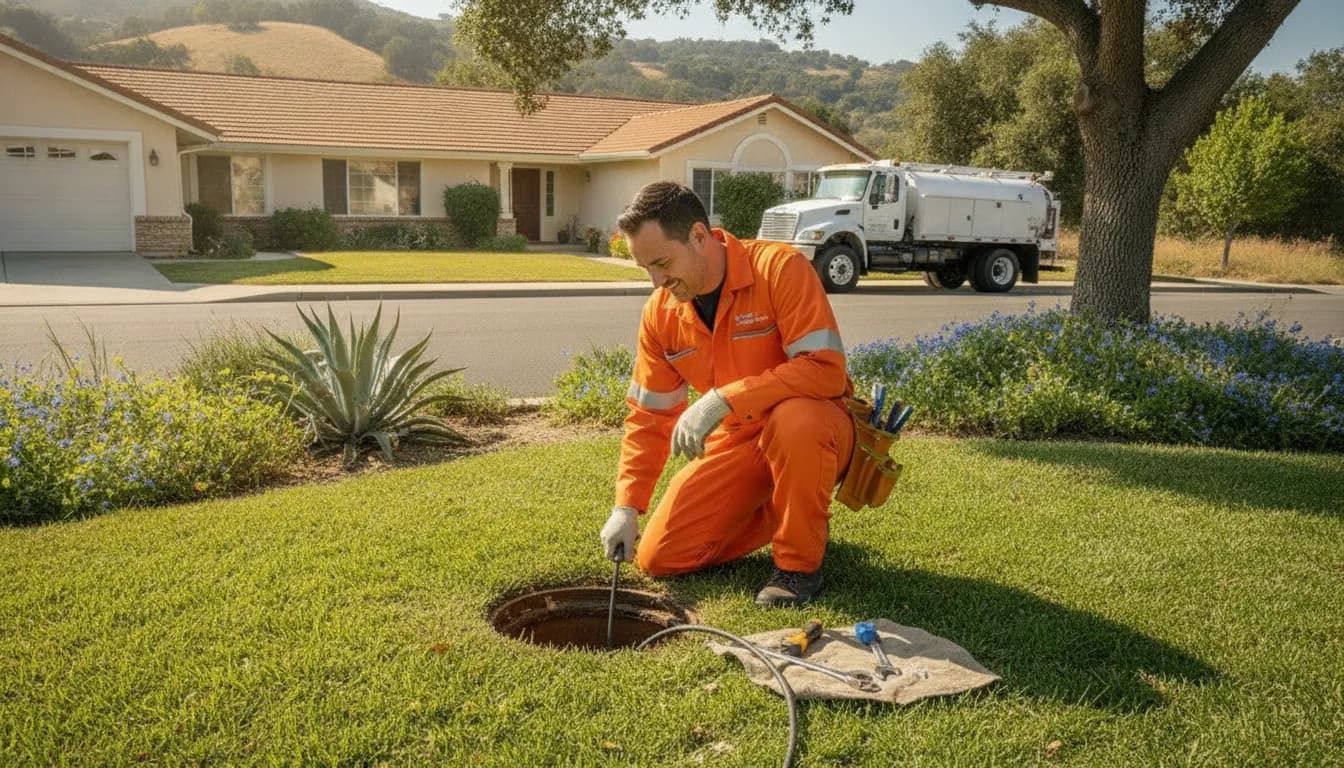
A sewer problem rarely starts with one dramatic moment. Grease, wipes, tree roots entering an existing pipe defect, or an aging line can gradually restrict flow. Several fixtures may begin slowing down together. Recognizing that pattern early can help you avoid treating a whole-home backup like an isolated sink or toilet clog.
Request main sewer line help today or call 805-603-1983
A main sewer line clog Thousand Oaks can show up as toilets that gurgle, tubs or showers that back up, multiple slow drains, or sewage odors. Homeowners should take these signs seriously. The right remedy depends on what is happening inside the pipe. A camera inspection can show the blockage's location and pipe condition, while hydro jetting or trenchless repair may be appropriate only when inspection supports it.
If more than one fixture is affected, stop adding water and look for the safest accessible cleanout rather than repeatedly forcing a small drain. The first step is understanding which materials and pipe conditions commonly create these backups, and why the visible symptom may appear far from the underlying problem.
What Causes a Main Sewer Line Clog in Thousand Oaks Homes?
The main sewer line is the larger drain that carries wastewater from your home toward the street connection. Smaller branch drains from sinks, showers, toilets, and laundry fixtures feed into it. When the main line is restricted, the problem can affect more than one fixture because the shared path cannot move wastewater away from the house normally. Conejo Bros provides Conejo Bros sewer services for mainline clearing, inspection, and related sewer concerns.
A main sewer line clog usually develops from material building up inside the pipe, something entering through a defect, or a combination of both. The visible symptom may be a slow drain or backup, but the underlying cause determines whether clearing alone is enough or whether the line needs further inspection.
Common causes of a main sewer line clog
| Possible cause | What happens inside the line | Clues worth noting |
|---|---|---|
| Grease and cooking residue | Fats, oils, and grease can cool and solidify on the pipe walls. The buildup narrows the passage and traps additional debris. | Recurring slowdowns, especially after kitchen use, or a clog that returns after a basic clearing. |
| Wipes and other non-dispersing products | Some products labeled flushable, including wipes, may remain intact and collect with grease or other material. | A gradual restriction that affects several fixtures rather than one isolated sink. |
| Tree roots | Roots can enter through an existing crack, gap, or faulty joint. They do not create the original crack, but they can exploit the opening and contribute to a blockage. | Recurring backups, outdoor growth near the route, or a restriction that returns after clearing. |
| Pipe defects and age-related damage | Older clay-tile or cast-iron pipes may break down. Poorly sealed joints, cracks, a damaged cap, or a collapsed section can interrupt flow and allow soil or water into the line. | Repeated problems, unexplained infiltration, or a clog that cannot be tied to household use. |
Why the cause matters
A cable may restore flow when loose material is the immediate obstruction, but it cannot by itself correct a damaged pipe or close an opening used by roots. Likewise, high-pressure cleaning may remove grease, mineral deposits, or roots in some situations, but the pipe must be suitable for that approach. The right next step is based on the line's location and condition, not only on what came out of the cleanout.
Homeowners should also avoid assuming that every sewer problem starts indoors. Improper connections involving roof leaders, foundation drains, or area drains can overload a sanitary sewer. If the restriction keeps returning, a diagnostic inspection can separate a household blockage from a pipe or connection problem before more disruptive work is recommended.
How Can You Tell If the Main Sewer Line Is Clogged?
A single slow sink often points to a local drain problem. A pattern across the home is more concerning. The main sewer line carries wastewater from multiple fixtures toward the street connection, so a blockage there can affect several rooms at once. If the kitchen sink, bathroom sink, shower, or toilet begin draining poorly around the same time, the issue may be farther downstream than any one fixture.
Watch for these signs:
- Several fixtures back up or drain slowly. Multiple drains acting up together can indicate a main-line problem rather than an isolated sink or shower clog.
- Gurgling from toilets or drains. Bubbling or gurgling can occur when air and wastewater are struggling to move through a restricted line.
- Backup at the lowest drain. When wastewater cannot move toward the street, it may appear first in a low tub, shower, floor drain, or other low fixture.
- Persistent sewage odors. A sewage smell near drains or cleanouts deserves attention, especially when it occurs with slow fixtures or recurring backups. Conejo Bros identifies odor detection as part of its sewer services.
These symptoms do not prove the exact location or cause. Roots, grease, wipes, pipe damage, or another obstruction can produce similar behavior. A professional assessment can distinguish a main-line clog from a fixture-level issue and determine whether clearing or further inspection is appropriate. Conejo Bros provides sewer services for mainline clearing and inspection in Thousand Oaks and the surrounding Conejo Valley.
What should you do during an active backup?
Stop using water throughout the home. Do not run sinks, flush toilets, start the washing machine, or take a shower until the line has been assessed. Additional water can increase the amount of overflow and spread contaminated material into living areas.
Treat visible sewage as a health hazard. The EPA notes that raw sewage can carry bacteria, viruses, protozoa, intestinal worms, molds, and fungi. Keep children and pets away from the affected area, avoid direct contact, and do not attempt to clean contaminated surfaces without appropriate precautions. If an accessible cleanout is present, tell the technician where it is, but avoid opening a pressurized or overflowing cleanout yourself. Document which fixtures are affected and when the symptoms began. Those details can help guide the first diagnostic step.
Why Do Tree Roots and Older Pipes Cause Recurring Backups?
Recurring backups often point to a continuing condition in the sewer line, not simply a one-time obstruction. Tree roots are drawn toward moisture and nutrients in the soil. If a buried pipe has a crack, open joint, damaged connection, or another gap, roots can find that vulnerable spot and grow into the line. The root growth then catches paper, grease, and other material moving through the pipe, narrowing the passage until wastewater backs up again.
That distinction matters. Roots do not normally create a sound pipe's first crack. They exploit an existing defect or opening. The presence of roots therefore suggests that the pipe may have been leaking before the roots entered it. A recurring main sewer line clog in Thousand Oaks may improve temporarily after clearing, but the underlying opening can continue to admit moisture and root growth unless the pipe's condition is evaluated.
Why pipe material deserves a closer look
Older clay-tile and cast-iron sewer pipes may break down, deteriorate, or develop leaks over time. Caustic drain-cleaning products can also damage older sewer pipes. However, age alone does not prove that a line has failed. A properly functioning older pipe may not need replacement. A newer installation can still have a poorly sealed PVC joint, an unsealed sewer cap, or another construction defect.
Tree location is not a reliable diagnosis, either. Roots can extend broadly through a yard in search of moisture, so moving a tree a few feet does not necessarily keep roots away from a sewer line. The important questions are where the obstruction is, whether roots are present, and whether the pipe has a crack, gap, collapse, offset, or other defect that allows the problem to return. The North Carolina Cooperative Extension explains that roots exploit existing cracks and gaps rather than creating them: tree roots and sewer lines.
What recurring backups can tell you
If clearing restores flow only for the problem to return, ask for evidence about the pipe instead of assuming that another clearing will solve it permanently. A sewer camera can help show the location and condition of roots, joints, and damaged sections. That information supports a more measured decision about cleaning, repair, or replacement. It also helps separate a root intrusion from a blockage caused by household material or another issue elsewhere in the line.
When Does a Sewer Camera Inspection Make Sense?
A camera inspection makes sense when a blockage is recurring, the cause is unclear, or clearing the line has not explained why the problem keeps returning. It is also useful before recommending a repair that could involve excavation or trenchless work. Instead of treating every main sewer line clog Thousand Oaks homeowners encounter as the same problem, a camera helps identify where the trouble is and what condition the pipe is in.
A small, localized drain clog may respond to routine clearing. However, repeated backups, several affected fixtures, sewage odors, or a suspected main-line issue call for a closer look. Conejo Bros includes mainline clearing and inspection among its sewer services, with a diagnostic-first approach that keeps the remedy tied to observable conditions.
What can the camera reveal?
A sewer camera travels through an accessible portion of the line and provides a view of conditions that are otherwise hidden underground. It may help locate a blockage, show tree-root intrusion, identify pipe damage, or reveal another condition affecting flow. The inspection does not simply answer whether a line is clogged. It can help distinguish a temporary obstruction from a damaged, deteriorated, or repeatedly vulnerable section of pipe.
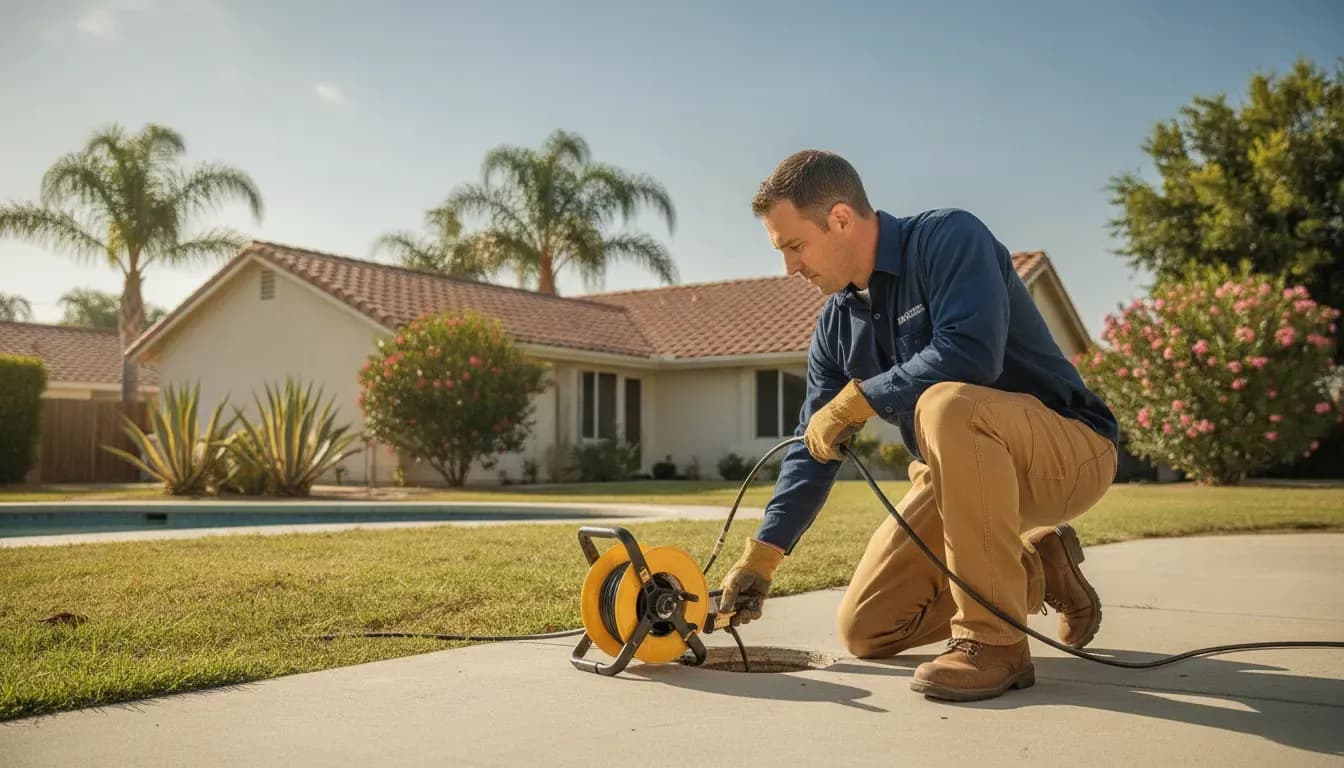
A sewer camera helps show the hidden condition of a residential line before repair recommendations are made.
For homeowners, recorded video and professional reporting can make the recommendation easier to understand. For property managers, commercial owners, or real estate clients, that documentation can provide a clearer record of what was observed before deciding on maintenance or repair. Conejo Bros describes its sewer camera inspection in Thousand Oaks as supporting high-resolution viewing, recording, customer documentation, and reporting.
Why diagnosis should come before repeated clearing
Clearing a line may restore flow without addressing the reason the blockage formed. If roots are entering through an existing defect, or if the pipe has another structural problem, repeated clearing may only provide temporary relief. A camera inspection gives the technician evidence to decide whether mechanical clearing, hydro jetting, monitoring, or a repair discussion is appropriate. Hydro jetting and trenchless solutions are not automatic answers for every clog, because pipe condition and access matter.
Older homes may also benefit from periodic sewer-system evaluation, particularly when the line has a history of backups. The right timing depends on the property's history and observed symptoms. If the inspection points toward work in a street lateral or public right-of-way, additional city planning, permits, traffic control, or public-works coordination may be part of the next step. The goal is a defensible diagnosis before more disruptive work is proposed.
Should You Choose Hydro Jetting or Mechanical Clearing?
Both methods can restore flow, but they solve different problems. Mechanical clearing uses a cable or similar tool to reach the obstruction and open a passage through it. That can be a sensible first response when the immediate goal is to relieve a main-line blockage and the pipe is accessible. It does not, by itself, explain whether grease, roots, mineral buildup, a damaged section, or another condition caused the backup.
Hydro jetting uses pressurized water to clean the inside of a drain or sewer line. Conejo Bros uses hydro jetting for sewer and area drains, with multiple nozzle configurations and systems capable of pressures up to 4,000 PSI. The process can remove grease, mineral deposits, and tree roots without relying on harsh chemicals. You can learn more about drain jetting and hydro jetting before deciding whether it sounds appropriate for your property.
When mechanical clearing may fit
Mechanical clearing may fit a straightforward obstruction where the line needs to be opened promptly, particularly when an accessible cleanout or another suitable access point is available. It can also be useful when the pipe condition has not yet been established and the technician needs to restore flow before conducting a closer inspection. Clearing the line is not the same as repairing it, however. If the clog returns, repeated attempts to push through the same point may leave the underlying issue unresolved.
When hydro jetting may fit
Hydro jetting may be considered when buildup on the pipe walls is contributing to restricted flow or when a more thorough cleaning is appropriate. It is often discussed for grease, mineral deposits, and root intrusion, but pressure and nozzle selection should match the line. High-pressure water is not automatically suitable for every older, cracked, poorly joined, or otherwise compromised pipe. The recommendation should account for both the material being removed and the pipe's ability to withstand the work.
That is why pipe condition and access matter more than choosing the most powerful-sounding method. A camera inspection can locate blockages, roots, and pipe damage while providing recorded documentation for the recommendation. A diagnostic-first assessment may show that mechanical clearing is enough, that hydro jetting is a reasonable maintenance or cleaning step, or that the line needs a different repair plan. For local help with a suspected main sewer line clog Thousand Oaks homeowners can review drain cleaning services and discuss the access point and symptoms before work begins.
When Could Trenchless Repair Be Appropriate?
Trenchless repair may be worth discussing when an inspection shows that a sewer pipe has a repairable structural problem, not simply a temporary obstruction. A recurring backup can be frustrating, but the symptom alone does not establish that the line needs rehabilitation. A camera inspection can help identify the location and condition of the pipe so the next recommendation is based on evidence rather than guesswork.
That distinction matters when evaluating a sewer service for a suspected main-line problem. Routine clearing addresses restricted flow. Trenchless work addresses certain pipe-condition issues while limiting the need for conventional excavation, but it is not an automatic substitute for clearing every clog. The right approach depends on what the inspection finds, the pipe's accessibility, and the requirements of the particular property.
What trenchless methods may involve
Depending on the diagnosis, available trenchless capabilities can include cured-in-place pipe rehabilitation, often called CIPP, as well as epoxy spray lining, epoxy brush coating, top-hat relining, or pipe bursting. These methods do not all solve the same problem, and listing a method does not mean it is suitable for every line. The condition, size, layout, connections, and surrounding constraints must be evaluated before a method is recommended.
For example, lining-based approaches may be considered when the existing pipe can support rehabilitation and the defect can be addressed from an appropriate access point. Pipe bursting is a different approach that replaces the old path by breaking and displacing the existing pipe, so site conditions and utility considerations matter. A professional should explain which option fits the documented defect, what preparation is required, and whether conventional repair is more appropriate.
Why a clog and a damaged pipe are different problems
A main sewer line can be blocked by material that restricts flow without requiring pipe repair. Grease, mineral deposits, or roots may sometimes be addressed through clearing or hydro jetting, subject to pipe condition and safe access. If the line is cracked, collapsed, badly offset, or repeatedly failing, clearing may restore flow temporarily without correcting the underlying defect. That is why diagnosis should come before choosing between mechanical clearing, hydro jetting, excavation, or trenchless rehabilitation.
Conejo Bros Plumbing presents trenchless repair as a condition-dependent, project-based option after diagnosis. A clear recommendation should connect the observed pipe condition to the proposed method rather than treating trenchless work as the default answer for every main sewer line clog in Thousand Oaks.
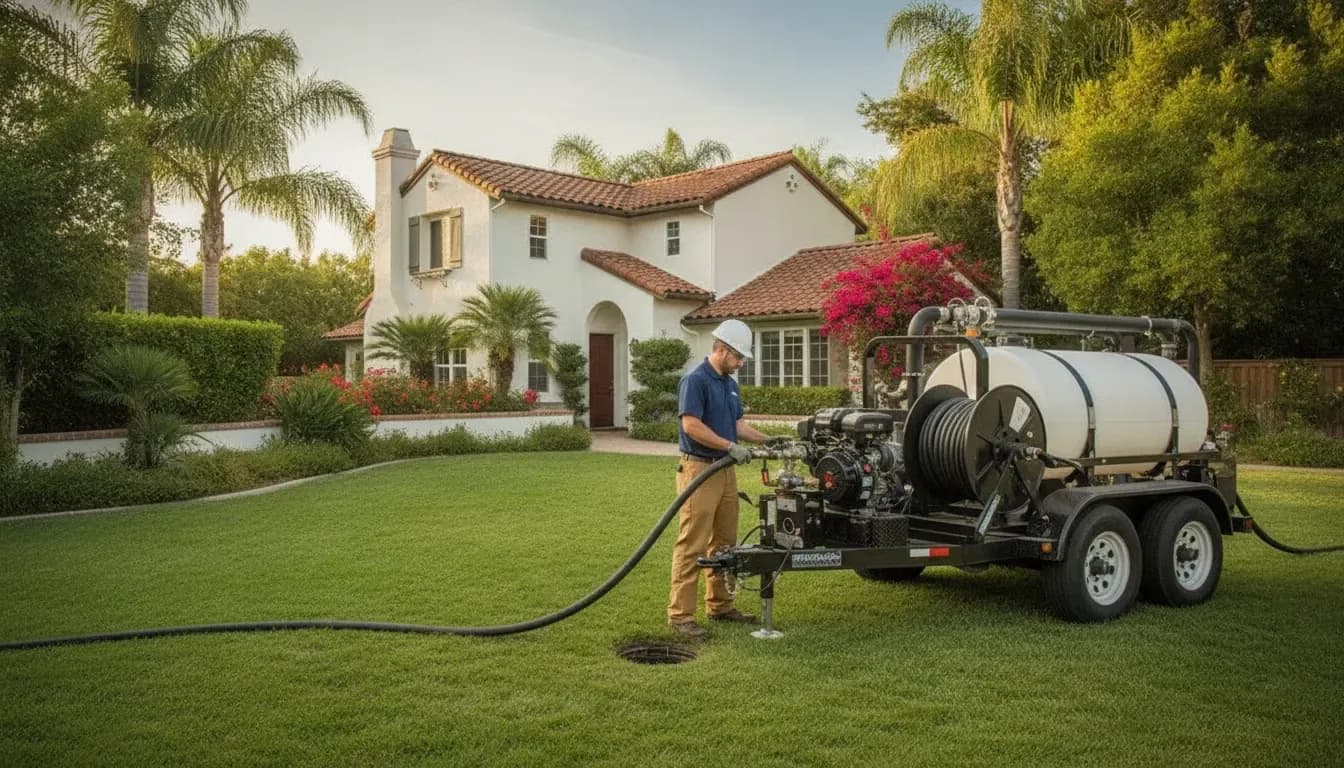
Hydro jetting may remove buildup when the pipe condition and access make high-pressure cleaning appropriate.
What Should Thousand Oaks Homeowners Do Before Help Arrives?
A suspected sewer backup can worsen quickly when more water enters the system. Keep people and pets away from wastewater, avoid experimenting with harsh chemicals, and gather useful details for the technician. These steps can protect your home and make the initial diagnosis more efficient.
- Stop adding water. Do not run sinks, showers, washing machines, or toilets while wastewater is backing up. If the affected area is safe to enter, keep children and pets away from any contaminated water. Sanitary sewer overflows can contain untreated or partially treated sewage, including bacteria, viruses, and other organisms, so avoid skin contact and do not attempt cleanup without appropriate protection. The EPA explains the health risks associated with sewage overflows.
- Do not force a cleanout open. An accessible cleanout may provide a useful access point for clearing a main-line blockage, but a cap can be under pressure when the line is full. If you are not certain which cap is the sewer cleanout or it is difficult to remove, leave it alone and tell the technician where it is located. Avoid pouring drain chemicals into a backed-up line.
- Document what happened. Note which fixtures are affected, when the backup began, whether more than one drain is involved, and whether you noticed gurgling, odors, or recent slow drainage. Take photos from a safe distance. These details can help distinguish a localized fixture issue from a problem farther along the main line. Conejo Bros provides mainline clearing and inspection, tree-root removal, smoke testing, real-estate inspections, and odor identification through its Conejo Bros sewer services.
- Identify the likely responsibility line. The private sewer lateral generally serves the property before it reaches the public connection. A blockage or damage in the street-side system may involve the city or another public agency. Do not assume responsibility based only on where water appears. A camera inspection and site assessment can help locate the issue. For work that reaches public right-of-way, ask about DWP and city public works coordination, street-lateral replacement, traffic control, City planning and permits, septic-to-city-sewer rerouting, or pre-construction plumbing bids. Homeowners can review the Thousand Oaks service area for local coverage.
Once the immediate risk is controlled, provide the technician with your notes and any prior sewer reports. A diagnostic-first evaluation can clarify whether the next step is clearing, inspection, or a larger repair, rather than treating every backup the same way.
For published service details and transparent options, review Conejo Bros Plumbing pricing before scheduling. Service recommendations still depend on the line's condition, access, and the findings from the evaluation.
Book a diagnostic sewer inspection now and stop repeat backups
Frequently Asked Questions
What should I do if my main sewer line is clogged?
Stop using sinks, toilets, showers, and appliances that discharge water into the drain system. If wastewater is backing up, keep people and pets away from it, avoid contact with your skin, and do not use chemical drain cleaners. Raw sewage can carry bacteria, viruses, and other health hazards, according to the EPA. A plumber can determine whether the obstruction is in the private sewer line or farther downstream.
Can I unclog a main sewer line myself?
Minor fixture clogs may respond to basic household methods, but a suspected main-line backup is different. Avoid forcing a cable or adding caustic chemicals when you do not know the pipe's condition. A camera inspection can locate blockages, roots, pipe damage, and other conditions before the remedy is selected. Multiple slow or backing-up fixtures are a reason to seek a professional diagnosis rather than repeatedly treating one drain.
When is a sewer camera inspection useful?
A camera inspection is useful when backups recur, several fixtures are affected, roots are suspected, or cleaning has not solved the problem. The video can show the blockage location and the condition of the pipe, supporting a documented recommendation. That evidence helps determine whether mechanical clearing, hydro jetting, or a trenchless repair is appropriate for the line.
Is hydro jetting appropriate for every sewer clog?
No. Hydro jetting may remove grease, mineral deposits, and some root growth, but the pipe must be evaluated first. A severely damaged, collapsed, or otherwise vulnerable line may require a different approach. Inspection findings, not the symptom alone, should guide the choice between jetting, mechanical clearing, repair, or rehabilitation.
Ready to Request a Sewer Evaluation?
Recurring backups, multiple slow drains, or signs of a main-line clog deserve a clear diagnosis before choosing a repair method. A sewer inspection can help identify whether camera inspection, hydro jetting, mechanical clearing, or trenchless repair fits the pipe's condition. To request a diagnostic sewer inspection or main-line clog evaluation in Thousand Oaks, contact us through Conejo Bros Plumbing.