
Septic Tank Pumping Services: What Conejo Valley Owners Need to Know
By Tiago Alkana
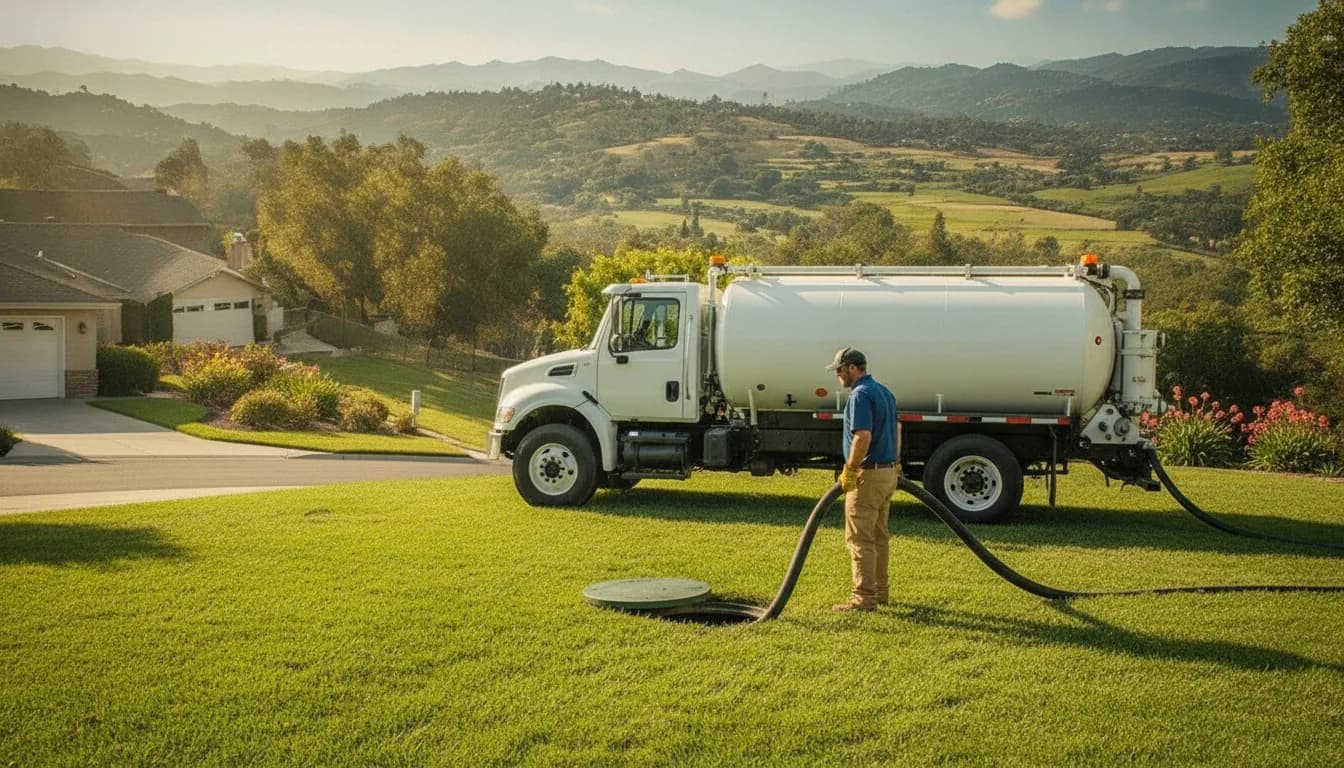
A septic system can seem out of sight until slow drainage, odors, or a backup makes the tank's condition impossible to ignore. Understanding the service first helps you choose the right next step instead of treating every septic problem as a simple pumping visit.
Septic tank pumping services remove accumulated solids and liquid from a septic tank to support routine maintenance. Conejo Bros Plumbing offers septic pumping capacity for tanks up to 1,250 gallons. The right scope depends on the tank, property, access, and observed condition. Pumping can support maintenance, but it does not replace an inspection or repair when symptoms point to a broader system problem.
For homeowners, property managers, commercial properties, and real estate customers in Thousand Oaks, the Conejo Valley, and Ventura County, the key question is what pumping addresses and what it does not. Use the service definition below to decide whether to request pumping, an inspection, or another septic evaluation.
What Are Septic Tank Pumping Services?
Septic tank pumping services are a maintenance service that removes accumulated solids from the tank so it can continue receiving wastewater. Pumping is not a complete diagnosis of every component connected to the tank. Homeowners may schedule it as planned maintenance, while property managers, commercial customers, and real estate professionals may request it for property care or documented evaluation.
Tank size and site conditions vary. Conejo Bros Plumbing's septic pumping capacity is up to 1,250 gallons. This is a maximum service capacity, not a statement that every tank holds 1,250 gallons or that capacity alone determines when pumping is appropriate. The provider should consider the property's system, access, service history, and current condition before recommending the next step.
How pumping differs from other septic services
Pumping focuses on removing accumulated material from the tank. An inspection looks at the tank and system condition, and may include camera documentation when that is useful. Repair addresses a specific problem, such as damage or a failing component. Installation or replacement involves putting in a new tank or system rather than maintaining the existing one. These services can relate to one another, but they are not interchangeable.
That distinction matters when a slow drain, odor, backup, or property transaction raises a concern. Pumping may be appropriate, but an inspection may also be needed to identify the cause and document what is present. Conejo Bros uses a diagnostic-first approach, including camera inspection before major interventions when appropriate. Its broader Ventura County septic services cover inspections, pumping and maintenance, tank replacement and installation, leach-field work, and seepage-pit maintenance.
This article defines the service rather than replacing the company's dedicated service page or a location-specific maintenance guide. For local cost context, review the septic pumping cost guide. The right recommendation depends on what the tank and surrounding system need, not simply on choosing the broadest service label.
What Does a Septic Tank Pumping Visit Include?
A septic tank pumping visit should begin with understanding the system's accessible condition, not with assumptions about what is wrong. The exact work depends on the tank, the property's symptoms, and what can be safely evaluated at the time of service. A diagnostic-first approach helps separate routine pumping from issues that may require inspection, repair, or additional maintenance.
- Review the system and accessible condition The visit can start with a discussion of recent symptoms, maintenance history, and access to the tank. The service provider may evaluate visible and accessible parts of the system for conditions that could affect the recommendation. This is especially useful when a property has slow drainage, odors, backups, or an uncertain service history. If a deeper evaluation is appropriate, Conejo Bros Plumbing may recommend inspection with camera documentation before a major intervention, rather than presenting an unsupported repair conclusion.
- Pump accumulated solids from the tank Pumping removes accumulated contents from the septic tank so the system has room to continue receiving wastewater. The approved pumping capacity for Conejo Bros Plumbing is up to 1,250 gallons. That figure does not mean every tank holds that amount, and tank capacity by itself does not determine when service is needed. The appropriate scope should reflect the property's actual system and condition.
- Check for leaks and scum or sludge buildup Maintenance-oriented evaluation can include checking for leaks and examining the scum and sludge layers. The U.S. Environmental Protection Agency identifies these checks, along with regular inspection and pumping, as important parts of septic system care. Findings should be explained plainly, including whether the visit appears to address routine buildup or whether another concern deserves follow-up.
- Document findings and outline the next step Clear documentation gives homeowners, property managers, and real estate customers a more useful record than a simple pump-and-leave visit. Depending on what is accessible and observed, documentation may support a recommendation for continued maintenance, a camera inspection, repair, or replacement. Conejo Bros provides broader Ventura County septic services., while its septic maintenance guide offers additional context for planning care.
If you are unsure whether your property needs pumping, inspection, or a different septic service, share the system's symptoms and known history when requesting an evaluation. That information helps the team recommend a practical next step without promising work that has not been verified.
How Often Should a Septic Tank Be Pumped?
For many household septic systems, the U.S. Environmental Protection Agency gives a typical pumping interval of three to five years. That range is useful for planning, but it is not a universal rule. The right timing depends on how the system is used and what an inspection finds.
Household size is one important factor. More people generally produce more wastewater and add solids to the tank faster. Water use, the amount of solids entering the system, and the tank's size also affect how quickly maintenance is needed. A home with frequent guests or unusually high water use may need attention sooner than a similar home with fewer occupants.
Tank capacity matters, but it should not be used by itself to set a pumping schedule. Conejo Bros Plumbing's septic pumping capacity is up to 1,250 gallons, yet the tank's capacity alone does not determine when service is due. The condition and measured levels inside the tank provide more useful guidance than a calendar date or capacity number viewed in isolation.
Inspection findings can change the schedule
An inspection can identify conditions that call for earlier service. The EPA recommends that septic professionals check for leaks and examine the scum and sludge layers. Its maintenance guidance identifies pumping indicators such as scum within six inches of the outlet. Sludge within 12 inches of the outlet, or combined scum and sludge exceeding 25 percent of the liquid depth. These measurements help turn a general maintenance range into a system-specific recommendation.
Systems with pumps or other mechanical components may need more frequent attention. The EPA generally recommends annual inspections for these alternative systems because additional components can affect performance and maintenance needs. If you are unsure when the tank was last serviced, have recently changed household occupancy. Or notice drainage concerns, an inspection can help establish a responsible next step rather than guessing.
For a practical recommendation, gather any prior service records and arrange an evaluation based on the tank's actual condition, use, and components. That approach keeps septic tank pumping services preventive instead of waiting for a backup or other avoidable disruption.
EPA septic system maintenance guidance
Signs You May Need Septic Tank Pumping Services, Not Just Routine Maintenance
Septic problems do not always begin with a complete backup. A change in how drains work, an unfamiliar odor. Or wet conditions near the tank or drain field may be a reason to ask whether the system needs pumping, inspection, repair, or another type of service. These signs can have more than one cause, so they should not be treated as proof that the tank is full. An inspection helps identify the next practical step.
Slow drains and recurring backups
When several fixtures drain slowly, the issue may involve the building's plumbing, a blockage in the line, or a septic tank that needs attention. A toilet or sink that backs up repeatedly deserves prompt evaluation, especially when the problem affects more than one fixture. Waiting until wastewater returns through a drain can make the disruption more difficult to manage. A qualified technician can assess whether pumping is appropriate and whether another restriction or system issue needs to be addressed.
Unpleasant odors or unusually wet areas
Persistent sewage odors around the tank, access points, or drain field can indicate that the system needs inspection. Unusually wet soil, standing water, or unusually vigorous vegetation in one area may also warrant a closer look. Odors and surface conditions are clues, not a diagnosis. They can reflect leaks, drainage conditions, or other concerns that pumping alone may not resolve.
Scum and sludge measurements
The U.S. Environmental Protection Agency lists general pumping indicators that a professional may evaluate: scum within six inches of the outlet. Sludge within 12 inches of the outlet, or combined scum and sludge occupying more than 25 percent of the liquid depth. These thresholds are inspection indicators, not instructions for homeowners to open a tank or measure it themselves. The provider should inspect the system safely and explain what the findings mean for the property.
Conejo Bros Plumbing takes a diagnostic-first approach, including camera documentation when appropriate, before recommending major work. For broader maintenance considerations, review this septic maintenance guide, then request an evaluation if your property is showing warning signs.
Septic Pumping for Thousand Oaks and Ventura County Properties
Septic needs vary by property type and by the condition of the system. A homeowner may need routine pumping, while a property manager may be planning service across several units. Commercial, real estate, and municipal-property customers may also need a clear inspection path before maintenance, a transaction, or additional work. Conejo Bros Plumbing provides septic services for these audiences in Thousand Oaks, the Conejo Valley. And Ventura County, with recommendations based on the condition of the system rather than a one-size-fits-all assumption.
Septic pumping capacity is up to 1,250 gallons. That figure does not determine every property's needs or establish a universal pumping schedule. A diagnostic-first review can help identify whether the next step is pumping, inspection, maintenance, repair, or installation. Septic work may include tank inspection with camera documentation, pumping and maintenance, tank replacement and installation, leach-field repair or replacement, and seepage-pit maintenance.
Choosing the right septic service direction
| Service need. | Likely next step. | Appropriate page or service direction. |
|---|---|---|
| Known tank service or accumulated solids. | Discuss pumping and the property's service history. | Septic tank pumping in Ventura County. |
| Unclear system condition, planned sale, or property review. | Start with an inspection and documented findings. | Ventura County septic services. |
| Planning around local service costs. | Review pricing factors before requesting service. | Septic pumping cost guide. |
| Recurring upkeep or questions about maintenance planning. | Compare the system's condition and history with a maintenance recommendation. | Septic maintenance guide. |
If you are unsure which direction fits your property, request septic service and share what you know about the system, its history, and the current concern. The right starting point can prevent a routine pumping question from being treated as a larger repair, or a developing system problem from being overlooked.
How to Choose the Right Septic Service Next Step
The right septic service depends on what you know about the system and what you are seeing on the property. Pumping removes accumulated solids from the tank as part of ongoing care. It may be the appropriate next step when the tank is due for service, measured solids are building up, or records show that routine maintenance has been deferred.
An inspection answers a different question: what condition is the tank and system in right now? Inspection can be useful before a real estate transaction, after an unexplained problem, or when you need a clearer picture before authorizing additional work. Conejo Bros Plumbing takes a diagnostic-first approach, including camera documentation when appropriate, so recommendations can be based on observed conditions rather than assumptions.
When repair or installation may be the better path
Choose a repair evaluation when the concern involves a leak, recurring backup, drainage problem. Damaged component, or an issue that does not appear likely to be resolved by pumping alone. Pumping can remove buildup, but it does not automatically correct a damaged tank, failing drainfield, seepage-pit concern, or other underlying system issue.
Installation or replacement is a separate decision for a new property, a system that cannot be reasonably repaired, or a project that requires a different septic configuration. The company's septic scope also includes tank replacement and installation, leach-field repair or replacement, and seepage-pit maintenance. You can review the broader range of Ventura County septic services. before deciding which type of evaluation fits your situation.
Use the property's history and symptoms together
Do not select a service from a calendar reminder alone. Consider the last documented pumping or inspection, recent changes in household or property use, slow drains, odors, backups, and any visible signs of trouble. Tank size matters, but it should not be the only factor used to plan service. Conejo Bros Plumbing's approved pumping capacity is up to 1,250 gallons, not a statement that every tank has that capacity or that capacity determines timing by itself.
For planned care, an inspection, pumping visit, or maintenance discussion may be enough to establish the next step. If the system is showing symptoms, ask for an evaluation that can distinguish routine pumping from repair needs. The septic maintenance guide provides additional planning context. When you are ready to match the property's history and symptoms to the appropriate service, request septic service from the Conejo Bros Plumbing team.
Frequently Asked Questions
What do septic tank pumping services include?
They typically focus on removing accumulated solids and evaluating the tank as part of ongoing maintenance. A service visit may also identify whether you need an inspection, camera documentation, repair, replacement, or installation. Conejo Bros Plumbing uses a diagnostic-first approach so recommendations address the condition of the system rather than assuming pumping is the only needed service.
How much septic waste can Conejo Bros Plumbing pump?
Septic pumping capacity is up to 1,250 gallons. That is the approved maximum service capacity, not a statement that every septic tank holds that amount. Your tank size and condition should be confirmed when planning service.
How often should a septic tank be pumped?
There is no single schedule that fits every property. Pumping needs depend on factors such as household or building use, wastewater generated, solids accumulation, and tank size. A professional inspection can help determine whether scheduled pumping or another maintenance step is appropriate for your property.
What if pumping does not solve the septic problem?
Pumping may not correct a damaged tank, leach-field issue, seepage-pit problem, or other system defect. Conejo Bros Plumbing can evaluate related septic needs, including tank inspection with camera documentation, leach-field repair or replacement, tank replacement and installation, and seepage-pit maintenance. Ask for an assessment before authorizing major work.
Ready to Request Septic Tank Pumping Service?
A clear conversation can help you identify the right next step for your property, whether you need pumping, an inspection, or additional septic service. Request septic tank pumping service through the Conejo Bros Plumbing contact page to share your needs with the team and get started.