
Sewer Cleanout Installation and Access for Thousand Oaks Drain Service
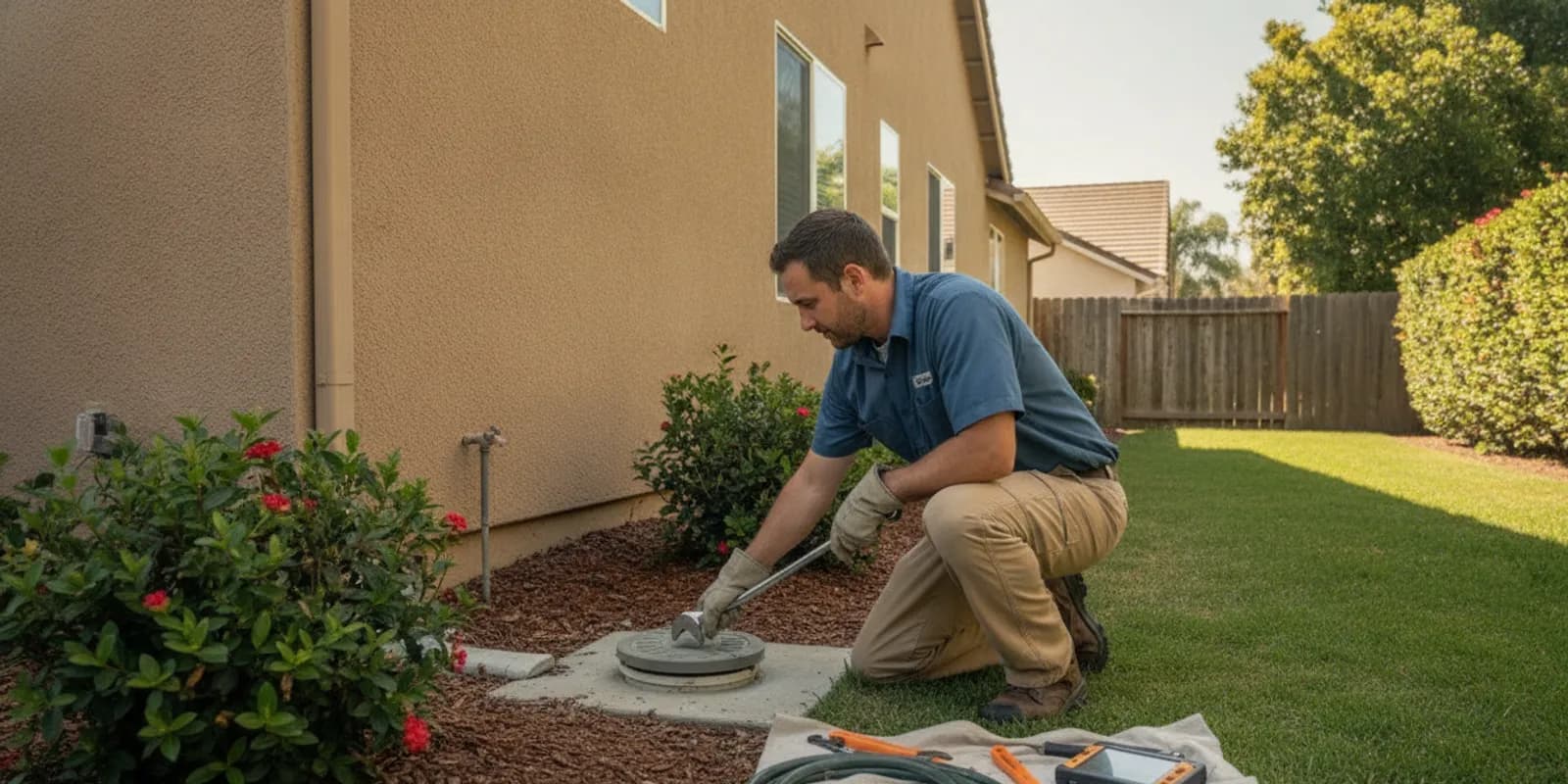
A sewer cleanout is an access point to a drain or sewer line, usually capped and connected to the pipe so a technician can reach the line with clearing or inspection equipment. For homeowners researching sewer cleanout installation Thousand Oaks, the key question is often whether an accessible cleanout exists and where it is located. Knowing that before a service call helps the team understand the issue and discuss an appropriate next step.
What is a sewer cleanout?
A cleanout is a capped fitting that provides access to a drain or sewer pipe. It may be outside near the home, in a garage, or inside a utility area, depending on the plumbing layout and local requirements. Some homes have more than one. A cap can be flush with the ground, partially hidden by landscaping, or located behind an access panel.
Cleanouts are not the same as drain openings inside sinks or showers. They provide a route into drainage piping for suitable service equipment. The exact layout varies, so do not assume every cap or pipe fitting is a sewer cleanout. If unsure, describe its location and appearance to the service team rather than removing it.
Homeowners sometimes notice a small round or square cover in a yard and wonder whether it marks a cleanout. Covers can also protect other utilities or drainage features. Avoid guessing from appearance alone. Take a photo from a safe distance if helpful, note nearby landmarks, and share that information with the person arranging service. A professional can identify whether the fitting connects to the line that needs attention.
How does sewer cleanout installation in Thousand Oaks help with service?
An accessible cleanout can provide a direct route to the line for drain clearing. It may help a technician reach a blockage without using a fixture opening or taking apart a portion of piping. Access can also support a sewer camera inspection when the pipe configuration allows the camera to be introduced through that point.
A suitable access point can make setup more straightforward, but it does not guarantee a faster visit or a particular result. The obstruction, pipe layout, distance, bends, and condition of the line affect the method a technician can use. If the access cap is stuck or damaged, that can also change how the work proceeds. The technician still needs to assess the symptoms and select a suitable approach.
The cleanout does not itself remove a blockage or reveal the condition of the entire system. A camera can show the section it travels through, while bends, deposits, standing water, or obstructions may limit what is visible. If a camera inspection is appropriate, the view can help identify what is happening in the accessible pipe and inform a discussion about next steps.
For an overview of drain clearing service, review the service details. You can also read about sewer camera inspection. If the concern is recurring, describe when it happens and which fixtures are affected before discussing whether inspection is useful.
Do I need a cleanout for drain cleaning?
Not necessarily. A cleanout is helpful access, but it is not the only possible route for every drain service. Depending on the problem and plumbing arrangement, a technician may be able to work through another appropriate access point. If a cleanout is missing, buried, damaged, or difficult to reach, available options depend on the pipe and the specific service needed.
Tell the service team if you know there is no accessible cleanout. Do not dig to locate one or try to create an opening yourself. A licensed professional can assess whether existing access is usable and whether a new access point is appropriate. Installation is not automatically needed for every clog, and the right placement depends on the piping and applicable requirements.
It also helps to distinguish a fixture-level problem from a possible building-drain issue. A single slow sink may involve that fixture or its branch piping, while symptoms at several fixtures can prompt broader questions. This is not a diagnosis: the pattern is simply useful context. Tell the technician what you observed rather than deciding in advance that the sewer line is blocked or that a new cleanout is required.
What should homeowners check before a service call?
A few simple observations can help the technician prepare. Do not remove a cap, insert tools, or apply force to a fitting. If wastewater is backing up, avoid using affected fixtures and mention the urgency when contacting the team.
- Look from a safe distance. Check common areas such as the side yard, near the foundation, or garage for a capped access point. Do not move heavy objects or dig.
- Note the location. Record whether it is inside or outside, and use a nearby landmark to describe where it sits.
- Check visibility. Say if it is covered by soil, plants, a box, or stored items. Do not pull apart landscaping or open a sealed cover.
- Describe symptoms. Note which fixtures drain slowly, whether more than one is affected, and whether the issue is constant or intermittent.
- Share history. Mention previous clearing or inspection, recurring symptoms, and any recent work you know about.
- Keep the area safe. Keep children and pets away from standing wastewater, exposed openings, or equipment.
When more than one person uses the property, ask household members whether they have noticed other symptoms. A short timeline can be useful: when the issue began, whether it followed heavy water use, and whether it has improved or worsened. Do not run water deliberately to test a suspected backup. If you have a recent plumbing sketch or records showing where a line runs, keep them available, but do not delay urgent service to search for paperwork.
For property managers, a simple access note can save confusion on arrival. Tell the technician how to enter the property, whether a gate or shared area is involved, and who can point out the suspected cleanout. Avoid providing access instructions that require someone to enter an unsafe area. If a tenant reported the issue, ask for specific observations rather than a technical diagnosis.
What affects cleanout access and installation?
Whether an existing cleanout can be used depends on its condition, accessibility, position, and connection to the affected line. A cap that is broken, obstructed, or difficult to reach may need attention before it can serve as an access point. The building-drain layout and location of the problem also matter. A visible fitting is not necessarily positioned to reach every branch or section of piping.
For a new cleanout, a plumber needs to consider the pipe route, suitable access location, and local plumbing requirements. The job may involve excavation or opening a finished surface, but the amount of work cannot be known without evaluating the site. Ask what location is proposed, what surfaces may be disturbed, how the work area will be protected, and how access will remain usable afterward.
Other practical questions include whether the proposed point would be easy to find later, whether landscaping or stored items could block it, and whether the cap will remain accessible after surface work. If the line runs beneath a driveway, patio, or other finished area, the access plan may involve different considerations than a cleanout in an open side yard. The professional should explain the intended work and any limitations before proceeding.
Code requirements vary by jurisdiction and situation. For example, Wisconsin's plumbing code addresses cleanout access for concealed drain piping, including access at a wall or floor surface. That example is not a substitute for local California requirements. Ask the professional evaluating the property which rules apply to your project. See Wisconsin cleanout access requirements.
How do service options compare?
| Situation | Possible next step | What to prepare |
|---|---|---|
| There is a visible, accessible cleanout and a drain is blocked | Discuss drain clearing and whether the cleanout is suitable access | Symptoms, affected fixtures, and cleanout location |
| The issue keeps returning or the cause is unclear | Ask whether camera inspection could help assess the line | Frequency, prior service history, and access details |
| No cleanout is visible or access is buried or damaged | Have a professional assess available access and whether installation is appropriate | Property layout and any known plumbing records |
| Multiple fixtures back up or wastewater is present | Contact a drain or sewer professional promptly for guidance | Which fixtures are affected and when symptoms began |
These are discussion points, not a diagnosis. A service professional can explain what can be confirmed during an evaluation and what work, if any, is recommended. Read about drain and plumbing service information and the company's sewer services.
When should I ask about sewer cleanout installation in Thousand Oaks?
Ask about installation when the home has no practical access point for a recurring line problem, or when existing access is damaged, blocked, or poorly located for service. An evaluation can establish whether a proposed location connects to the right pipe and can remain accessible. For homeowners planning repairs or improvements, asking early may help clarify how future inspection or clearing could be approached.
Installation may not be the first or only solution. If the issue is a single fixture clog, the relevant access and repair may differ from a blockage affecting the main line. Explain the symptoms and let the plumber determine which pipe section should be assessed. Avoid treating a cleanout as a guarantee that every part of the drainage system can be reached from one point.
Before agreeing to installation, ask the professional to describe the reason for the proposed location and what problem it addresses. Clarify whether the work is intended to provide future service access, restore damaged access, or accompany another repair. Ask what surfaces might be affected and what you should do to keep the point clear afterward. These questions help you understand the recommendation without assuming that adding a cleanout will resolve an underlying blockage or pipe defect.
What should you ask during the evaluation?
A clear conversation can help you understand the difference between an immediate service need and a longer-term access improvement. Start with what is known: symptoms, the likely area of the line, and whether anyone has used the suspected cleanout before. Then ask the technician to explain what is confirmed, what remains uncertain, and what additional access or inspection could clarify.
- Which pipe section would this access point serve?
- Can the existing access be used safely, or is it damaged or obstructed?
- Would another available access point work for the clearing or inspection?
- If installation is recommended, where would it be located and why?
- Could the proposed work disturb paving, flooring, landscaping, or other finished surfaces?
- How should the point be marked and kept accessible for future service?
Ask for a plain-language explanation of the options and their limits. A camera view, when available and appropriate, may answer some questions but may not show every portion of the system. Likewise, clearing a blockage can restore flow without establishing why it formed. Understanding what each step can confirm makes it easier to decide what to discuss next.
How can homeowners keep access useful over time?
If a cleanout is present, keep its location in household or property-maintenance notes. A simple description such as “side yard near the rear corner” is more useful than relying on memory during an urgent situation. If you manage several units, record the unit or building served and share the information with the appropriate maintenance contact.
Keep plants, stored materials, and movable items from obscuring the cap, but do not modify a buried or damaged fitting yourself. When planning landscaping or paving, tell the contractor that a plumbing access point may be nearby and ask how it will remain reachable. Do not paint over, seal, or cover a cap in a way that prevents a professional from locating and opening it.
After service, make a note of what access was used and any guidance the technician provided. Keep records of recurring symptoms and work performed. If problems return, that history can help the next evaluation distinguish a repeated symptom from a new one. It does not replace professional assessment, but it can make the conversation more precise.
Frequently asked questions
Can I remove the cleanout cap before the plumber arrives?
It is safer to leave the cap in place. A cap may be difficult to loosen, and opening a line can expose you to wastewater or pressure. Tell the service team where it is and let them handle access.
Does every home have an outdoor sewer cleanout?
No. The location and number of access points depend on the home's plumbing layout and construction. If none is visible, that does not by itself establish that installation is needed.
Can a camera inspection be done without a cleanout?
Sometimes another suitable access point may be available, but it depends on the pipe layout and the inspection needed. Share what access you can identify so the technician can evaluate options.
Will a new cleanout stop recurring clogs?
A cleanout provides access; it does not correct the cause of a blockage. Recurring problems may need diagnosis of the pipe and obstruction, followed by a suitable repair or maintenance approach.
Request an evaluation for cleanout access today
Before the visit, note the symptoms and point out any suspected access location without opening or digging around it. Clear information helps the team discuss safe, practical next steps for your home.