
Storm Drain Cleaning in Westlake: Catch Basin Checks Before Heavy Rain
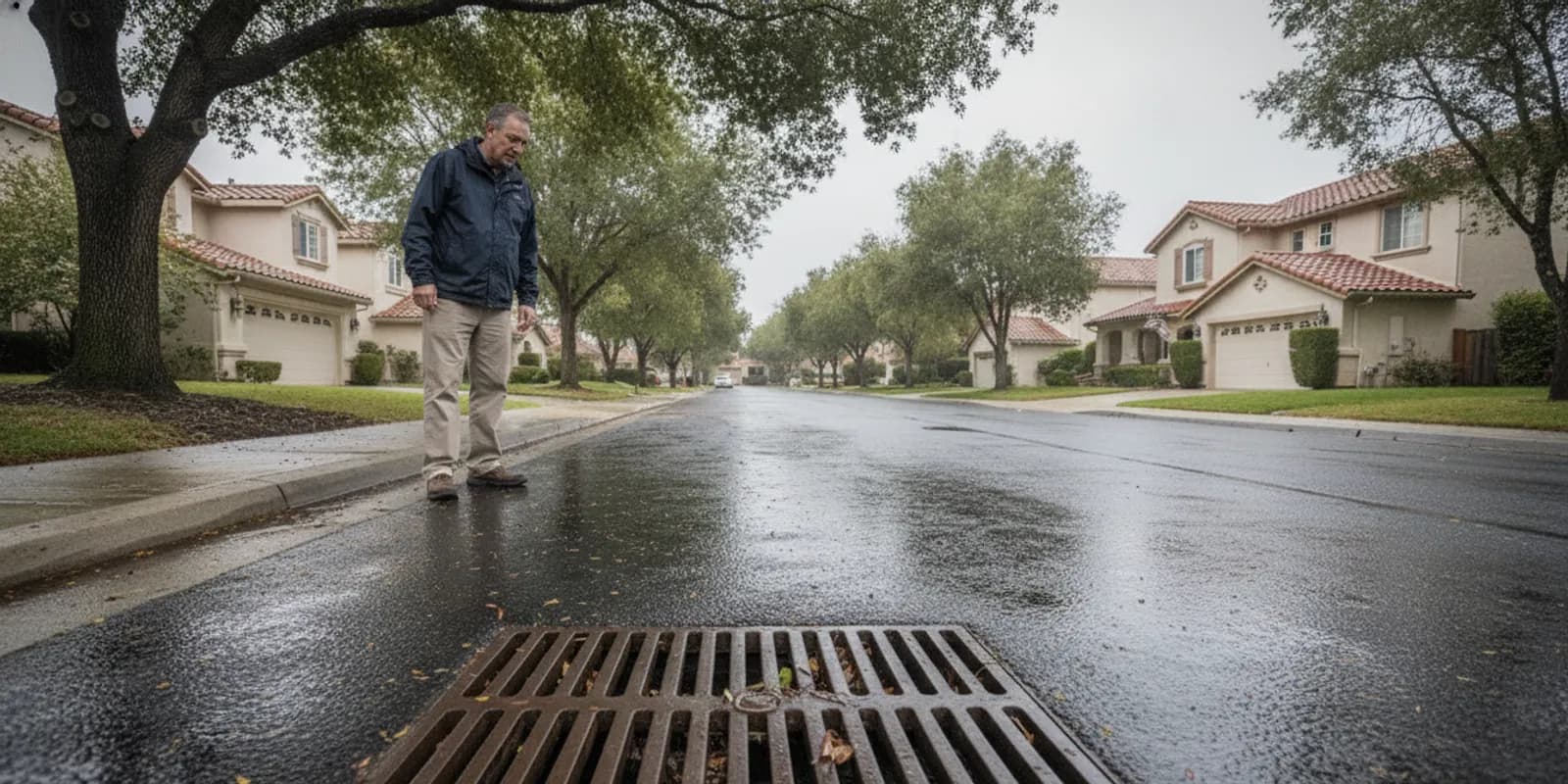
Storm drain cleaning in Westlake often starts with a practical question: is a catch basin allowing runoff to enter, or is debris restricting the opening? Before heavy rain, a visual check may reveal leaves, sediment, standing water, or a change in how a low spot drains. It cannot confirm what is happening underground, but it can help you choose the right next step.
What is a catch basin, and how does storm drain cleaning westlake relate?
A catch basin is a drainage structure with an inlet, often covered by a grate, that collects runoff and directs it into a connected drainage route. It can catch leaves and other debris before they travel farther. The grate is only the visible part: a restriction, damage, or capacity issue may be below ground or farther along the route.
Storm drains carry rainwater runoff; they are not household wastewater lines. A private yard or area drain may serve a single property, while a street-side catch basin may be managed by a city or another property owner. Their layouts, responsibilities, and maintenance steps can differ. If ownership is unclear, note the exact location and ask the property manager or public works department before arranging work.
That distinction matters because clearing a private inlet does not authorize work on a public structure, and a public basin report should go to the responsible agency. For a private property drainage concern, Conejo Bros Plumbing provides area drain services. The service page is a useful starting point when the drain is on your property and the trouble concerns runoff rather than indoor wastewater.
What signs suggest a catch basin needs attention?
Look for patterns before assuming a blockage. Possible warning signs include:
- Leaves, litter, or sediment visibly covering much of the grate.
- Water pooling at the inlet after nearby surfaces begin to drain.
- Water rising from the grate or flowing toward a building, garage, or walkway.
- Repeat pooling at the same place after separate rain events.
- A displaced, damaged, or unstable cover that could create a fall or vehicle hazard.
- Runoff carrying soil or mulch toward the opening after landscaping or a storm.
One observation rarely identifies the cause. Pooling could relate to a surface obstruction, a restriction farther along the path, the slope of the ground, or rainfall that exceeds the system's capacity. Write down when the water appeared, where it traveled, and how long it remained. A photo taken from a safe distance can help show whether the condition changes between storms.
Separate a one-time event from a recurring pattern. For example, leaves across a grate just after a windy night may be a surface condition, while water that repeatedly collects even when the grate looks clear deserves closer attention. If water is approaching a doorway or the level is rising quickly, do not spend time diagnosing the basin yourself. Keep clear and contact the appropriate emergency or public works service.
How can you check storm drain cleaning westlake needs safely?
Begin from stable ground and inspect only what is visible. Look at the grate, nearby low points, and the direction water would naturally flow. If loose leaves or litter sit on the surface and it is safe to do so, move that material away without reaching into the opening. Keep children and pets away from standing water, damaged covers, and runoff that may contain contaminants.
Do not lift or shift a grate, insert a tool into the basin, or enter a drainage structure. Covers can be heavy or unstable, and underground spaces may have hazards that a homeowner cannot assess from above. Do not use a hose or pressure washer to force debris farther into a storm drain. Avoid chemical drain products: they are not a sound way to maintain a stormwater structure and can add risk without addressing the underlying cause.
Keep the check observational. Note whether water is standing at the inlet or elsewhere, whether the surface is visibly covered, and whether the condition has happened before. Do not stand in moving water or approach an opening during active flooding. If water reaches electrical equipment or enters a building, move to safety and seek the appropriate urgent help.
How do you distinguish a surface issue from a drainage problem?
A clear-looking grate does not prove the route below it is clear. Likewise, debris on a grate does not prove that removing it will solve persistent pooling. Use a few observations to communicate the situation, not to make a final diagnosis.
- Check the timing. Did pooling begin during a short, intense burst of rain, or does it also happen in ordinary rainfall?
- Compare nearby areas. Is water collecting only at this inlet, or are several low points holding water at once?
- Look for a repeat location. If water consistently gathers along the same edge or near the same building entrance, record that pattern.
- Observe what happens after rain. Note whether water recedes, remains, or returns when another storm arrives; do not enter water to inspect.
- Identify ownership. Establish whether the structure is on private property, managed land, or public right-of-way before requesting work.
Consider a simple example: leaves cover part of a private area-drain grate, and water recedes after the leaves are moved from the surface. That observation supports keeping the opening clear, but it still does not establish the condition of the pipe. In a different case, the grate is clear but a pool remains through multiple rain events. That is a reason to report the recurring symptom and request an assessment, not a reason to push a tool into the opening.
If multiple grates or low points are affected at once, rainfall volume or a broader drainage route may be involved. A private contractor can assess a private drain, but public infrastructure questions should be directed to the responsible agency. Avoid changing the grade, redirecting runoff onto a neighbor's property, or altering a public inlet without confirming the applicable requirements.
How does storm drain cleaning westlake compare with other drainage checks?
The appropriate next step depends on where the water collects, whether there is an immediate hazard, and who maintains the structure. This comparison is a way to organize observations, not a diagnosis or a promise that cleaning will prevent flooding.
| What you observe | Reasonable next step | What it does not establish |
|---|---|---|
| Loose leaves on a private grate | Move only loose surface debris if safe; monitor during rain | That a connected pipe is clear |
| Repeated pooling at a private area drain | Record timing and location; request a drainage assessment | Whether blockage, slope, or capacity is the cause |
| Street-side basin is blocked or damaged | Report its location to the responsible city or property manager | That a private contractor is authorized to work there |
| Water entering a building or creating immediate danger | Move clear and contact appropriate emergency or public works help | That routine cleaning will resolve the hazard |
| Several nearby low points hold water | Document the affected area and report the broader pattern | That one grate is the only source of the problem |
For local context, the City of Westlake drainage and retention information discusses stormwater management, detention and retention basins, and city ordinances. Use the city's current directions for public drainage questions and confirm requirements before changing or working on public infrastructure.
What can you do before and after heavy rain?
A short routine helps you notice change without taking on unsafe maintenance. Before rain, walk the private areas you can inspect safely and identify drains near slopes, driveways, low points, and entrances. Clear loose surface leaves from private grates only when safe. Keep soil, mulch, and yard waste from being placed where runoff can carry it toward an inlet.
Check visible downspout ends and private drain outlets for obvious surface obstruction, without inserting anything into them. If you manage a property, make sure staff know which grates are private and which require a public agency. Do not assign untrained staff to lift covers or enter structures. A simple record of dates, locations, observations, and reports can make repeat problems easier to describe.
After rainfall, observe from safe ground. Take note of where water collected, whether it moved toward a structure, and whether the pattern differed from prior storms. Record the approximate duration rather than relying on memory. If you take photos, avoid stepping into moving water or placing yourself near traffic to get a better angle.
Maintenance cannot guarantee that a drainage system will prevent flooding during every storm. Heavy rain can exceed system capacity, and a visible grate check cannot reveal every underground condition. Protect belongings when appropriate, stay away from fast-moving water, and follow local weather and emergency guidance.
When is professional storm drain cleaning westlake appropriate?
Consider an assessment when a private area drain repeatedly holds water, the grate looks clear but drainage remains slow, or runoff keeps moving toward the same doorway or garage. A professional can inspect accessible portions and advise whether cleaning, further diagnosis, or another repair may be appropriate. The exact recommendation depends on what is found; a surface observation alone cannot determine the remedy.
If symptoms point to indoor plumbing or a sewer line rather than rain runoff, use the company's information on drain cleaning or sewer inspection and repair. A recurring stormwater issue and a household drain backup can look similar at first, but the location and timing help distinguish them. Describe which fixtures, drains, or outdoor areas are affected rather than labeling the cause yourself.
Before asking for help, gather the property address, the drain's location, when the issue occurs, whether it repeats, and whether water enters a building. Mention whether the structure appears to be on private or public land. Photos taken safely and notes about recent rain can be useful context. These details help route the request; they do not guarantee a particular diagnosis or schedule.
What should property managers and businesses consider?
For a managed site, assign a person to conduct visual checks and a separate process for reporting hazards. Keep a simple log with date, location, weather, visible debris, observed pooling, and action taken. When the same spot appears in multiple reports, the record can show that the issue is recurring rather than a single isolated observation.
Give employees clear boundaries: they may report visible conditions from a safe place, but should not remove grates, enter basins, or use equipment to push debris into a drain. If a cover is unstable, treat it as a safety issue and keep people away while contacting the responsible party. For a street-side catch basin, contact the relevant city department or property owner instead of assuming it is part of the site's private plumbing.
Projects near streets may require coordination, traffic control, planning, or permits. Conejo Bros Plumbing's public-works specialists page describes its public-works focus, including city coordination and street-lateral work. The agency responsible for the infrastructure determines applicable requirements. For a private property concern, the company's service-area information can help readers check local coverage.
How should you prepare for a drainage assessment?
A clear description saves time and prevents assumptions from driving the conversation. Before contacting a provider or public agency, write down:
- The exact location: curb, driveway, yard, side passage, or near a building entrance.
- Whether the grate or structure appears to be on private land or public right-of-way.
- When the pooling began and whether it has happened during earlier storms.
- Whether the inlet was visibly covered, and whether water reached a structure.
- What you already observed from the surface, without removing a cover or using tools.
- Any safely taken photos that show the location and surrounding flow path.
Be precise about uncertainty. “Water remained beside the driveway after the rain stopped” is more useful than “the pipe is blocked” when the pipe has not been inspected. Likewise, say if you do not know who owns the basin. The person receiving the request can then help determine whether it belongs with a private drainage assessment, a property manager, or public works.
For a private drain, Conejo Bros Plumbing's area drain service page explains the relevant service category, and the contact page provides a way to describe the concern. For sewer-related symptoms, review the drain camera inspection information and explain what you are experiencing rather than deciding in advance which service is needed.
Frequently asked questions
Is a catch basin the same as a yard drain?
Not necessarily. Catch basin often refers to a structure that collects runoff at a street or low point. A private yard or area drain may serve a property's own drainage layout. Designs and ownership vary, so locate the structure before deciding who to contact.
Can I remove the catch basin grate to clean it?
No. Do not lift a grate or enter a basin as a homeowner. Covers can be heavy or unstable, and a drainage structure may contain hazards. Limit checks to visible surface conditions and ask the responsible agency or a qualified professional for help.
Why does water pool when the grate looks clear?
A restriction may be below the grate or farther along the drainage path. Ground slope, outlet conditions, or runoff volume that exceeds capacity can also contribute. A visual check alone cannot identify the cause.
Who should I contact about a street-side drain?
Contact the city or public works department responsible for the street, or the property manager if the basin is on managed private land. For a private drain, share its location and symptoms with an appropriate service provider.
Does cleaning guarantee there will be no flooding?
No. Cleaning may address a particular obstruction, but it cannot guarantee that flooding will not occur. Rainfall volume, system capacity, slope, and conditions elsewhere in the route can all matter.
Request a private drainage assessment today
Check visible conditions safely, identify who maintains the structure, and describe repeat water patterns before deciding what help is needed. When a private drain continues to hold water, seek an appropriate assessment rather than relying on guesswork.