
What Causes Pool Deck Drains to Back Up Around a California Home?
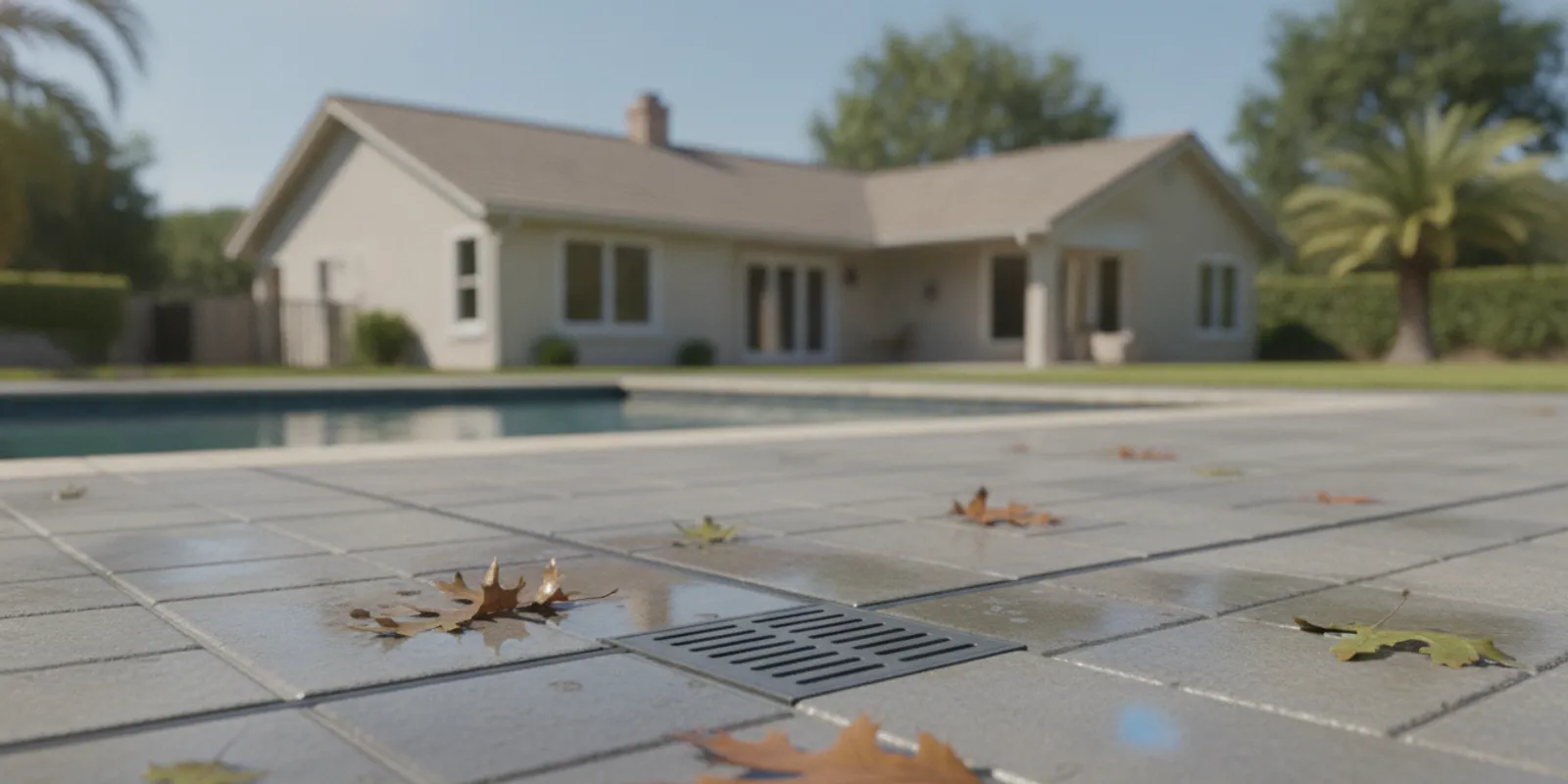
Storm drains around a pool deck should carry rainwater and appropriate wash-down water away from walking surfaces. When water lingers, rises around an inlet, or appears at several drains, the cause may be debris, a restricted line, heavy runoff, a downstream issue, or a change in deck slope. Understanding the pattern can help you respond safely without guessing at the repair.
Request help with a pool deck drain today
What causes storm drains around pool decks to back up?
A deck drain is only one part of a drainage path. Water crosses the deck, enters a grate or channel, passes through a connected pipe, and exits at an approved outlet or drainage system. A problem at any point can slow drainage. The water pattern offers clues, but it does not establish the exact cause; two problems can also occur at the same time.
Leaves, grit, and objects at the inlet
Leaves, seed pods, grass clippings, soil, and windblown debris can cover a grate or settle in a channel. Furniture, planters, pool toys, and cleaning equipment can block an inlet as well. If the water clears after loose material is removed from the surface, an obstructed grate may have contributed. Avoid pushing material down into the opening, where it can become harder to reach.
A quick visual check is most useful when it is safe and dry enough to stand securely. Look at the grate from above, the edge of the channel, and the nearby deck. Do not lift a heavy cover or put a hand or tool into a drain. If the inlet appears clear and water still lingers, repeated surface cleanup is unlikely to resolve a restriction farther along.
A blockage in the drain body or connected pipe
Sediment and organic debris can collect below the grate. Farther down, soil intrusion, roots, a damaged section, or accumulated material may narrow the pipe. A recurring slow drain despite a clear inlet suggests that the issue may be in the drain body or line. The same applies when water drains, then returns soon afterward.
Do not assume every pool-deck drain connects to the sanitary sewer. Drainage systems and approved discharge points vary by property. An assessment should establish the route before anyone chooses a cleaning or repair method. For information about related drain cleaning services, see the drain service page.
Rain runoff exceeds what the path can carry
Rain may send water from a roof, hillside, patio, lawn, or neighboring paved surface toward the pool deck. A system that handles ordinary conditions may struggle when several areas contribute runoff at once. Look for whether water arrives from outside the deck, whether more than one inlet rises, and whether the problem occurs only during intense rain. These observations can distinguish a broad flow or capacity concern from one isolated grate.
Do not direct a hose into a backed-up drain to test it. Adding water can worsen pooling and tells little about how the system performs under actual conditions. If runoff is entering from a particular direction, take a photo from a safe location and note when it happens. Avoid changing the route of water onto a neighboring property or into an unverified outlet.
Settling or a surface slope that no longer leads to the inlet
Water follows the deck's surface grade. Settlement, resurfacing, landscaping, or construction may create a low spot or leave the drain inlet higher than the surrounding surface. In that case, the pipe may be open while a puddle remains because water cannot reach the opening. A line-clearing service does not correct a surface-grade issue, so the symptom needs to be evaluated at the surface as well as at the drain.
Observe where the puddle begins and which way water moves during rain. If it collects away from the grate or appears after a surface project, record that context. Do not chip, drill, or alter the deck around a drain as a first step; the drain assembly and nearby waterproofing may be affected.
A downstream outlet or shared path is restricted
If several drains back up together, the shared path or outlet may be involved, or incoming runoff may exceed what the system can carry at that time. A single affected inlet points more toward a local obstruction, though it is not proof. If water reappears after it drains or backs up in more than one location, stop adding water and arrange an evaluation of the route. Related area drain and yard drainage information can help clarify how surface drainage services relate to a property's wider flow path.
How can you check storm drains safely?
Start with observation rather than equipment. Wet pool tile and deck surfaces are slippery, and standing water near electrical equipment can create a hazard. Keep children and pets away from the affected area until it is safe. If water is approaching electrical equipment, keep clear and contact the appropriate emergency service.
- Record the timing. Note whether the backup follows rain, irrigation, pool cleaning, or another activity, and how long water remains.
- Look at the surface inlet. From a stable position, check for loose debris that can be lifted away without tools. Do not remove a heavy cover or reach inside.
- Compare nearby drains. Write down whether one inlet or several are affected. A shared pattern is useful information for an assessment.
- Trace the visible water direction. Note whether runoff flows toward the inlet or collects in a low spot away from it.
- Photograph the conditions. A photo after dry weather and another during or after rain can show whether the issue is persistent or weather-related.
- List recent changes. Mention resurfacing, landscaping, construction, or a change in how the pool area is cleaned.
A simple log helps avoid repeating tests that add water without explaining the cause. For example, if one grate is covered after a windy day and the water clears when loose leaves are removed, report that sequence. If all visible grates are clear but two locations fill during the same storm, note both locations and the weather. The distinction helps a professional consider an inlet, branch line, shared outlet, or runoff pattern.
A camera may be useful for an accessible pipe, but it is not a substitute for understanding the full drainage route or checking the deck's grade. The appropriate inspection depends on access and the system. Conejo Bros offers drain camera inspection information; an evaluation can determine whether that method fits the situation.
What do common pool-deck drain symptoms suggest?
| What you observe | Possible explanation | Useful next step |
|---|---|---|
| One grate is covered with leaves | Surface inlet obstruction | Remove only loose debris from the surface and monitor the next rain. |
| One drain stays slow although the grate is clear | Restriction in the drain body or connected pipe | Record recurrence and request an assessment if it persists. |
| Several drains rise at the same time | Shared downstream restriction or heavy runoff | Stop adding water and note which inlets are affected. |
| A puddle forms away from the inlet | Low spot, changed slope, or inlet height issue | Document where water collects and when; consider surface-grade evaluation. |
| Water clears, then returns | Continuing restriction or downstream condition | Avoid repeated flushing and have the drainage path checked. |
These are clues, not diagnoses. For instance, a storm can both wash leaves over a grate and expose a limited or partially obstructed pipe. A symptom table can organize observations, but it cannot show whether a line is damaged, where it discharges, or what work is appropriate.
Why should pool water and stormwater be handled carefully?
Pool water may contain treatment chemicals, including chlorine, bromine, or salt. Do not assume it is acceptable to discharge pool water into a storm drain or waterway. Local rules and approved disposal methods vary, so check the applicable municipal guidance before draining or releasing water. The City of Fillmore pool drainage guidelines describe environmental concerns associated with untreated stormwater and chemically treated pool water.
During deck cleaning, keep concentrated pool water, chemical products, and swept debris out of stormwater inlets. If a drain is already backing up, pause nearby wash-down and irrigation until the path is understood. A drain's presence does not by itself establish that a particular discharge is permitted.
How can you reduce repeat storm drains problems around a pool deck?
Prevention starts with keeping the inlet accessible and watching for changes. These habits do not fix a damaged pipe or correct poor grading, but they can reduce avoidable debris and help you catch a developing issue earlier.
- Clear loose leaves and grass clippings from around grates, especially before forecast rain.
- Keep furniture, planters, toys, and storage from covering drain openings.
- Trim plants near the deck and dispose of clippings rather than rinsing them toward a drain.
- After resurfacing or landscaping, watch for new puddles and note where runoff travels.
- Use pool-cleaning practices that keep chemicals and concentrated water away from stormwater inlets.
- If a slow drain recurs, record the timing and affected inlets rather than repeatedly flushing it.
For a pool owner, a practical routine is to look over the grates before rain, inspect the deck after the first rainfall, and note any change in pooling. For a property manager, include drain inlets and low spots in the grounds walk-through, and keep dated photographs when a problem recurs. In both cases, the useful goal is to spot a changing pattern—not to diagnose underground pipework without access or training.
When should you request a storm drains inspection?
Seek professional help when a backup returns after loose surface debris is removed, when more than one drain is affected, when water returns after draining, or when pooling threatens the home, pool equipment, or adjacent property. An inspection can help determine whether the problem appears to involve the inlet, a connected pipe, the outlet, or the deck surface. The recommended method depends on what is accessible and what the observations show.
Before contacting a provider, gather the property address, a description of the affected area, whether the drain is used during rain or cleaning, when the issue began, and any recent work nearby. Share photos if available. This context helps the team understand the concern and discuss an appropriate next step. You can review drain jetting information, professional drain clearing, and sewer inspection and repair services for related service details; the right approach depends on the verified drain route and condition.
For properties in the region, Conejo Bros also provides local service information for Thousand Oaks, Santa Barbara, and Ventura. The exact service and access options can depend on the property and the drainage system.
Frequently asked questions
Can I clear a pool deck drain with a garden hose?
A hose may add water without removing a restriction, so it is not a dependable diagnostic test. Clear only loose material from the surface, then observe how the drain behaves during ordinary conditions. If water continues to stand or returns, stop flushing and seek an assessment.
Why does a pool deck drain back up only when it rains?
Rain can bring more runoff to the deck than a restricted or limited drainage path can carry at that moment. Leaves, sediment, a downstream issue, or surface grading may contribute. Note whether nearby drains are affected and where runoff enters the area.
Should pool water go into a storm drain?
Do not assume that it is allowed. Pool water may contain treatment chemicals, and local requirements differ. Check local guidance for an approved discharge or disposal method before draining.
Does standing water always mean the pipe is clogged?
No. A low spot or a surface that slopes away from the inlet can leave water standing even when the pipe is open. The surface and the connected line may need separate evaluation.
What should I tell a drain professional?
Explain when the backup occurs, how many drains are affected, where the water pools, whether it clears or returns, and whether the deck or landscaping changed recently. Photos and dates can make the pattern easier to understand.
Contact Conejo Bros Plumbing to discuss a recurring drain backup
Get help with a recurring drain problem
Pool deck drainage problems can begin at the grate, inside a pipe, at an outlet, or in the surface grade. Observe the pattern, keep people clear of unsafe standing water, and request an evaluation if the issue returns or affects multiple drains.