
How to Clear a Blocked Drain at Home
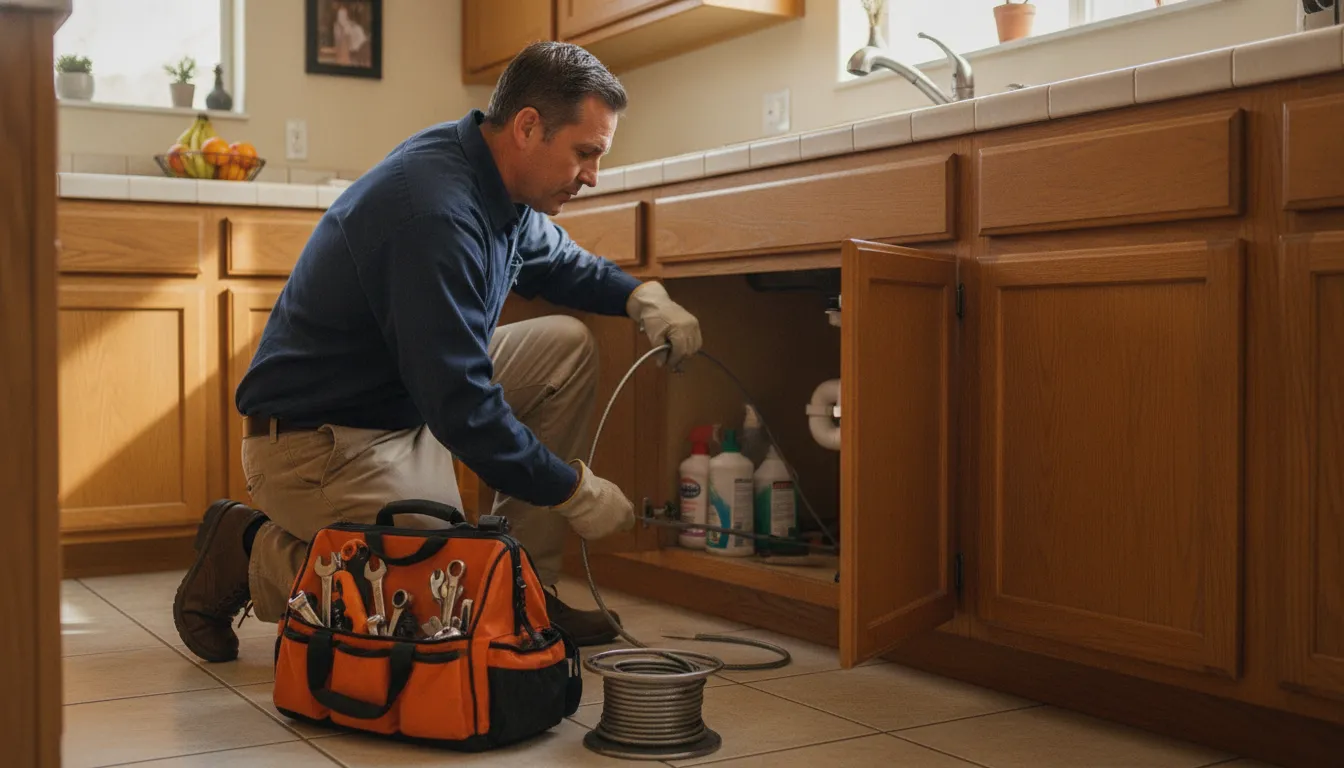
A sink that will not empty is a different job from a house where two fixtures back up at once. Knowing which one you have is the first step in how to clear a blocked drain without pushing the mess into another room.
Start at the fixture that stopped. Lift out hair or food you can see, then use the right plunger with a real seal. A cup plunger fits a sink or tub. A flange plunger fits a toilet. If the water drops and stays down, you are done for now. If it rises again the same day, or a second fixture starts to gurgle, stop. That clog is no longer a one-trap problem.
Homes in Thousand Oaks and the rest of Ventura County see both kinds of stoppage. Grease from a kitchen line can sit in one trap. Roots and scale usually sit farther down, where a bottle from the hardware store never reaches. The sections below show the safe first steps for one fixture, and the point where a cable, a camera, or a hydro jet is the better call.
How to Clear a Blocked Drain Starts With One Fixture or the Whole House
Before you reach for a plunger or drain snake, look at what the rest of the plumbing is doing. That quick check helps you decide whether the blockage is near one fixture or farther down the drain system.
One slow sink, shower, or tub with normal drains elsewhere usually points to a local clog. The blockage may be in or near the trap, the U-shaped pipe beneath the fixture. A cup plunger can help with sinks and tubs. Toilets need a flange plunger that seals around the drain opening.
The pattern changes when more than one fixture backs up. Two slow drains, a toilet that gurgles while a sink drains, or water rising in a tub when the washer runs can point to a branch drain or main-line stoppage. Water is finding another route because the shared pipe cannot carry it away.
Use the symptoms to identify where the blockage may be
| What you see | What it usually means | What to do next |
|---|---|---|
| One slow sink. | A local clog in or near that fixture's trap. | Try the correct plunger and watch nearby drains. |
| Tub and sink both slow. | A shared branch drain may be restricted. | Stop adding water and check other fixtures. |
| Toilet gurgles when another fixture drains. | A stoppage may be farther down the branch or main line. | Avoid repeated flushing and arrange an inspection. |
| Sewage at a floor drain or cleanout. | A serious main-line backup is likely. | Keep people away and call for emergency service. |
Pay attention to timing, not just the first fixture that acts up. If a drain slows after one appliance runs, the shared line deserves attention. If only one basin stays slow while the toilet and shower work normally, the problem is more likely close to that basin.
Do not assume a clog is local just because one drain shows the first symptom. Charles White of the Plumbing-Heating-Cooling Contractors Association told Consumer Reports that a blockage that looks local can be a stoppage farther down the line. That work gets messy fast, especially when standing water or sewage is involved.
If you see multiple drains backing up, stop running water until you know where the restriction is. If sewage is rising from a floor drain or cleanout, go to our emergency drain service page for the next step.
How to Clear a Blocked Drain With Safe First Steps
For a clog in one fixture, start with a controlled attempt rather than a harsh chemical. A plunger may work when the blockage sits in or near the U-shaped trap beneath the drain, as the PHCC guidance already cited explains. It may only open a narrow path, though, leaving sludge behind for the clog to find again.
These steps apply when one sink, tub, or toilet is affected. If several fixtures drain slowly or back up together, stop treating the problem as a simple fixture clog. The obstruction may be farther down the branch or building drain, where repeated plunging will not solve it.
- Lower the water level. Bail standing water into a bucket until only a couple of inches remain. That gives the plunger room to work and helps it form a seal instead of pushing water over the fixture.
- Choose the right plunger and seal nearby openings. Use a cup plunger on a sink or tub. Use a flange plunger on a toilet. On a sink or tub, press a wet rag firmly over the overflow opening before you begin.
- Plunge with slow pulls. Center the cup or flange over the drain, then make controlled strokes. Focus on pulling steadily rather than jabbing violently. A sudden, forceful motion can splash dirty water and may not improve the seal.
- Flush the opened line with hot tap water. If the fixture drains again, run hot water from the tap for a few minutes. Do not pour a kettle of boiling water into the fixture. Hot tap water can help move loosened grease without exposing the plumbing to an unnecessary temperature shock.
- Stop if the clog returns the same day. That quick return suggests the plunger opened a passage without removing the remaining sludge. A short hand snake can pull out that material, but wear gloves and eye protection because dirty water can splash back.
Keep the attempt limited to the single fixture. Do not open a wall or pull a toilet to chase a local clog. If a bathroom sink will not clear after these steps, the blockage may need a better diagnosis and tool.
Store chemicals are the wrong next step when plunging has not solved the problem. They can leave caustic liquid in the trap, creating a hazard for anyone who works on the drain later. Read more about the pipe risks of chemical drain cleaners before adding anything to the fixture.
When to Stop and Call for a Cable, Camera, or Hydro Jet
DIY drain clearing has a reasonable limit. Stop and call for professional help if the clog returns the same day, more than one fixture is involved, or water rises through another fixture.
Sewer gas odor is another reason to stop. Do not keep working when you cannot find a cleanout, or when a hand snake hits a solid stop and will not advance.
These signs can point beyond a simple trap clog. Continuing to push, pull, or add chemicals may waste time and make the next repair harder to evaluate.
A powered cable, often called a rooter, works through an accessible cleanout. Its rotating cable can pull out or cut through a clog when a hand snake cannot reach or move it.
Learn more about rooter service if the blockage feels deep, returns quickly, or affects more than one drain. A technician chooses the cable size and approach after assessing the line.
A camera inspection sends a small camera through the drain line. It can show whether roots, a belly, scale, or a break is causing the restriction before anyone digs.
That information matters because opening a line is different from repairing the reason it keeps failing. A camera can help identify the next appropriate step instead of relying on guesswork.
Hydro jetting uses water only. The equipment sends high-pressure water through the line to clear heavy grease, scale, and roots, rather than relying on chemical drain opener.
Conejo Bros Plumbing runs commercial-grade hydro-jetting equipment at 4,000 psi. Read what a hydro jet does and compare professional drain snaking options before deciding what to ask about.
Hydro jetting is not automatically the right choice for every line. The condition, access, and cause of the blockage should guide the method.
If there is no usable cleanout, ask about cleanout installation before treating repeated stoppages as routine. A cleanout gives technicians a safer, more direct access point.
For professional drain clearing, the main-line cleaning special applies only to a main-line stoppage with an accessible cleanout.
GreenSky financing may be available for a qualifying major repair, not a simple clearing. If sewage is backing up or the line will not clear, reach Conejo Bros Plumbing through the contact page.
What to Do in the Hour After the Clog Clears
A drain that starts flowing again still deserves a short check. Run cold water for a minute, then switch to warm water. Watch the basin, tub, or shower while it drains.
Test another nearby fixture as well. Flush the toilet, run a second sink, or let a little water flow through the tub. Listen for gurgling and watch for slow drainage. If another drain gurgles, rises, or begins backing up, the clear may be incomplete. The blockage could be farther along in a shared branch or building drain.
While the area is dry enough to inspect, wipe away hair or residue you can see around the stopper and the mouth of the trap. Use a paper towel or cloth and your hands only. Do not remove fittings, push debris deeper, or reach into standing water with an unprotected hand. This quick cleanup can remove loose material without turning a successful clearing into a larger repair.
Do not pour a chemical cleaner into the drain to “finish the job.” A chemical opener can leave caustic liquid in the line and create a splash hazard for anyone who works on it later. It can also damage vulnerable piping. The safer alternatives to chemical cleaners are worth reading before you add another product.
Be especially cautious in a home with a septic system. Do not follow a harsh drain cleaner with an enzyme shock treatment on the same day. Combining products can create an unpredictable chemical environment, and an enzyme product is not a reset button for damage or an unfinished blockage. The EPA advises that only human waste and toilet paper belong in a septic-system toilet; see its septic care guidance for more information.
Keep an eye on the fixture during this hour rather than starting a prevention routine. The ongoing drain-clog prevention checklist belongs in a separate step-by-step guide. If the water slows again, odors return, or several fixtures behave oddly, review the warning signs that a drain needs professional cleaning. Repeated symptoms are a reason to stop experimenting and arrange an evaluation.
Frequently Asked Questions
How can I clear a blocked drain with standing water?
Remove as much standing water as you can without forcing it into another fixture. Wear gloves and eye protection before using a hand snake because splashback is possible. A cup plunger may work when the blockage is in or near the U-shaped trap under a sink or tub. If several fixtures are affected, the stoppage may be farther down the branch or building drain.
What should I pour down my drain to unclog it?
Do not rely on a liquid remedy for a hard blockage. Vinegar, baking soda, and enzyme products may not reach or remove dense sludge; enzyme cleaners are slower and weaker on a hard clog. Avoid mixing chemical cleaners. Caustic and oxidizing products can create a hazard, especially if you later need to snake the drain.
Is it okay to pour boiling water down the drain?
Boiling water is not a dependable fix for a drain that is already blocked, especially when standing water prevents it from reaching the clog. Start with a properly sized plunger or a hand snake instead. If a chemical cleaner is already in the drain, do not add another product or put your hands near the water.
How can I unclog my bathtub drain?
Remove the stopper and clear visible hair or debris first. A cup plunger fits a tub drain, and a hand snake can pull out residual sludge after the plunger opens a path. Keep the area contained because a clog that looks local can actually be in a larger branch or building drain.
When does a badly blocked drain need a plumber?
Call a professional when the clog returns, a snake cannot clear it, or multiple drains back up together. Those signs can point to a larger branch or building-drain stoppage rather than a simple trap clog. A professional can also handle heavy blockages with commercial-grade equipment and safely address standing wastewater.
Get a Blocked Drain Moving Today
Stop if a plunger does not hold on one fixture. Stop sooner if more than one drain is involved. A second bottle of cleaner will not fix either case. Conejo Bros Plumbing clears main lines from an accessible cleanout for homes across Thousand Oaks and Ventura County.
The main-line cleaning special applies only to a main-line stoppage with an accessible cleanout. For a major repair, qualifying homeowners can ask about GreenSky financing. Send the job details through the contact form.