
Trenchless Pipe Lining vs Replacement: Which Is Better?
By Tiago Alkana
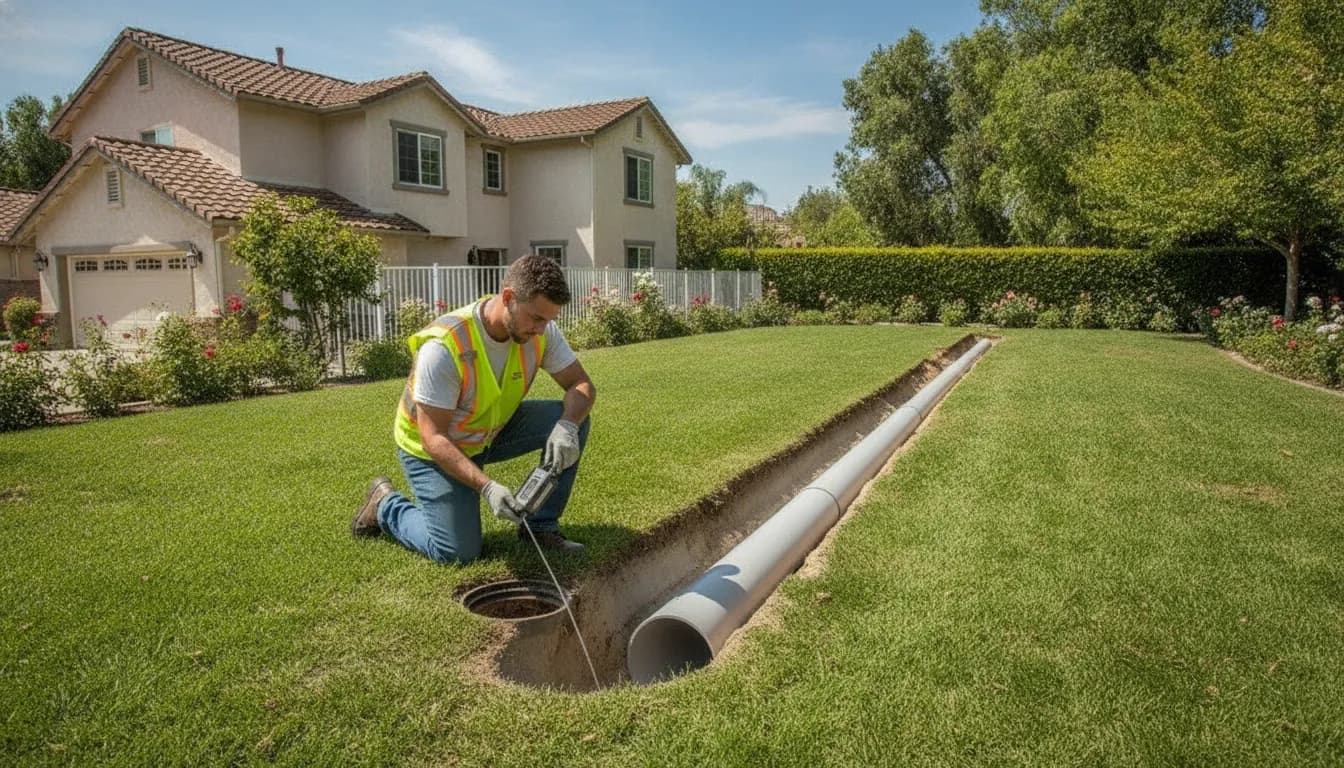
When a sewer camera shows damage, homeowners often ask whether trenchless pipe lining or replacement is the better fix. The right answer depends less on the label "trenchless" and more on the pipe's condition, access, alignment, depth, and what sits above it. This guide explains where CIPP lining, epoxy lining, pipe bursting, or traditional excavation may make sense for a Conejo Valley property.
Request a trenchless sewer assessment today
What is the difference between pipe lining and pipe replacement?
Trenchless pipe lining rehabilitates the existing pipe from the inside, while pipe replacement removes or breaks apart the old line and installs a new one. Lining usually preserves the original route and surrounding surfaces. Replacement makes more sense when the existing pipe cannot support a liner, needs a new grade, or has damage that a new inner wall cannot correct.
| Decision factor | Pipe lining | Pipe replacement |
|---|---|---|
| What changes? | A new inner wall is formed inside the existing pipe. | The old pipe is replaced with a new pipe or a new pipe route. |
| Best starting condition | The host pipe is still reasonably continuous and shaped. | The old pipe is collapsed, badly offset, bellied, misaligned, or no longer suitable as a host. |
| Surface disruption | Often limited to cleanout or access-point work. | Open excavation may require removal and restoration of soil, concrete, asphalt, or landscaping. |
| What it cannot solve alone | Major collapse, severe deformation, a bad grade, or a route problem. | It may not be the most practical choice when the line is sound and access is difficult. |
Traditional replacement is not automatically the inferior option. In the right location, an open trench can be the most direct way to correct a belly, change an alignment, replace multiple connections, or rebuild a failing section. A camera inspection and professional site assessment should come before choosing either path.
When is trenchless pipe lining better than replacement?
Trenchless pipe lining is often better than excavation when a sewer line is damaged but still provides a usable path for a liner. CIPP lining can seal cracks, small leaks, and root-entry points while avoiding the cost and disruption of opening the entire route. It is especially attractive beneath finished surfaces that would be difficult to restore.
- The pipe is mostly intact: The line has a continuous shape instead of a full collapse or major offset.
- Cracks or small leaks are the main problem: A cured liner can create a new jointless inner surface when the pipe is suitable for lining.
- Roots are entering through joints or fractures: A properly selected liner can seal the openings that allow recurring intrusion.
- The line runs beneath a driveway, street, slab, patio, or established landscaping: Avoiding a long trench can reduce restoration work and disruption.
- The route and grade are already acceptable: Lining repairs the pipe wall, but it does not redesign the way wastewater flows.
- Access points are workable: The crew can reach and prepare the line through a cleanout, excavation point, or other approved access.
For a homeowner, the practical benefit is not just fewer piles of soil. A lining project may preserve hardscape and landscaping, reduce the time a property is under construction, and limit the number of surfaces that need to be rebuilt. Feasibility still comes first. The liner must be able to travel through the existing pipe, seat correctly, and cure into a sound new inner wall.
When does traditional pipe replacement make more sense?
Traditional replacement may be the better choice when the old pipe is too collapsed, deformed, shallow, damaged, or poorly graded for a liner. Excavation also makes sense when the project needs a new route, new slope, new connections, or direct access to a section that cannot be rehabilitated from inside. The goal is a durable system, not a trenchless method at any cost.
- Full collapse or severe deformation: There may not be enough open passage for a liner to pass or expand.
- A pronounced belly or drainage problem: A liner follows the existing route and generally cannot correct low spots that hold wastewater.
- Major offset joints or separated sections: Large changes in alignment can prevent a liner from forming a reliable continuous fit.
- Insufficient pipe diameter or a needed capacity change: A liner slightly reduces the interior diameter, while replacement can change pipe size.
- A route or connection change is required: Excavation may be needed to reroute a line, rebuild a lateral, or correct how several pipes connect.
- The work area is open and easy to restore: If the line crosses an accessible dirt or non-finished area, the disruption difference may be smaller.
Open replacement is also worth considering when a property owner is already planning related construction. Coordinating sewer work with a remodel, landscape renovation, utility project, or permitted site work can reduce duplicated restoration. The recommendation should account for the complete project, not just the repair method in isolation.
How do CIPP, epoxy lining, pipe bursting, and excavation compare?
CIPP lining, epoxy coating, pipe bursting, and traditional replacement solve different pipe problems. CIPP creates a structural liner inside a suitable host pipe. Epoxy methods coat or reinforce the inside of a line for selected conditions. Pipe bursting installs a new pipe through the old route, while excavation exposes the line directly. The camera report and site constraints determine which option belongs on the shortlist.
| Method | May fit when | Important limitation |
|---|---|---|
| CIPP pipe lining | The pipe is continuous enough for a resin-saturated liner, with cracks, leaks, or root entry but no major collapse. | It does not fix a bad grade or replace a severely deformed host pipe. |
| Epoxy coating or lining | The pipe has selected corrosion, small leaks, or surface deterioration that can be prepared and coated successfully. | Coating is not a universal answer for structural failure, heavy deformation, or an unsuitable pipe surface. |
| Pipe bursting | A new pipe is needed but the route can accommodate bursting equipment and access points. | It needs suitable entry and exit access and can affect nearby utilities or structures. |
| Traditional replacement | The line needs direct rebuilding, a new grade, a new route, larger capacity, or repair of severe failure. | Excavation can increase restoration, traffic-control, and property-disruption requirements. |
The word "trenchless" describes how the work reaches the pipe, not proof that digging is unnecessary. Even a trenchless project may require a small excavation, access pit, cleanout repair, connection reinstatement, or work near a property line. A clear scope should explain where access is needed and what restoration is included.
For a deeper overview of available methods, see Conejo Bros Plumbing's trenchless sewer repair services. Homeowners comparing pipe bursting with lining can also review the dedicated pipe lining and pipe bursting comparison without treating that narrower comparison as a substitute for a site-specific recommendation.
What does a sewer camera inspection reveal before the decision?
A sewer camera inspection shows the evidence needed to separate a lining candidate from a replacement candidate. The technician can look for cracks, root intrusion, scale, corrosion, open joints, offsets, collapse, standing water, and changes in pipe shape. The inspection should be paired with locating and access information so the recommendation accounts for the line's route and the surfaces above it.
 A camera inspection helps identify whether the existing pipe can serve as a host for lining.
Ask for the video or a written report that identifies the location and type of each defect. A useful assessment should explain whether the line is structurally continuous, whether the grade appears to be working, where access is available, and whether nearby utilities or connections affect the plan. If the only recommendation is a method name without describing the observed pipe condition, ask for more detail.
Conejo Bros Plumbing provides sewer services in the Conejo Valley, including diagnostic work that can help a homeowner understand the repair decision before committing to excavation or rehabilitation.
How do cost and yard disruption affect the choice?
The least disruptive method is not always the lowest initial quote, and the lowest material price is not always the lowest project cost. Compare excavation, access, traffic control, permitting, surface removal, restoration, connection work, equipment, and the expected service life of the repair. A lining method can be financially attractive beneath a driveway or mature yard, while open replacement may be competitive in an accessible unpaved area.
When reviewing a proposal, ask these practical questions:
- What exact defect is being repaired, and where is it located?
- Does the recommendation correct the cause, or only the pipe wall?
- How many access points, pits, or excavations are required?
- What concrete, asphalt, irrigation, plants, fencing, or soil may be disturbed?
- Are permits, traffic control, connection reconnection, testing, and restoration included?
- What conditions would make the proposed method unsuitable once the line is opened?
Conejo Bros Plumbing maintains a plumbing and sewer pricing page for listed services, but trenchless repairs and replacement projects are condition- and access-dependent. A site-specific quote is more useful than applying a generic per-foot estimate to every property.
Book a sewer camera review and repair options consultation now
How can Conejo Valley homeowners plan trenchless work?
For homeowners in Thousand Oaks, Westlake Village, Newbury Park, and nearby Ventura County communities, the best plan starts with the property rather than a one-size-fits-all promise. Older neighborhoods, mature trees, driveways, slopes, easements, and connections to city infrastructure can all change the practical choice between lining, bursting, and excavation.
Start with the local service pages for Thousand Oaks plumbing and sewer service, Westlake Village service, and Newbury Park service to confirm the coverage area and request an assessment. If the work touches a street lateral, public right-of-way, or municipal connection, planning may involve DWP or city public works coordination, traffic control, City planning and permits, and a defined restoration scope.
Conejo Bros Plumbing's public-works specialists can also help property owners and project teams evaluate street-lateral replacement, septic-to-city-sewer rerouting, and pre-construction plumbing bids. Those projects need early coordination because the best private-property repair method may not be the same as the method required for a public connection or a larger construction schedule.
What should you ask before approving pipe lining or replacement?
Before approving work, ask the contractor to connect the recommendation to the inspection evidence, the property's surfaces, and the required access. A homeowner should be able to explain why the selected method fits the pipe condition, what it will not fix, how the site will be accessed, and what restoration or permits are included.
- Can you show me the camera footage and mark each defect on a route map?
- Is the pipe continuous and correctly graded enough for lining?
- If you recommend CIPP or epoxy, what preparation and connection work is included?
- If you recommend bursting, where will the access pits go and what utilities must be checked?
- If you recommend excavation, which surfaces will be removed and restored?
- What is the plan if the pipe condition differs from the initial inspection?
- Which permits, testing, traffic controls, and public-works approvals apply?
Good sewer repair decisions are evidence-based. The right answer may be trenchless pipe lining, pipe bursting, epoxy rehabilitation, or traditional replacement. It depends on whether the existing line can be repaired from the inside and whether preserving the route and surfaces creates real value for the property.
Frequently asked questions
Is trenchless pipe lining always better than replacement?
No. Lining is a strong option for a pipe that is damaged but still continuous and properly aligned. Replacement may be better for a collapse, severe offset, belly, route change, inadequate capacity, or a host pipe that cannot support a liner.
Can CIPP lining repair a collapsed sewer pipe?
A fully collapsed or badly deformed pipe may not provide the open passage and shape needed for CIPP installation. A camera inspection and access assessment should determine whether the line can be prepared for lining or needs replacement, bursting, or another repair approach.
Is pipe bursting the same as pipe lining?
No. Pipe lining forms a new inner wall inside the existing pipe. Pipe bursting breaks apart the old pipe while pulling a new pipe through the route. Bursting can address more severe damage and may allow a change in pipe diameter, but it needs suitable access and site conditions.
Does trenchless repair mean there will be no digging?
Not necessarily. Trenchless work usually reduces excavation, but the crew may still need a small access excavation, pit, cleanout repair, connection opening, or restoration area. The proposal should identify the expected access points before work begins.
How do I choose a trenchless pipe lining company in Conejo Valley?
Choose a contractor who begins with a sewer camera inspection, explains the pipe condition in plain language, distinguishes lining from bursting and replacement, identifies access and restoration requirements, and provides a written scope. Ask for a recommendation that fits your property rather than a method selected before the line is inspected.