Pipe Lining vs Pipe Bursting Trenchless Sewer Repair
Pipe Lining vs Pipe Bursting Trenchless Sewer Repair
Choosing between pipe lining vs pipe bursting trenchless sewer repair starts with understanding the condition of the existing sewer. Lining builds a new interior within a pipe that still has a usable shape. Bursting breaks the old line apart while pulling a replacement pipe into its path. Both can reduce excavation, but neither is automatically right for every damaged sewer.
Schedule a trenchless sewer evaluation or call 805-603-1983 to get a camera-informed recommendation for your Conejo Valley property.
A slow drain, recurring backup, sewage odor, or soggy patch in the yard may signal a sewer problem, but the symptom alone does not reveal the best repair. The line may have a small crack, offset joint, severe root intrusion, missing section, poor slope, or complete collapse. Each condition changes what a trenchless method can accomplish. A careful inspection lets a property owner compare options based on evidence instead of choosing a familiar method by name.
Pipe Lining vs Pipe Bursting Trenchless Sewer Repair: What Is the Difference?
Pipe lining rehabilitates the inside of an existing sewer, while pipe bursting replaces the existing sewer along substantially the same route.
With pipe lining, the old pipe serves as the host for a resin-based interior. With pipe bursting, a bursting head fractures or splits the old pipe as a new pipe is pulled behind it. That central difference affects site access, diameter, the types of damage each method can address, and whether the old line must remain open enough to support the work.
Lining can be an efficient choice when the host pipe is continuous and structurally suitable but has cracks, leaking joints, root entry points, or surface deterioration. Bursting is often considered when the existing line is too badly damaged to act as a host, or when replacing the line rather than rehabilitating it is the better objective. A conventional excavation may still be necessary when access, utility conflicts, severe deformation, or an unsuitable route makes a trenchless approach impractical.
| Comparison point | Pipe lining | Pipe bursting |
|---|---|---|
| Primary goal | Rehabilitate the existing pipe interior | Replace the existing pipe along its route |
| How it works | Forms or applies a resin-based interior | Breaks the old pipe while pulling in a replacement |
| Existing pipe condition | Needs a suitable, reasonably continuous host pipe | Can address some severely damaged or failed lines |
| Diameter effect | Reduces the interior diameter slightly | May maintain or increase diameter when conditions allow |
| Typical access | Uses existing access when possible, with openings as needed | Usually requires launch and receiving pits |
| Collapsed sections | Cannot pass through or restore a fully collapsed route without preliminary work | May replace a collapsed line if a workable path can be established |
| Nearby utility concern | Generally limited ground displacement | Requires careful planning because the bursting head displaces material |
| Best decision tool | Camera inspection plus site evaluation | Camera inspection plus site and utility evaluation |
How Does Epoxy CIPP Pipe Lining Work?
Epoxy cured-in-place pipe, commonly called CIPP lining, creates a fitted resin liner inside a cleaned and prepared host pipe.
The process begins with access and inspection. The sewer must be cleaned well enough for the team to see defects and prepare the pipe surface. A flexible liner saturated with resin is then positioned inside the host pipe. The liner is expanded against the existing walls and cured so it becomes a solid interior. Openings that connect to the lined section must be identified and restored as part of the plan.
CIPP is not simply a coating over dirt or debris. Successful lining depends on preparation, accurate measurements, controlled installation, and confirmation after curing. If roots, scale, grease, or broken material remain in the line, they can interfere with the finished result. If the pipe is flattened, badly offset, or missing a section, a liner may not have the continuous shape it needs.
Ideal use cases for CIPP lining
CIPP may be appropriate for a sewer that still follows its intended path and retains enough shape to serve as a host. It can address multiple defects in one continuous section while reducing the need to expose the entire line. Common candidate conditions include cracks, leaking joints, root entry points after proper cleaning, and deterioration on the interior surface.
It is especially worth evaluating when a sewer passes under established landscaping, a patio, or another surface that an owner wants to preserve. Conejo Bros Plumbing explains additional applications on its sewer pipe relining service page. Where a lateral connection meets a main line, a targeted top hat relining solution may also be considered after inspection.
Limitations of CIPP lining
Lining cannot correct every structural or layout problem. It does not establish a new route, and it generally follows the grade and bends already present. It also reduces the inside diameter slightly because the liner occupies space. A fully collapsed section can prevent installation, while a pronounced belly or poor slope may continue to hold water even after the interior is renewed.
Because CIPP depends on the host path, the camera findings matter more than a surface symptom. A recurring clog may be caused by roots entering otherwise lineable joints, but it may instead come from a low spot or displaced section that lining will not correct. That distinction should be clear before work begins.
Where Does Spray Coating Fit Among Trenchless Repairs?
Spray coating applies layers of resin to the inside of a prepared pipe and is best treated as a distinct rehabilitation method, not as another name for CIPP lining.
CIPP uses a flexible carrier or liner that cures into a new interior pipe. Spray-in-place coating uses application equipment to place resin directly on the existing pipe wall. The method can be useful in certain smaller, irregular, or difficult-to-line sections, including some pipes with bends or changes that make a conventional liner less practical. As with all rehabilitation, the surface must be properly cleaned and suitable for the material.
Spray coating relies on the existing pipe for support. It should not be expected to replace a missing section, reopen a collapse, correct poor grade, or solve every structural defect. Thickness, access, pipe material, and damage all influence whether coating is appropriate. See the trenchless spray lining service overview for more information about this option.
Not sure whether your sewer calls for CIPP, spray coating, or replacement? Call 805-603-1983 to arrange a practical, camera-informed evaluation.
When Is Pipe Bursting the Better Choice?
Pipe bursting is often the better trenchless choice when the existing sewer should be replaced rather than used as the structural path for a liner.
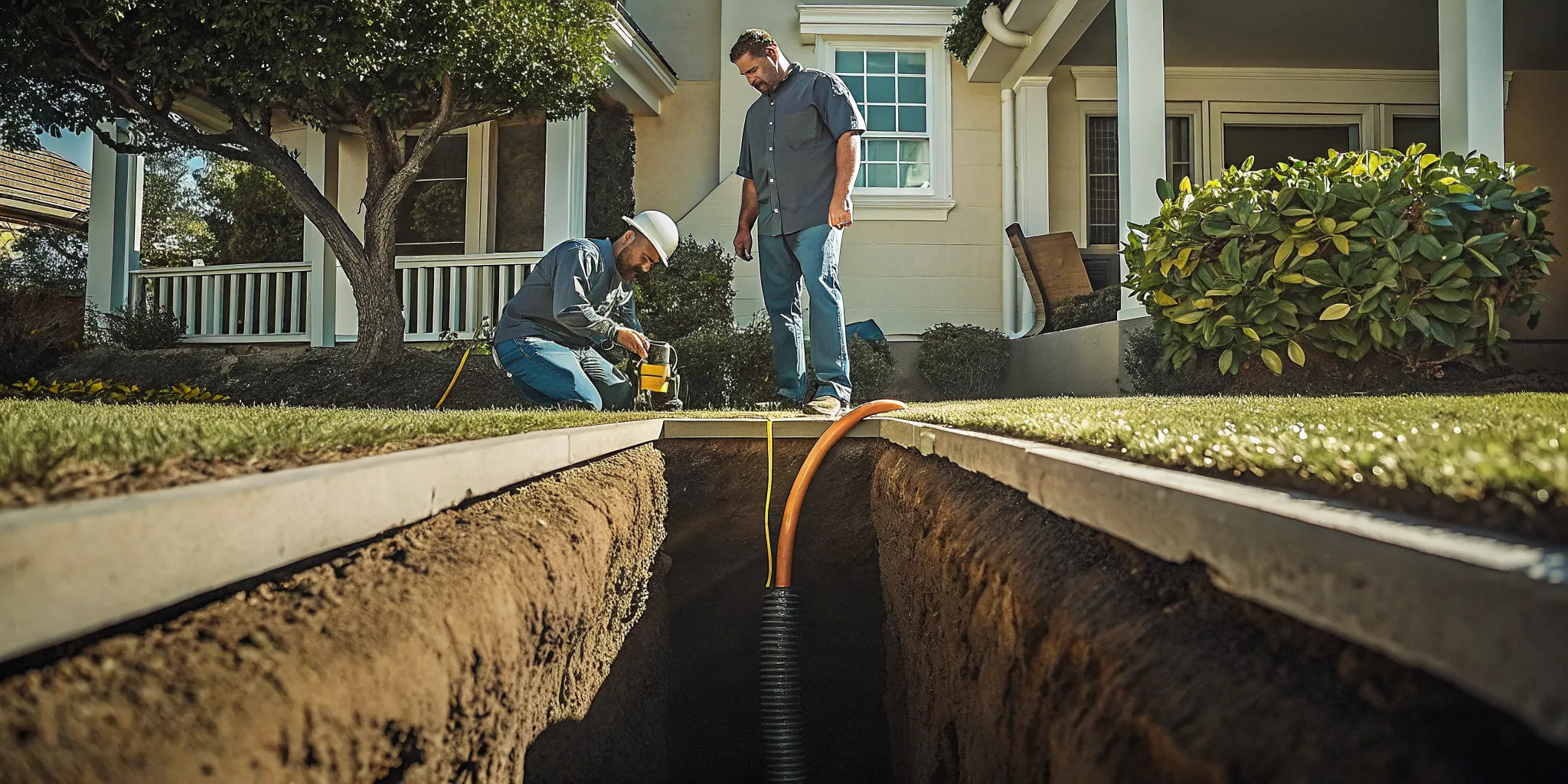
During pipe bursting, a cable or pulling system moves a bursting head through the existing route. The head fractures or splits the old pipe and displaces pieces into the surrounding soil. A new replacement pipe follows directly behind it. Launch and receiving pits provide access at the ends of the run, so the method reduces long-trench excavation but is not completely dig-free.
Bursting may be considered for brittle, severely deteriorated, or partially failed lines. It can also be evaluated when maintaining or increasing capacity is important, because lining slightly reduces the interior opening. Whether an upsized pipe is practical depends on soil, route, local requirements, connections, and nearby utilities. A larger replacement should never be assumed before the site is evaluated.
Conditions that may favor pipe bursting
Pipe bursting deserves closer consideration when the host line is not a reliable candidate for rehabilitation. Relevant conditions can include:
- A sewer with extensive structural failure or brittle material
- A section that has collapsed or lost too much of its original shape
- A line whose interior cannot be adequately prepared for lining
- A need to replace, rather than rehabilitate, the existing sewer
- A relatively direct route that can support the pulling operation
- Sufficient room for properly placed launch and receiving pits
- A site where utility clearances and soil conditions support bursting
- A capacity concern that may justify evaluating a larger replacement
Limitations and site risks of pipe bursting
Pipe bursting displaces the old pipe and surrounding material, so nearby utilities, foundations, surface features, and connected lines require careful attention. Hard soil, large rocks, tight bends, unusual fittings, or crowded utility corridors can affect feasibility. Access pits can also disturb landscaping or hardscape at specific points even though a continuous trench is avoided.
The method also follows the existing general route. If that route has a fundamental slope or alignment problem, replacement along the same path may not resolve it. In some cases, selective excavation or a new route offers a more reliable result. A responsible recommendation considers those alternatives instead of forcing every site into a trenchless method.
How Does a Sewer Camera Inspection Guide the Recommendation?
A sewer camera inspection shows the visible condition and location of defects, helping the technician decide whether rehabilitation, replacement, targeted repair, or further investigation makes sense.
After the line is accessible and clear enough to inspect, a camera can document cracks, roots, offsets, open joints, corrosion, standing water, intrusions, and collapsed sections. A locating device may help mark key defects from the surface. The video also helps determine whether the line has a reasonably continuous opening for CIPP or whether a replacement method should be evaluated.
A camera is essential, but it is not the only input. The technician may need to confirm pipe material and diameter, map connections, evaluate access, identify nearby utilities, and review the ground above the route. Standing water can indicate a belly or grade issue, but the full cause may require more investigation. The right recommendation combines the recorded interior view with site conditions and the owner’s priorities.
Questions the inspection should answer
A useful inspection gives the property owner a clear explanation, not just a video file. The evaluation should help answer these questions:
- What pipe material, diameter, and approximate route are present?
- Where is the defect, and how much of the line is affected?
- Is the host pipe continuous and shaped well enough for lining?
- Are roots or deposits hiding additional damage?
- Is standing water caused by a blockage, offset, belly, or poor grade?
- Where are branches and lateral connections located?
- Can access points or pits be placed with reasonable disruption?
- Are nearby utilities or site features likely to limit bursting?
- Would a targeted repair solve the problem, or is a longer section involved?
Before approving work, ask to see the findings and understand why the recommended method addresses them. A good plan should also identify the parts of the property likely to be affected and explain how the completed repair will be verified.
What Should Conejo Valley Property Owners Compare?
Conejo Valley property owners should compare the pipe condition, repair objective, access needs, site risks, disruption, and scope before choosing a trenchless sewer method.
Local properties can have mature landscaping, limited side-yard access, driveways over sewer routes, and nearby utility lines. Those features may make reduced excavation attractive, but they also shape what is feasible. A line beneath a valued surface may be a strong candidate for rehabilitation if the host pipe is suitable. A severely failed line may justify bursting if access and clearances allow it. Another property may need selective excavation to correct an alignment problem.
Price should be tied to a defined scope rather than a method name alone. Cleaning, access, pipe length, diameter, damage, connections, permits, utility locating, pits, surface restoration, and verification can all affect the proposal. Conejo Bros Plumbing publishes a that can help owners begin a more informed conversation, but an exact sewer repair scope still depends on inspection findings.
A practical decision checklist
Use this checklist when reviewing a recommendation or comparing proposals:
- Request camera evidence of the problem and affected section.
- Confirm whether the plan rehabilitates or fully replaces the pipe.
- Ask why the existing pipe is or is not suitable as a liner host.
- Review access points, pit locations, and expected surface disruption.
- Ask how branches, cleanouts, and lateral connections will be handled.
- Confirm whether slope, bellies, offsets, or alignment concerns remain.
- Discuss utility clearances and site constraints before pipe bursting.
- Ask what cleaning and preparation are included.
- Confirm how the finished work will be inspected and documented.
- Compare the complete scope, not just the initial quoted amount.
How Do You Choose the Right Trenchless Sewer Repair?
Choose the repair that directly addresses the documented defect, fits the property, and has a clear installation and verification plan.
For a continuous host pipe with repairable cracks or leaking joints, CIPP lining may provide the right balance of rehabilitation and limited excavation. For certain irregular or smaller sections with sound structural support, spray coating may be worth evaluating. For a badly failed line that needs replacement, pipe bursting may be the better trenchless route when the site can safely support it. When slope, access, or utility conflicts rule out these methods, excavation may be the responsible choice.
A recommendation should be easy to explain in plain language: what is wrong, where it is wrong, why the proposed method fits, what it cannot correct, and how the result will be confirmed. Conejo Bros Plumbing provides sewer services for homeowners, property managers, businesses, and real estate customers across the Conejo Valley and Ventura County. License # 1108756.
Explore trenchless sewer repair options and call 805-603-1983 to schedule an evaluation for your property.
Frequently Asked Questions
These answers address four common questions property owners ask when comparing pipe lining and pipe bursting.
Can pipe lining repair a completely collapsed sewer?
No. CIPP lining needs a sufficiently open and continuous host path for installation and curing. A fully collapsed section usually requires another approach, such as excavation or pipe bursting when site conditions make bursting feasible.
Does pipe bursting require any digging?
Yes. Pipe bursting usually requires launch and receiving pits, plus access where connections must be managed. It avoids a continuous trench along the entire sewer route, but it should not be described as completely dig-free.
Is spray coating the same as CIPP lining?
No. Spray coating applies resin directly to the prepared pipe wall, while CIPP uses a resin-saturated liner that cures into a fitted interior pipe. Both depend on proper preparation, but they have different capabilities and ideal applications.
Why is a camera inspection needed before choosing a method?
A camera inspection documents visible defects, pipe shape, connections, and obstructions so the recommendation can match the actual condition. Site access, utilities, pipe material, slope, and owner goals must also be considered before selecting a repair.
