


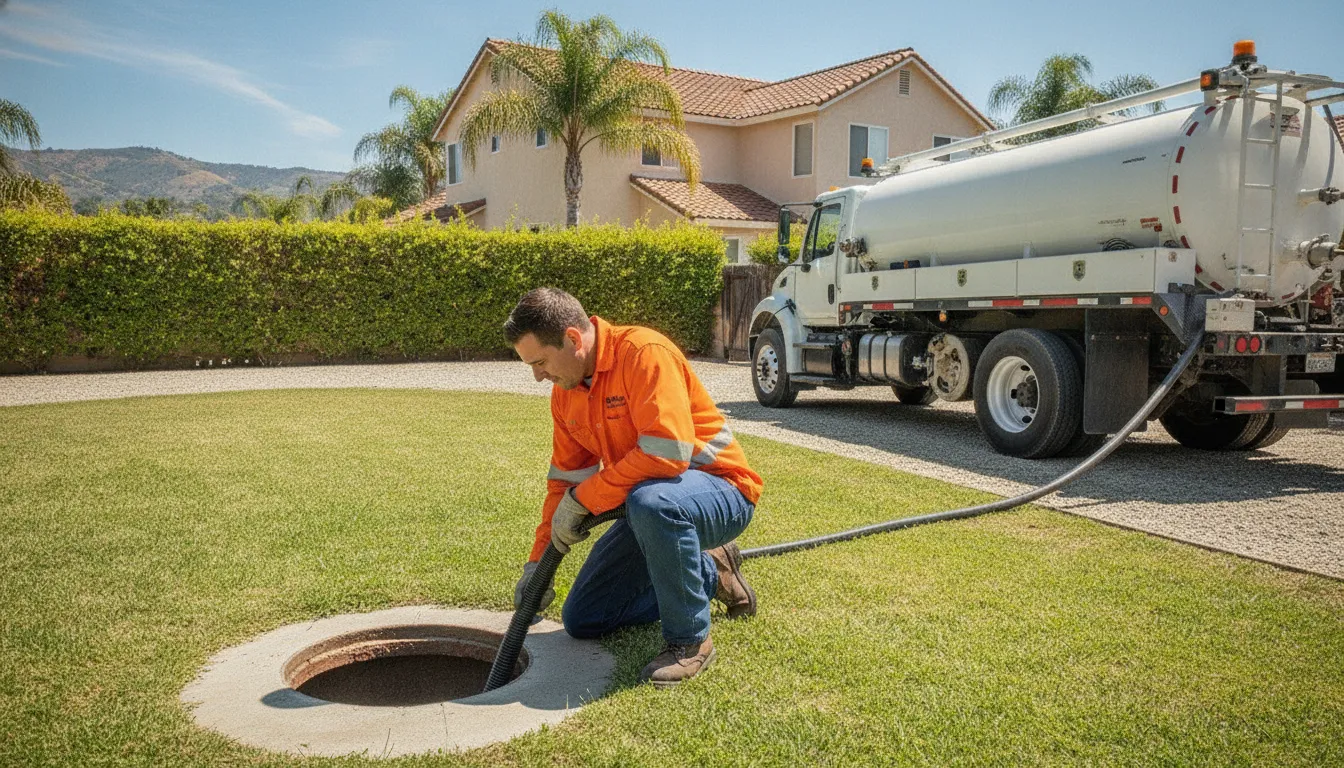
Septic Tank Maintenance Checklist Ventura County
Septic problems rarely begin with a dramatic backup. More often, warning signs build quietly when inspections, pumping, and everyday water habits fall out of rhythm. For homeowners across Thousand Oaks, Ventura, Moorpark, Simi Valley, and nearby Ventura County communities, a written maintenance routine makes those responsibilities easier to track.
A septic tank maintenance checklist ventura county homeowners can follow should include a professional inspection at least every three years and routine pumping about every three to five years. With timing adjusted for household size, wastewater use, solids, and tank capacity. The EPA recommends these intervals as practical starting points.
Good maintenance also means protecting the drainfield, watching for leaks, and keeping service records so you can spot changes before they become costly repairs. Start with the annual tasks below, then use them to build a schedule that fits your home and property. For a broader overview, see our Ventura County septic tank service guide.
Request a septic inspection or pump-out today with Conejo Bros Plumbing and get a clear read on your system’s condition from licensed professionals who serve Thousand Oaks and the wider Ventura County area.
Your Annual Septic Tank Maintenance Checklist for Ventura County
A reliable maintenance routine helps you catch problems before wastewater backs up into your home or reaches the drainfield. Use this checklist once a year, then adjust the timing based on your tank size, household use, and the recommendations in your service records.
- Locate the tank and access ports. Start with your property records to identify the tank location, inlet, outlet, and drainfield. If records are incomplete, a professional can help locate the system. Knowing where the tank is makes inspections safer and avoids unnecessary digging or damage to the yard.
- Check the tank and surrounding area for warning signs. Look for unusually wet soil, sewage odors, unusually lush grass over the drainfield, slow drains, or signs of backup. These conditions do not confirm a failure by themselves, but they are reasons to arrange an inspection rather than waiting for the next routine appointment.
- Schedule a professional inspection at least every three years. The U.S. Environmental Protection Agency recommends that an average household septic system be inspected by a septic service professional at least every three years. Alternative systems with pumps, electrical float switches, or other mechanical components generally need inspection once a year. Ask the provider to document the tank condition and any recommended repairs.
- Measure sludge and scum, not just the calendar. A tank should be pumped when the combined sludge and scum layers occupy more than 25 percent of the liquid depth. This measurement provides a better maintenance decision than relying on a generic schedule alone. A qualified professional should perform the measurement and pumping.
- Plan pumping every three to five years, unless your system needs it sooner. Household septic tanks are typically pumped within this range, but household size, wastewater volume, solids accumulation, and tank size all affect the interval. Keep the pump-out date and service report so the next appointment is based on your system’s actual history.
- Confirm the T-shaped outlet is in good condition. The outlet helps keep sludge and scum inside the tank instead of allowing them to travel into the drainfield. During service, ask the professional to check this component and note its condition in the report.
- Keep your service records together. Save inspection findings, pumping receipts, photographs, and repair recommendations. If maintenance identifies a structural issue, arrange repairs promptly. For help maintaining a system in Thousand Oaks, Ventura, Moorpark, Simi Valley, Camarillo, or nearby communities, review our septic tank services in Ventura County.
This checklist is a starting point, not a substitute for a site-specific evaluation. Consistent inspections and timely pump-outs give your septic professional the information needed to protect the tank and drainfield over time.
What to Never Flush or Pour Down Your Septic Drains
A septic system is designed to separate solids and treat household wastewater, not to process every product that disappears down a drain. What you flush or pour in your Thousand Oaks, Ventura, Moorpark, Simi Valley. Or Camarillo home can affect the tank, the drainfield, and the quality of the treatment process. A simple rule for any septic tank maintenance checklist in Ventura County is to keep waste and chemicals out of the system whenever they do not belong in ordinary wastewater.
Keep grease and cooking fats out of every drain
Never pour cooking oil, bacon grease, gravy, butter, or pan drippings into the kitchen sink, even if you run hot water afterward. Grease can cool and stick to the inside of pipes, contributing to blockages before wastewater ever reaches the tank. It can also add unnecessary solids to the system. Let fats cool, collect them in a disposable container, and place the sealed container in the trash according to local disposal guidance. Wipe greasy pans with a paper towel before washing them.
Do not flush chemicals or non-biodegradable items
Keep solvents, paint, gasoline, pesticides, antibacterial chemicals, and other harsh products away from septic drains. These substances can interfere with the biological treatment process and may move toward the drainfield. Use the Ventura County household hazardous-waste disposal program or another approved disposal option instead of rinsing chemicals into a sink or toilet.
Toilets should receive human waste and toilet paper only. Do not flush wipes, paper towels, feminine hygiene products, diapers, cotton swabs, dental floss, cat litter, or disposable cleaning pads. Items marketed as “flushable” may still fail to break down quickly enough for a septic system. Keep a small, lined wastebasket in each bathroom so guests and children have an easy alternative.
Skip septic additives and drain-cleaning shortcuts
Septic additives, enzymes, and biological treatments are often promoted as an easy way to improve tank performance, but properly functioning septic systems do not need additives to work. Rather than masking a slow drain or odor with a product, have the cause evaluated. Likewise, avoid relying on repeated chemical drain cleaners. A licensed professional can identify a blockage or plumbing problem without adding unnecessary chemicals to the system.
For the complete EPA guidance on septic-system care and maintenance, review the EPA septic system care and maintenance recommendations. If wastewater is backing up, drains are unusually slow, or you are unsure what belongs in your system. Stop adding products and arrange an inspection before a small issue reaches the drainfield.
Monthly Water Usage Habits That Protect Your Septic System
Your household’s water habits affect how hard the septic tank and drainfield have to work. Efficient water use improves septic system operation and can reduce the risk of malfunctions. Making it a practical part of a septic tank maintenance checklist ventura county homeowners can follow between professional visits.
Start with leaks. Check faucets, showerheads, hose connections, and visible supply lines for dripping or damp spots. Pay special attention to toilets because a leak may be silent. A running or leaking toilet can send as much as 200 gallons of extra water into the septic system every day. That unnecessary flow adds up quickly, even when the toilet seems to refill normally after each flush.
Repair running toilets promptly
If you hear a toilet cycling when nobody has used it, place a few drops of food coloring in the tank and wait without flushing. Color appearing in the bowl indicates that water is escaping through the flapper or another component. Replace the faulty part or arrange a repair instead of letting the problem continue. The same principle applies to dripping faucets and irrigation leaks near the house. Small repairs can prevent a steady stream of avoidable water from reaching the tank.
Spread laundry and high-water activities throughout the month
Avoid doing several large loads of laundry back to back whenever possible. Space loads across different days so the system can accept wastewater at a manageable rate. The same approach helps with long showers, frequent baths, and other high-water activities. Choose properly sized loads, use efficient settings when practical, and repair washing machine hoses before they leak. These changes do not require homeowners to avoid normal water use. They simply prevent sudden surges from overwhelming the system.
Conserving water also reduces the amount entering the drainfield. That gives the soil more opportunity to absorb and treat wastewater rather than receiving more flow than it can handle. If drains become slow, wastewater appears in the yard, or an area over the drainfield becomes unusually wet. Do not respond by increasing chemical use or ignoring the issue. Reduce unnecessary water use and arrange a professional evaluation. Consistent monthly habits, combined with scheduled inspections and pumping, help protect a septic system serving a home in Thousand Oaks, Ventura, or elsewhere in Ventura County.
When to Schedule a Professional Septic Inspection vs. Routine Pumping
Inspection and pumping are different services, and a healthy septic maintenance checklist should make room for both. An inspection evaluates the condition of the system and helps identify problems before they become backups or drainfield damage. Pumping removes accumulated solids from the tank. One does not replace the other.
For most household systems, the EPA recommends professional inspection at least every three years, while tanks are typically pumped every three to five years. Alternative systems with electrical or mechanical components generally need inspection about once a year. Your actual pumping interval may be shorter or longer depending on household size, wastewater volume, solids volume, and tank size. See the EPA’s septic maintenance guidance for the factors that affect scheduling.
| Service | When it is needed | What it includes | Conejo Bros price |
|---|---|---|---|
| Professional inspection | On a recurring schedule, before buying or selling a property, after warning signs, or when condition is unknown. | Camera inspection of the sewer line and septic lid to identify access, structural, or flow concerns. | $350 |
| Routine pumping | When the tank has reached its solids capacity, when records indicate the scheduled interval has arrived. Or when testing shows sludge and scum exceed 25% of the liquid depth. | Removal of accumulated tank solids. Pumping and any structural repairs must be performed by a licensed professional. | $450 |
A camera-based inspection is especially useful when you see slow drains, foul odors, unusually lush grass over the drainfield, or sewage backup. Those symptoms can indicate a problem that pumping alone may not explain. If you are preparing for a real estate transaction, an inspection can also give you a clearer record of the sewer line and tank condition before negotiations.
Choose professional septic tank inspection when you need answers about condition, location, or a suspected defect. Choose septic tank pumping when the tank needs solids removed. If both services are due. Coordinating them with a licensed septic professional can provide a more complete view of the system and reduce the chance of overlooking a developing issue.
How to Keep Septic Maintenance Records for Ventura County Compliance
A well-organized septic file makes routine maintenance easier and gives you a clear history when a problem appears. Start with the basics: keep every pumping invoice, inspection invoice, service report, permit document, and written repair recommendation in one physical folder or digital folder. The EPA recommends keeping maintenance records for all work performed on your septic system, so record the service date, provider, work completed, and the next recommended service date. The EPA’s septic maintenance guidance supports this approach.
What to save after every septic visit
Do not save only the receipt. Ask for a detailed service report that identifies the tank and describes its condition. The service provider should document any repairs completed and the tank condition in the report. Keep notes about the access location, observed sludge or scum levels, inlet and outlet condition, drainfield concerns, and any follow-up work recommended. If a camera inspection was performed, save the written findings and any photos or video supplied by the technician.
Your records should also make the maintenance timeline easy to understand. Use a simple log with the date, service type, provider, findings, and next action. This helps homeowners in Thousand Oaks, Ventura, Moorpark, Simi Valley, Camarillo, and other Ventura County communities avoid guessing when the tank was last pumped or inspected. It also gives a future buyer, property manager, or contractor useful background before work begins.
Know when Ventura County permits are required
Routine maintenance records are not the same as permitting records. If your system needs a repair or installation, confirm the permitting requirements before work starts. In Ventura County, septic repairs and installations require a permit through the Ventura County Environmental Health Division. Keep the approved permit, plans, inspection sign-offs, and final documentation with your service records. If a contractor recommends replacing, rerouting, enlarging, or substantially modifying the system, ask which work requires approval and who is responsible for securing it.
Good records support good decisions. Proper maintenance can help a septic system last 20 to 30 years or longer, according to the EPA. When your file shows consistent inspections, pumping, repairs, and permit compliance. You can address small concerns before they become disruptive failures and provide the documentation needed for future service or property transactions.
Book a septic tank inspection or pump-out now so your records reflect a current, professional assessment of your tank and drainfield before the next maintenance interval arrives.
Frequently Asked Questions
How often should you pump your septic tank in Ventura County?
Most household septic tanks should be pumped every three to five years, but the right interval depends on household size, wastewater volume, solids accumulation, and tank capacity. An inspection can confirm whether the tank needs service sooner. The EPA recommends professional inspection at least every three years.
What are the signs that my septic tank needs maintenance?
Watch for slow drains, foul odors, unusually lush grass over the drainfield, or sewage backup. These symptoms can indicate that the system is overloaded, blocked, or no longer treating wastewater properly. Have the problem evaluated promptly rather than relying on chemical treatments or waiting for a backup.
Does Ventura County require a permit for septic system repairs?
Yes. Septic repairs and installations in Ventura County must be permitted through the Ventura County Environmental Health Division. Before work begins, confirm with your service professional which permits and approvals apply to your property and the proposed repair.
Can I perform septic system maintenance myself?
You can keep records, conserve water, avoid grease and non-biodegradable items, and visually monitor accessible areas. Pumping, structural repairs, and other work inside the tank should be handled by a licensed professional. A professional can also check sludge levels, the inlet and outlet components, and the tank’s condition safely.
Ready to Schedule Your Septic Service?
A professional inspection or pump-out can help you understand your system’s current condition and keep your maintenance plan on track. When you are ready, schedule a septic tank inspection or pump-out today with Conejo Bros Plumbing. Share your property’s location and service needs through the contact page, and the team can help determine the appropriate next step.
