
What Is a Seepage Pit Septic System? Ventura County Guide
On a hillside or small lot in Southern California, a septic system may send treated wastewater downward instead of spreading it through a broad, shallow drainfield. That difference matters when you’re evaluating an older property, investigating slow drainage, or planning repairs. Because the soil, groundwater, and available space all affect how the system should be inspected and maintained.
A seepage pit septic system uses a deep, drywell-like structure to disperse effluent from a septic tank. While a leach field spreads effluent through shallow leach lines across a larger soil area. In Ventura County, a conventional onsite wastewater treatment system may use either leach lines or seepage pits as its disposal field. And the appropriate design depends on site-specific conditions such as soil permeability and groundwater depth (Ventura County Environmental Health).
Neither option should be judged by appearance alone. A proper evaluation considers how wastewater moves through the property, whether the septic tank is being maintained correctly. And whether the disposal area remains safe for people, property, and groundwater. Start with the structure itself, its purpose, and how it handles effluent below the surface.
What Is a Seepage Pit Septic System?
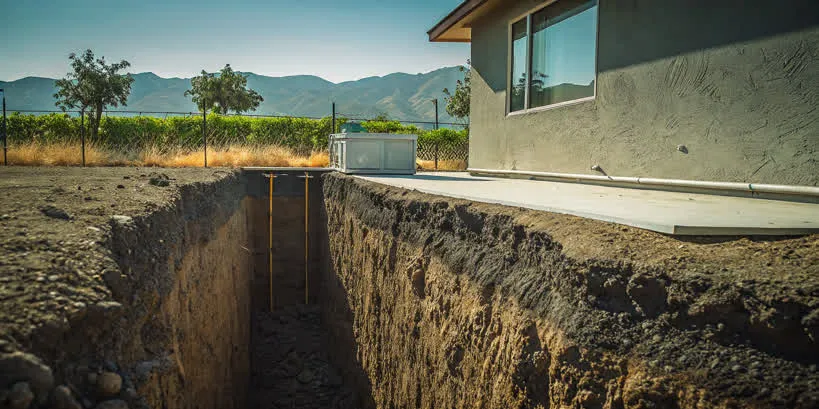
A seepage pit is a deep, covered, rock-filled underground structure that receives clarified wastewater, or effluent, from a septic tank. The effluent flows through the rock and gradually seeps into the surrounding soil. In a typical Ventura County installation, the pit may be about 4 to 6 feet in diameter and 10 to 60 feet deep. Depending on the property, soil, groundwater, and local approval requirements.
The septic tank and seepage pit perform different jobs. The tank holds wastewater long enough for solids to settle and floatable material to separate. The clarified liquid then moves through the distribution system to the pit for dispersal. Ventura County describes a conventional onsite wastewater treatment system as a septic tank, distribution box, and disposal field using either leach lines or seepage pits. Ventura County’s OWTS guidance explains this component relationship.
How a seepage pit differs from a drywell or cesspool
The terms can sound interchangeable, but they describe different uses. The EPA identifies a seepage pit as a drywell-type dispersal method for septic tank effluent. A drywell used only for graywater receives wastewater from sources such as sinks or showers, not toilet sewage. A cesspool, by contrast, receives raw sewage without the treatment and solids separation provided by a properly functioning septic tank.
That distinction matters for both safety and system performance. Seepage pits disperse effluent in an oxygen-poor environment, where some pathogens may not be treated before reaching the water table. Because the pit is deep, it also provides less opportunity for natural treatment in the upper soil and plant root zone. The system must therefore be designed for the site and kept in good working order.
Why septic tank maintenance is essential
Proper septic tank sizing and regular maintenance are critical. If the tank is undersized, damaged, or not pumped as needed, solids can pass into the pit. The pit is not designed to process that material, and the system can begin functioning like a cesspool. A qualified inspection and dependable septic tank service plan help protect the pit, surrounding soil, and groundwater.
How a Seepage Pit Works vs. a Leach Field
Both systems receive treated effluent from a septic tank and disperse it into the ground, but they use very different parts of the site. In Ventura County, seepage pits and leach lines are recognized as conventional dispersal options under the local onsite wastewater treatment system (OWTS) regulations. The right choice depends on soil conditions, available land, groundwater, slope, and the requirements for the specific property.
| Feature. | Seepage Pit. | Leach Field. |
|---|---|---|
| Orientation. | Vertical, typically 10 to 60 feet deep. | Horizontal, with trenches no more than 3 feet deep below the drain line. |
| How it works. | A drilled pit is filled with clean drain rock and includes a central perforated pipe extending through the effective depth. | A trench system uses perforated pipe set in clean drain rock to distribute effluent across the trench bottoms. |
| Soil treatment zone. | Below the root zone, where conditions are often oxygen-poor and there is little plant uptake or evapotranspiration. | Shallow, aerobic soil where natural biological processes help treat effluent as it moves downward. |
| Land area needed. | Small footprint, which can help where usable surface area is limited. | Larger area needed for horizontal trenches and required expansion space. |
| Best fit. | Hillsides, small lots, or sites where surface soil is unsuitable for a traditional field. | Level terrain with adequate land area and suitable shallow soil. |
| Ventura County depth standard. | Minimum 10 feet of effective depth and maximum 60 feet below grade. | Leach trenches are limited to a maximum of 3 feet below the drain line. |
The main tradeoff is space versus treatment environment. A seepage pit can fit on a constrained or sloped lot, but its depth places effluent below the root zone, reducing treatment from plants and shallow aerobic soil. A leach field spreads effluent over more surface area and uses natural biological treatment in shallow soil. Ventura County therefore evaluates each new OWTS individually, rather than approving a seepage pit septic system based on lot size alone. A site evaluation should confirm soil permeability, groundwater separation, bedrock conditions, setbacks, and the available area before design or replacement.
Sources: Ventura County OWTS design guidance and the EPA seepage pit fact sheet.
Why Seepage Pits Are Common in Southern California and Ventura County
A seepage pit can make sense when a property cannot support a conventional horizontal leach field. That situation is common across Southern California, where hillside lots, older neighborhoods, and varied ground conditions often limit the usable surface area for wastewater dispersal.
Hillsides and compact lots change the design
Many Conejo Valley homes sit on sloped or uneven terrain. Building long, level leach trenches on those properties may be impractical or may create concerns about access, grading, and slope stability. A vertical dispersal system can use a smaller footprint by moving effluent deeper into suitable soil.
Lot size is another factor. Older residential neighborhoods may not have enough open land for a full leach field and the 100% expansion area typically reserved for future replacement. Seepage pits are therefore often found at older homes that were built before modern subdivision sewer connections reached the area. Ventura County identifies limited surface area, including hilly terrain and small Southern California lots, as a reason seepage pits may be selected.
Surface soil may not support horizontal dispersal
Some sites have clay, shallow soil, or rock close to the surface. Those conditions can make it difficult for a leach field to disperse wastewater through an adequate layer of soil. A pit may be considered when deeper site conditions are more suitable, but it isn’t automatically the right answer. Soil permeability, groundwater, bedrock, and slope conditions must be evaluated for the specific property.
Ventura County requires site-specific review
The Ventura County Environmental Health Division regulates onsite wastewater treatment systems under its OWTS Technical Manual. New systems are evaluated individually before a permit is issued, and seepage pits require careful geotechnical review because of their depth. The county’s design framework generally limits pits to 4, 5, or 6 feet in diameter. With an effective depth of at least 10 feet and no more than 60 feet. The pit bottom must also maintain required separation from groundwater and bedrock, while the pit edge must be separated from surface fill. See the Ventura County OWTS requirements for the applicable site evaluation and design standards.
Signs Your Seepage Pit Is Failing
A failing seepage pit septic system may not announce the problem at the surface. Unlike a leach field, where ponding can be visible across the soil, a seepage pit can deteriorate underground and require a camera inspection to identify the cause. Watch for these warning signs:
- Foul odors near the septic area. Persistent sewage odors may indicate gases escaping from a saturated or poorly functioning pit.
- Slow drains, gurgling toilets, or fixture backups. These symptoms can mean the system is struggling to absorb additional effluent. They should not be dismissed as an isolated drain problem when several fixtures are affected.
- Unusually lush, green grass over the pit. Excess nutrients surfacing near the disposal area can make one patch of grass noticeably greener than the surrounding landscape.
- Standing water or soggy ground. Surface moisture near the pit may indicate saturated soil that cannot absorb more wastewater.
- Rising groundwater. A high water table can flood the pit, allowing pathogens and nitrogen to come into direct contact with the aquifer, according to the EPA’s seepage pit guidance.
- Landslides or slope movement. On hillside properties, seepage pits may contribute to slope instability and create risks for people, animals, and structures.
These signs do not confirm a failed pit by themselves. A professional camera inspection can help locate blockages, structural damage, unusual flow, or saturation below ground. If you’re evaluating a property, schedule a septic inspection before buying.
Regular septic tank pumping every two to three years can help prevent solids from reaching the pit. Proper tank maintenance is especially important because seepage pits are not designed to process accumulated sewage solids.
What Does Seepage Pit Repair or Replacement Cost?
There is no reliable one-size-fits-all price for repairing or replacing a seepage pit in Ventura County. A pit may be 10 to 60 feet deep, and excavation becomes more involved when the property is on a hillside or has limited equipment access. Soil conditions, the pit’s construction, permitting requirements, and any needed geotechnical evaluation can also change the scope. As a result, replacement can run into the thousands, especially when the entire disposal area must be rebuilt.
Start with diagnosis, not excavation
The first step is to confirm where the failure is occurring. Conejo Bros Plumbing can perform a sewer scope inspection for $450, using a camera to check whether the problem is in the seepage pit. The line leading to it, or another part of the septic system. A complete smoke test is $550 and may help locate cracks, breaks, or improper connections that allow odors or gases to escape.
That diagnostic work matters because a repair may be possible when the pit itself is not structurally compromised. Replacing a functioning pit without identifying the actual cause can add unnecessary excavation and permitting costs.
Maintenance can extend system life
Regular pumping is usually far less expensive than major disposal-system work. Conejo Bros Plumbing charges a flat $450 for septic tank pumping, and pumping every two to three years helps prevent solids from entering a seepage pit. You can review local guidance on septic tank pumping and learn how often to pump your septic tank.
Proper tank maintenance is especially important because seepage pits are designed to receive liquid effluent, not accumulated sewage solids. If you notice slow drains, odors, or surface wetness, schedule an inspection before a manageable repair becomes a full replacement.
Frequently Asked Questions
What is a seepage pit septic system?
A seepage pit septic system uses a covered underground pit to disperse liquid effluent from a septic tank into surrounding soil. The pit is a disposal component, not a replacement for the septic tank. Proper tank sizing, regular maintenance, and effective solids removal help keep sewage solids out of the pit. The U.S. Environmental Protection Agency explains that seepage pits are also commonly called drywells when they disperse septic tank effluent. EPA seepage pit guidance.
What is the difference between a seepage pit and a leach field?
A leach field spreads effluent through shallow soil across a larger surface area, where soil biology helps treat it as it moves downward. A seepage pit sends effluent deeper below the root zone, so it does not receive the same potential treatment from plant uptake or evapotranspiration. In Southern California, limited space, hillsides, or small lots may influence which disposal design is considered, but the right choice depends on site conditions and local approval. Ventura County OWTS guidance.
Are seepage pits safe for residential use?
They can be safe when properly designed, permitted, inspected, and maintained, but they require careful groundwater and soil evaluation. Rising groundwater can flood a pit and bring pathogens or nitrogen into contact with the aquifer. In Ventura County, each new onsite wastewater treatment system is evaluated individually before a construction permit is issued. So an existing pit should not be judged by appearance alone. EPA risk guidance.
What are common seepage pit septic system problems?
Common warning signs include slow drains, sewage odors, unusually lush or wet ground, surface ponding, and recurring backups. Problems may result from a full or poorly maintained septic tank, restricted soil absorption, changing groundwater levels, or structural and slope concerns. Do not enter, uncover, or excavate a seepage pit yourself. A qualified septic professional can inspect the tank, disposal area, and surrounding site to determine whether the issue requires maintenance, repair, or a replacement design.
Ready to Talk Through Your Seepage Pit?
If you’re unsure whether seepage pit symptoms point to a maintenance issue, damage, or a larger system concern, a professional evaluation can clarify the next step. Contact Conejo Bros Plumbing to schedule seepage pit inspection, diagnosis, or repair throughout Ventura County. We’ll help you understand what your system needs and how to move forward.
