


Septic System Inspection Simi Valley CA: What to Expect
For Simi Valley homeowners, septic maintenance is more than a routine chore. A quiet tank can still have blocked lines, rising sludge, or a drainfield problem that becomes expensive once wastewater backs up or reaches the soil. The right inspection gives you a clear picture before a sale, after symptoms appear, or when system records are incomplete.
A septic system inspection simi valley ca typically reviews the tank, connected lines, and drainfield for safe operation, leaks, capacity concerns, and signs of failure. The EPA recommends professional inspection at least every three years, while systems with pumps or other mechanical components generally need annual attention: EPA septic guidance.
Ventura County oversight also matters for properties that use an onsite wastewater treatment system rather than public sewer. Start by identifying who needs an inspection and what event or condition makes it especially important, then use our Septic Tank Service Ventura County Guide for broader maintenance planning.
Request a septic system inspection today
Who Needs a Septic System Inspection in Simi Valley
A septic system inspection is not only for a homeowner who already has a sewage backup. In Simi Valley, it is a practical way to understand the condition of an onsite wastewater system, plan maintenance, and avoid unpleasant surprises when a property changes hands. If you are unsure how your tank, drainfield, or pump system is supposed to be maintained, the Septic Tank Service Ventura County Guide provides helpful background. A professional inspection can then connect that general information to your home’s actual equipment and site conditions.
- Homeowners who are not connected to public sewer: Properties using a private septic system or other onsite wastewater treatment system need periodic professional attention. Ventura County’s Environmental Health division oversees onsite wastewater systems for structures that are not connected to public sewer. An inspection helps confirm that the tank, outlet components, and drainfield are functioning as they should. Rather than relying on the absence of a current backup as proof that everything is healthy.
- Property buyers and sellers: A septic inspection is an important part of evaluating a home before a real estate transaction. Buyers can learn about the system’s condition and maintenance history before finalizing a purchase, while sellers can address documented concerns early and provide useful service records. For transaction-specific planning, review this septic inspection guide, then schedule an inspection that fits the property and the sale timeline.
- Owners of older homes or systems with limited records: If you recently bought an older Simi Valley home, cannot locate prior pumping records. Or do not know where the tank and drainfield are located, an inspection creates a clearer starting point. The technician can document the system’s condition and identify maintenance or repair needs before a small issue becomes a costly failure. Keeping the resulting report with your home records also helps future owners and property managers.
- Households noticing warning signs: Slow drains throughout the home, sewage odors, unusually wet or green areas over the drainfield, standing water, or sewage surfacing in the yard should prompt an inspection. These symptoms can have more than one cause, so guessing or repeatedly using drain products may delay the right repair. A malfunctioning septic system can contaminate groundwater and surface water, creating risks for people and the environment, according to the CDC.
- Owners due for routine service: The EPA recommends that the average household septic system be inspected by a professional at least every three years. Systems with electrical float switches, pumps, or other mechanical components generally need inspection annually. Your household size, water use, system design, and prior service history may justify a different schedule. So keep inspection and pumping records and ask the technician to explain the recommendation.
What Does a Septic System Inspection in Simi Valley, CA Cover?
A professional inspection is a methodical look at the parts that collect, separate, and disperse household wastewater. The technician is not simply checking whether toilets currently flush. The goal is to identify active leaks, excessive solids, damaged components, and warning signs that could affect the drainfield or create a costly failure.
What the technician checks
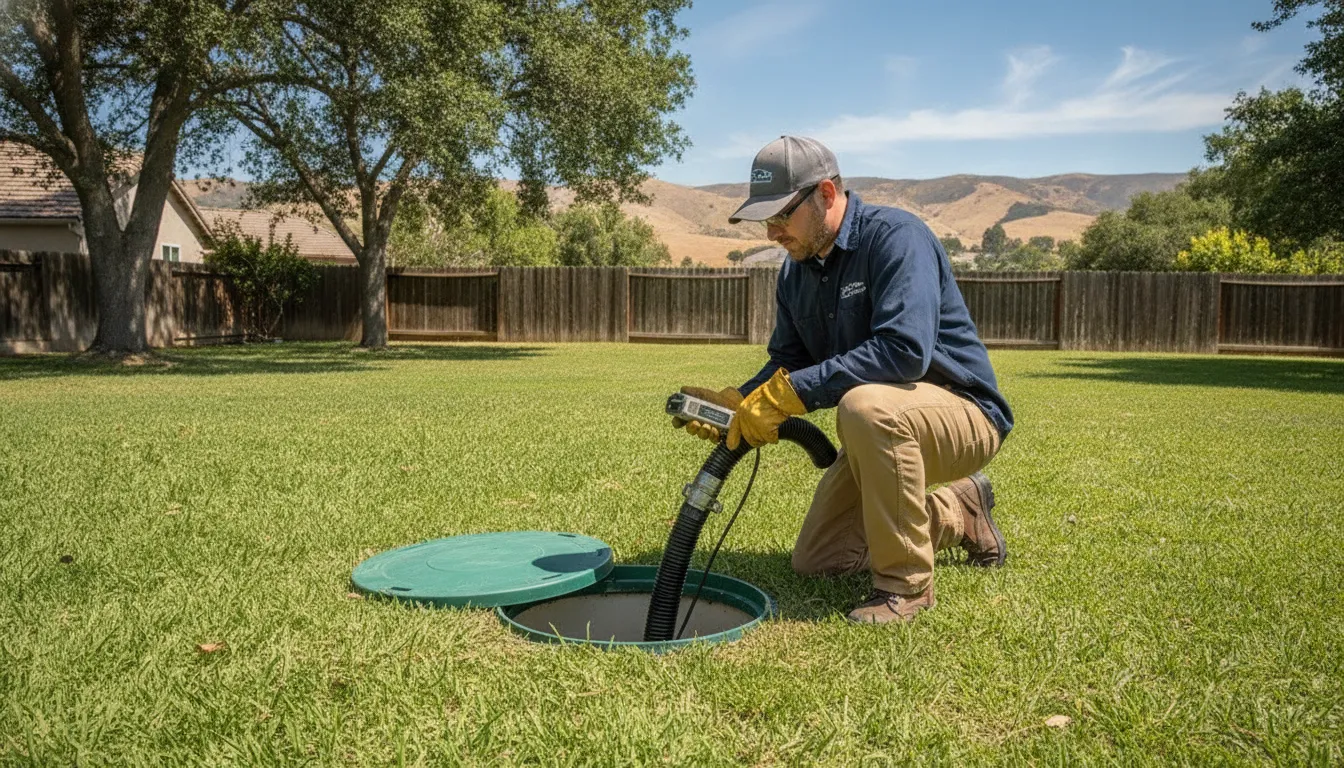
Most inspections begin by locating the septic tank and exposing its access risers or lids. If the access points are buried, this may require careful probing or limited digging. Once the tank is accessible, the technician checks the tank structure and connections for visible cracks, damage, or leakage. The condition of the lids and risers also matters because unsafe or poorly sealed access points can allow water intrusion or create a safety hazard.
The tank contents are then examined. A professional measures the scum and sludge layers instead of guessing from the age of the system or the last time it was pumped. The U.S. Environmental Protection Agency recommends pumping when the bottom of the scum layer is within 6 inches of the outlet. When the top of the sludge layer is within 12 inches of the outlet, or when sludge and scum occupy more than 25 percent of the liquid depth. These measurements help determine whether pumping is needed now and provide a useful baseline for future maintenance.
- Tank and access points: The inspection checks risers, lids, inlet connections, visible tank surfaces, and evidence of leaks or structural damage.
- Scum and sludge: Layer depth is measured against recognized pumping criteria, including the 6-inch, 12-inch, and 25-percent thresholds.
- Outlet protection: The T-shaped outlet is inspected because it helps keep sludge and scum from moving into the drainfield.
- Drainfield condition: The technician looks for saturated soil, sewage odors, unusually green or spongy areas, standing water, and other signs that wastewater is not dispersing properly.
The drainfield assessment also considers the area around the system. Heavy vehicle traffic, new structures, grading, landscaping, or excess irrigation can affect how the soil accepts effluent. A field inspection cannot reveal every underground issue, but it can identify surface evidence that calls for further evaluation.
When the tank or lines warrant a closer look, the technician may recommend a camera or video inspection. This can help identify obstructions, root intrusion, broken pipe, or a damaged connection that is not visible from the tank opening. Camera work is not automatically necessary for every routine inspection, but it is valuable when symptoms, property history, or visible conditions suggest a hidden problem.
A typical inspection takes about 1 to 2 hours, depending largely on tank accessibility and the scope of the evaluation. Ask for a written service report that records the tank condition, measurements, recommended repairs, and work completed. Before scheduling, review the signs your septic tank is full or failing so you can describe any symptoms accurately. The EPA also recommends keeping service records for future maintenance and property decisions. EPA septic care guidance provides the reference criteria used for inspection and pumping decisions.
What Does Ventura County Require for a Septic System?
In Simi Valley, a home that is not connected to a public sewer relies on an Onsite Wastewater Treatment System, or OWTS. OWTS is the county’s regulatory term for a septic system. Ventura County’s Resource Management Agency, through its Environmental Health division, oversees septic systems and wastewater disposal for these properties. The county’s requirements are intended to protect public health, nearby homes, groundwater, and surface water while keeping systems operating as designed.
For the county’s current guidance, start with Ventura County RMA septic systems. Residents can call the OWTS Inspection Hotline to schedule an inspection. The county guidance indicates that scheduling may take two business days, so do not wait until the day before a deadline, closing, or planned repair.
When documentation matters
Inspection documentation is especially important when a Simi Valley property changes ownership. Property-transfer inspections are commonly used to identify septic problems before a real estate transaction is finalized. A written report gives the owner, buyer, and other parties a clearer record of the tank, wastewater system, observed conditions, and any recommended next steps. Keep service reports and maintenance records after the inspection. They can help establish what work was performed and make future evaluations more efficient.
County compliance is not only a paperwork issue. A malfunctioning OWTS may allow wastewater to reach areas where people, pets, or wildlife can be exposed. The CDC warns that malfunctioning septic systems can contaminate groundwater and surface water, potentially affecting individuals and the environment. That makes a prompt inspection important when you notice sewage odors, unusually wet ground over the drainfield. Slow drains throughout the house, surfacing wastewater, or unexplained changes in system performance. These signs should not be dismissed as ordinary plumbing inconveniences.
Responding to an inspection finding
An inspection does not automatically mean a property needs a full replacement. The result should identify the system’s condition and distinguish routine maintenance from repairs or a larger compliance concern. If a professional recommends repairs, address them promptly to reduce the chance of a more serious failure. Properties with pumps, electrical float switches, or other mechanical components may need more frequent attention than a conventional system.
For background on inspections, pumping, drainfields, and ongoing care, see the Septic Tank Service Ventura County Guide. A local inspection paired with accurate county documentation helps Simi Valley homeowners make decisions before a small warning becomes a health, environmental, or real estate problem.
Common Septic Problems Found on Simi Valley Properties
A professional inspection can reveal septic problems while they are still manageable. On Simi Valley properties, the issue may be inside the tank, in the drainfield, or caused by something entering the system from the home. The EPA recommends inspecting a typical household septic system at least every three years. Older systems, high-use homes, and alternative systems with pumps or electrical controls may need more frequent service.
Common findings include:
- Sludge and scum buildup: Solids naturally collect in the tank over time. If the layers become too deep, they can reduce working capacity and allow solids to move toward the outlet. The tank’s T-shaped outlet is designed to help keep sludge and scum out of the drainfield, but it cannot compensate for a tank that is overdue for pumping. An inspector checks these layers and can recommend pumping based on the actual conditions.
- Clogged or failing drainfields: The drainfield treats wastewater after it leaves the tank, so restricted or saturated soil can cause slow drains, wet spots, odors, or sewage surfacing in the yard. The EPA identifies drainfield maintenance as a key part of preventing failure. Poorly maintained drainfields are a leading cause of septic system failure in residential areas, making this an important part of an inspection.
- Tree root intrusion: Roots can enter aging or damaged pipes and restrict the flow between the house, tank, and drainfield. A careful inspection can help identify signs of a blockage before wastewater backs up into the home or overwhelms another part of the system.
- Leaky fixtures and excess water: A running toilet may seem like a minor plumbing defect. But one leaky or running toilet can send as much as 200 gallons of water per day into the septic system, according to the EPA. That hydraulic overload can strain the tank and drainfield. Repairing fixtures promptly and spreading out heavy water use can reduce stress on the system.
- Improper disposal and hydraulic overloading: Grease, harsh chemicals, wipes, and other non-biodegradable products can interfere with septic treatment or contribute to blockages. The same is true when excessive water enters the system in a short period. Properly disposing of household waste and following a practical septic system maintenance checklist helps protect the system between inspections.
Annual-to-triennial inspections give homeowners a reasonable window for catching these conditions before they become expensive failures. The right schedule depends on the system type, household size, wastewater volume, and maintenance history. If you notice slow drains, sewage odors, unusually wet ground, or recurring backups, do not wait for the next routine interval. Have the system evaluated and address recommended repairs promptly.
How Much Does a Septic System Inspection Cost in Simi Valley?
The cost of a septic system inspection in Simi Valley depends on what the property and system require, not just the time spent looking at the tank. A straightforward inspection may involve locating the tank, opening the access, checking for leaks, and examining the scum and sludge layers. The inspector should also document the tank’s condition and any recommended repairs. For background on ongoing care, see the Septic Tank Service Ventura County Guide.
Conejo Bros Plumbing keeps pricing clear by separating the inspection itself from optional services or additional diagnostic work. For a real estate sewer scope inspection, the price is $450. A complete smoke test is $550 when that testing is appropriate for the property’s drainage concerns. Drain cleaning is $73, and a sewer camera inspection is included at no additional charge when it is bundled with a paid drain cleaning service. These are separate services, so the right combination depends on what the inspection reveals and what the property owner needs.
| Service | Price | When it helps |
|---|---|---|
| Real estate sewer scope inspection | $450 | Documenting the sewer line before a property sale |
| Complete smoke test | $550 | Tracing hidden drainage leaks and odor sources |
| Drain cleaning | $73 | Clearing a routine clog or slow drain |
| Sewer camera inspection | Free with paid drain cleaning | Checking the line when a persistent clog or root intrusion is suspected |
Several site conditions can affect the final recommendation and total cost:
- Tank accessibility: A buried, obstructed, or difficult-to-locate tank can require more time than a tank with clear access.
- Riser condition: Damaged, missing, or difficult-to-open risers may need attention before the tank can be evaluated properly.
- System type: Conventional tanks and alternative systems with pumps, floats, or other mechanical components have different inspection needs.
- Added pumping or camera work: Pumping may be recommended based on sludge and scum levels. Camera work may be useful when the line, not just the tank, could be contributing to the problem.
Before scheduling, ask what is included, whether access must be uncovered, and which services would be optional. Conejo Bros Plumbing is an A-licensed and C-42 licensed contractor, license #1108756, serving homeowners and real estate professionals with practical septic, drain, and sewer diagnostics. A clear inspection report helps you decide what needs attention now and what can be planned later.
How to Schedule a Septic System Inspection in Simi Valley
Scheduling a septic inspection is easier when the technician can access the system and review its history. Start by choosing a qualified septic specialist who can evaluate the tank, connected components, and drainfield, explain the findings clearly, and identify repairs that may need prompt attention. Conejo Bros Plumbing is an A-licensed and C-42 licensed drain, sewer, and septic specialist serving Simi Valley and the surrounding Ventura County area.
If your property is subject to Ventura County onsite wastewater requirements, contact the Ventura County OWTS Inspection Hotline early. The county guidance states that scheduling may take two business days. So do not wait until the day before a real estate inspection, repair deadline, or other required appointment. You can review the county’s OWTS and septic system information before calling.
Prepare the property before the appointment
A few practical steps can make the inspection more efficient and help the report answer the right questions:
- Clear soil, stored items, vehicles, or landscaping that blocks access to the septic tank, lid, risers, cleanouts, or inspection ports.
- Locate the tank and risers if you know where they are. If the location is uncertain, gather any site plans, prior inspection reports, pumping receipts, or installation records.
- Collect the system’s maintenance history, including dates of pumping, repairs, alarms, filter cleaning, and previous inspections. The EPA recommends keeping records of work performed on a septic system.
- Write down symptoms such as slow drains, sewage odors, wet areas, unusually lush grass over the drainfield, or backups. Include when each issue started and whether it changes after heavy rain.
- Tell the inspector whether the system includes pumps, float switches, alarms, or other mechanical components. These systems may need more frequent professional attention than a conventional tank.
- Ask what the inspection includes, whether pumping is recommended or required for the evaluation, and when you will receive the written service report.
For ongoing upkeep, keep the recommendations with your records and use this Septic Tank Maintenance Checklist for Ventura County as a practical reference. When you are ready to arrange a professional inspection, share the property’s access details, location, and any known concerns.
Request a septic system inspection today
Frequently Asked Questions
How much does a septic system inspection cost?
Cost depends on tank access, system type, records, pumping needs, and whether additional testing is needed. A real estate sewer scope inspection is $450 under the current service pricing guidance. While a broader septic evaluation may require a separate quote after the property and system are reviewed.
How long does a septic inspection usually take?
Most inspections take about one to two hours when the tank is accessible. The visit may take longer if the access lid is buried, the drainfield needs additional evaluation, records are incomplete, or pumping and follow-up testing are recommended.
How often should I inspect my septic system?
The EPA recommends having an average household septic system inspected by a professional at least every three years. Alternative systems with pumps, electrical floats, or other mechanical components generally need annual inspections because they have more parts that can fail. Source: EPA septic system care guidance.
Should I inspect the septic system before selling or buying a home?
Yes. A property transfer inspection can identify tank, drainfield, plumbing, or documentation concerns before a transaction is finalized. Buyers should request available maintenance records, and sellers should address recommended repairs promptly rather than waiting for a failed system to disrupt the sale. Source: EPA property transfer inspection guidance.
What happens if my septic inspection finds a problem?
The inspector should document the tank condition, observed defects, and any repairs completed or recommended in the service report. Next steps may include pumping, repairs, drainfield evaluation, or coordination with Ventura County requirements. Do not assume a failed inspection means immediate replacement; the correct remedy depends on the problem and the system’s condition.
Ready to Schedule Your Septic Inspection?
A professional inspection can clarify your system’s condition and help you address maintenance or county compliance questions with a practical plan. Reach out for help with a property in Simi Valley or elsewhere in Ventura County so the team can recommend the appropriate next step.
