


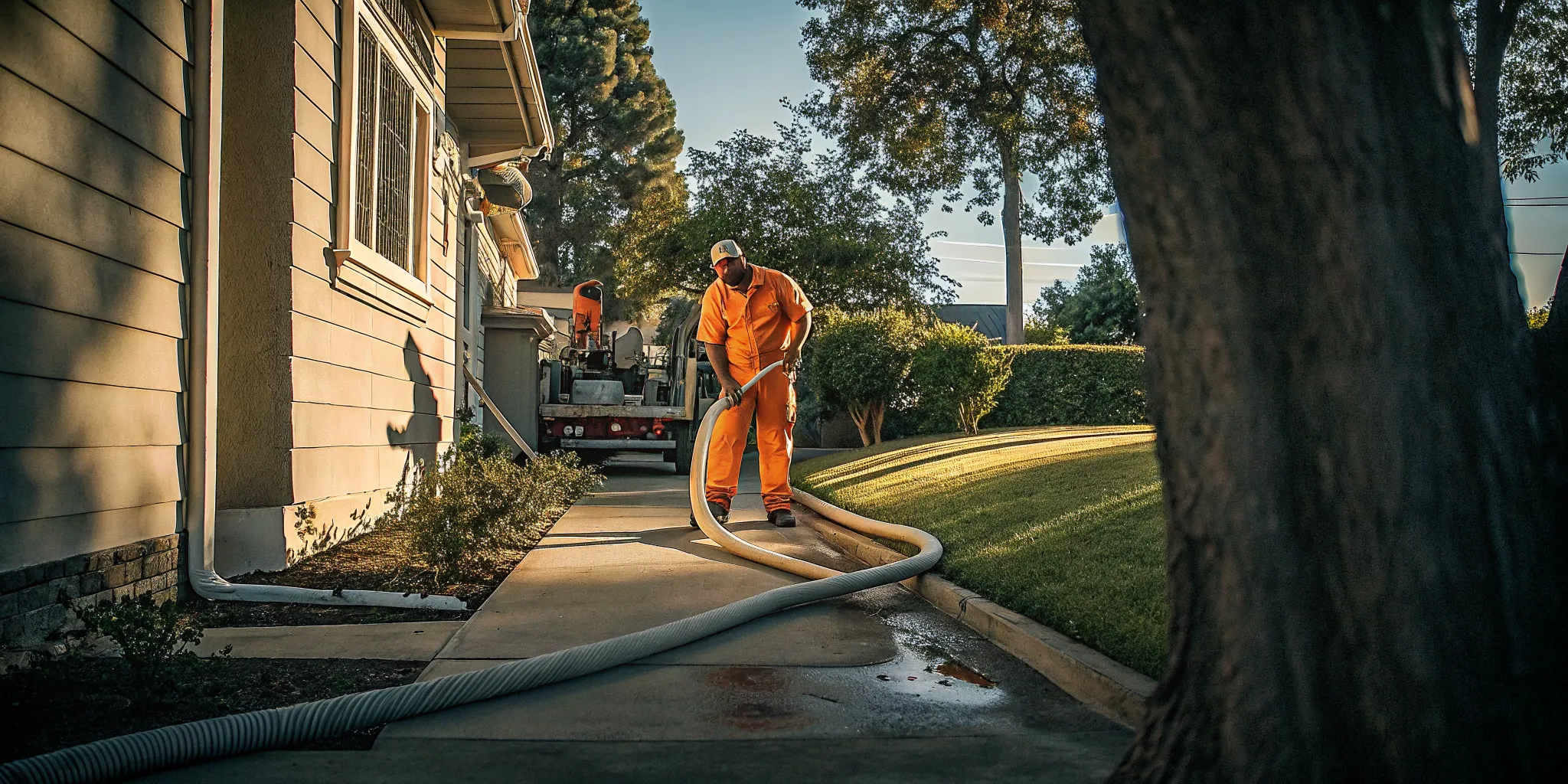
Septic Tank Pumping Moorpark CA: A Homeowner’s Guide
When a Moorpark home uses a private septic system, routine pumping is part of protecting the property, not just responding to a backup. The right schedule depends on household size, tank capacity, water use, and the condition of the system. Slow drains, odors, or sewage surfacing can also signal that service should not wait.
Septic tank pumping moorpark ca typically means service every three to five years for most households, with professional inspections at least every three years. Earlier attention may be needed when sludge and scum levels get high, when household use increases, or when warning signs appear.
This guide explains how often to schedule pumping, what local homeowners can expect to pay, which symptoms need prompt attention, and what to do during an emergency. For broader maintenance guidance, review our Septic Tank Service and Maintenance Guide before looking at why septic systems remain common in Moorpark.
Why Moorpark Homes Rely on Septic Systems More Than City Sewer
Moorpark includes established neighborhoods as well as larger, more rural parcels. In areas outside the city sewer network, a home cannot send wastewater to a municipal treatment line. Instead, it depends on a private septic system located on or near the property. That system provides essential wastewater treatment, but it also makes maintenance a homeowner responsibility.
For homeowners, the difference is important. City sewer customers generally pay for a connection and rely on the public system for treatment beyond the property line. With septic, the tank, pipes, distribution components, and drainfield all need to be understood and cared for as part of the property. The property owner is responsible for maintaining a household sewage treatment system, according to guidance from Ohio State University Extension: OSU septic maintenance guidance.
That responsibility does not mean septic ownership has to be difficult. It means keeping track of service history, knowing where the tank and drainfield are located, and watching for changes in drainage. Scheduling a professional inspection before a small issue becomes a backup is easier than managing a full failure. A neglected system can create costly property damage and public health concerns, while routine care helps protect the home and the people living in it.
Maintenance protects the system and the property
Proper maintenance can help a wastewater treatment system reach its expected life of around 20 years. Actual performance depends on the system design, soil conditions, household use, installation quality, and the care it receives. Avoiding preventable overloads and responding to warning signs early gives the tank and drainfield a better chance to function as intended.
For a practical overview of inspection, pumping, and homeowner care, review the Septic Tank Service and Maintenance Guide. It can also help you prepare useful questions for a technician, especially if you recently purchased the home or do not have reliable records from the previous owner.
Local support for Moorpark septic owners
Conejo Bros Plumbing serves residential and commercial customers throughout Ventura County, including Moorpark. A local septic professional can help identify the system layout, assess its current condition, and recommend maintenance based on the property rather than a one-size-fits-all schedule. Keeping those records current makes future service easier and can provide valuable documentation when you sell the home.
How Often Should Moorpark, CA Homeowners Pump Their Septic Tanks?
There is no single calendar date that fits every private wastewater system. The right schedule depends on the tank, the number of people using it, and how much wastewater the household sends through the system. A practical maintenance plan combines a routine pumping interval with professional inspections and attention to actual sludge and scum levels.
The 3-5 Year Rule
The U.S. Environmental Protection Agency says household septic tanks are typically pumped every three to five years. The same guidance recommends having the system inspected by a septic service professional at least every three years. That interval is a starting point, not a guarantee that every tank can safely wait five years.
An inspection can identify the condition of the tank and its components before a backup or drainfield problem develops. Pumping is due sooner when more than 25 percent of the tank’s liquid depth consists of sludge and scum. A technician can measure those layers during service and help set a schedule based on what is actually happening inside the tank. See our guide to how often to pump a septic tank for additional planning guidance.
Tank Size and Household Size
A larger household generally adds more wastewater and solids to the tank, which can shorten the time between pumping appointments. Tank capacity matters too. A smaller tank may reach its working limit sooner than a larger tank serving the same number of residents.
Daily water use is another factor. Residential septic systems are designed around roughly 50 to 60 gallons of household sewage per person per day. Consistently sending more water through the system can reduce settling time and increase the load on the tank and drainfield. Spacing out laundry and other heavy water use helps prevent sudden overloading, but it does not replace inspection or pumping.
Alternative Systems Need More Frequent Care
Not every Moorpark septic system operates by gravity alone. Systems that use electrical pumps, float switches, or other mechanical components require more frequent professional attention. The EPA recommends inspecting these alternative systems generally once a year because a failed control or pump can interrupt operation even when the tank itself is not full.
Keep records of pumping dates, inspection findings, household changes, and any repairs. If the number of residents increases, a home sits vacant for a long period, or symptoms such as slow drains or odors appear. Ask a septic professional to reassess the schedule rather than relying on the original estimate.
Signs Your Moorpark Septic System Needs Immediate Service
Septic problems rarely improve when they are ignored. A slow drain may be an early warning, while sewage at the surface signals a more urgent failure. The CDC identifies several symptoms that a septic system is not working properly, including slow-draining sinks and toilets, foul odors, and sewage visible outside the home. These signs deserve prompt evaluation rather than repeated drain-cleaning attempts.
Slow Drains and Gurgling Toilets
When several fixtures drain slowly at the same time, the problem may extend beyond a single sink trap or household clog. Toilets that flush slowly, drains that gurgle, or wastewater that backs up can indicate that the tank, outlet, distribution components, or drain field is struggling to accept flow. Pay attention to whether the symptoms appear throughout the home, especially after showers, laundry, or multiple toilet flushes.
Reduce water use while you arrange service. Avoid adding more strain through unnecessary laundry loads, long showers, or repeated flushing. Do not use chemical drain openers as a substitute for diagnosis, since they can complicate the problem and do not correct a failing septic component. A technician can determine whether the next step is pumping, a tank inspection, or a repair.
Odors, Soggy Ground, and Sewage on the Surface
Persistent sewage odors near the tank or drain field, unusually soggy ground, patches of unusually strong grass growth. Or sewage becoming visible outside the home should be treated as immediate service concerns. Keep children and pets away from affected areas, and avoid contact with standing wastewater. A neglected septic system can threaten public health and cause financial losses to the property, according to Ohio State University Extension: septic maintenance protects health and property.
Do not cover wet areas, drive over the drain field, or assume a recent pumping resolves every issue. Saturated soil, damaged lines, or a failing absorption area may require a different solution. For homeowners preparing to buy or sell, remember that a general septic inspection is not the same as a sewer scope inspection. A sewer scope can provide a separate view of connected sewer piping, so ask for the inspection that matches the property and transaction. Conejo Bros can help arrange a sewer camera inspection in Moorpark when that diagnosis is appropriate.
Early service protects more than convenience. It can limit interior damage, reduce exposure risks, and help preserve the value of a Moorpark property.
What Septic Pumping Costs in Moorpark
Clear pricing helps you decide whether you need routine pumping, an inspection, or both. Conejo Bros Plumbing lists septic tank pumping at $450 and a septic tank inspection at $350. The inspection includes a camera in the sewer line and access to the tank lids. So it can provide useful information when the cause of a problem is not obvious.
| Service. | Price. | What is included. | Best fit. |
|---|---|---|---|
| Septic tank pumping. | 450. | Removal of accumulated tank waste. | Routine maintenance or a tank that needs pumping. |
| Septic tank inspection. | 350. | Camera in the sewer line and inspection of tank lids. | Diagnosing a concern or evaluating system condition. |
These services answer different questions. Pumping removes solids and restores available tank capacity. An inspection looks at accessible components and the line so you can make a more informed maintenance decision. If you are buying or selling a property, ask for the inspection appropriate to the transaction, since a real estate sewer scope is distinct from a general septic inspection.
Routine pumping typically does not require a permit, according to the available competitor guidance, but local requirements can vary by jurisdiction and project. Confirm the details when scheduling, especially if the work involves repairs, alterations, or a failing system rather than routine maintenance.
For details about septic tank pumping services, review the service information and ask which option fits your tank’s condition. A straightforward conversation should leave you knowing what is recommended, what it costs, and why.
Scheduling Emergency Septic Service in Moorpark
Septic problems rarely wait for a convenient appointment. Conejo Bros Plumbing provides 24/7 emergency septic service for Moorpark homeowners who are dealing with a backup, overflow, or sudden loss of drainage. Call 805-603-1983 as soon as you notice a serious change, or contact us to request emergency service.
Heavy rain can make an urgent problem more likely. According to the CDC’s septic system guidance, saturated ground can prevent a septic system from operating properly. When the soil cannot absorb wastewater as it normally would, backups and overflows may surface inside the home or across the yard. That is a reason to seek professional help, not to keep adding water to the system.
What to Do While You Wait for the Technician.
While you wait, take a few simple steps to limit the damage and give the technician a clear picture of what is happening:
- Stop water use throughout the house and avoid flushing toilets.
- Move people, pets, and vehicles away from wet or visibly contaminated areas.
- Never open the septic tank, enter a tank, or try to pump, dig, or chemically treat the system yourself.
- Note where you see sewage, standing water, unusual odors, or slow drains so you can describe the symptoms clearly.
Slow-draining sinks or toilets, gurgling, foul odors, sewage visible outdoors, or wastewater backing up through a drain all warrant an immediate call. Prompt evaluation can help identify whether the problem involves the tank, drainfield, sewer line, or another part of the onsite system before the damage spreads.
For emergency septic service in Moorpark, call Conejo Bros Plumbing at 805-603-1983.
Frequently Asked Questions
How often should a Moorpark homeowner pump a septic tank?
Most household septic tanks are pumped every three to five years, but the right schedule depends on tank size, household size, wastewater volume, and sludge levels. The EPA recommends professional inspections at least every three years. Systems with electrical pumps, float switches, or other mechanical components generally need inspection about once a year. EPA septic maintenance guidance provides the baseline schedule.
What are the clearest signs that a septic tank needs pumping?
Watch for slow-draining sinks or toilets, foul septic odors, sewage appearing outside, or unusually soggy ground near the drainfield. These signs can indicate a full tank or another system problem, so avoid waiting for a complete backup. Reduce water use and arrange a professional evaluation promptly. The CDC’s septic system guidance lists slow drains, odors, and visible sewage as warning signs.
How much does septic tank pumping cost in Moorpark?
Conejo Bros Plumbing lists septic tank pumping at a flat rate of $450. If the issue may involve the tank, lids, or a sewer line, a separate septic inspection is listed at $350 and includes a camera in the sewer line and tank lids. Confirm access conditions and the recommended service before work begins.
What should I avoid putting into a septic system?
Keep grease, harsh chemicals, and non-biodegradable items out of the system. Also space out heavy water use instead of running several loads of laundry on one day. Spreading laundry and bathing across the day helps reduce the chance of overloading the treatment system, while careful disposal protects the tank and drainfield.
Ready to Schedule Septic Service in Moorpark?
Regular pumping can help you stay ahead of routine maintenance and keep your private septic system working as expected. For septic tank pumping or emergency septic service in Moorpark, call Conejo Bros Plumbing at 805-603-1983 or request service online to schedule an appointment.
